





Changzhou Veidt Weighing Co., Ltd. © 2022 ALL RIGHTS RESERVED Privacy Policy | Calibration Weight | Test Weights | Cast Iron Weights | Standard Weights | Laboratory Weights | XML | SITEMAP
Product Category
Jewelry Scale
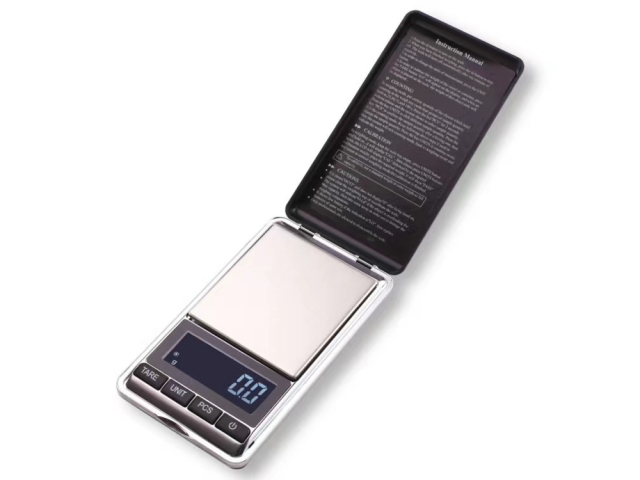
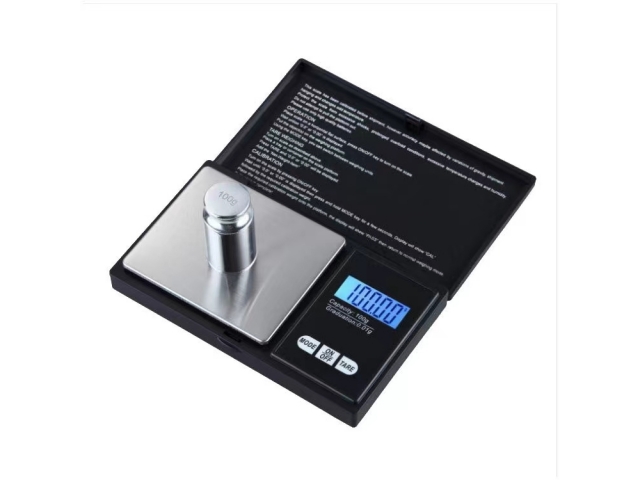
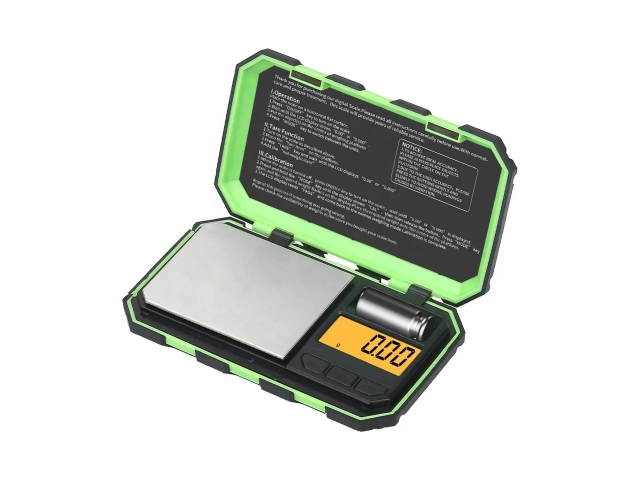
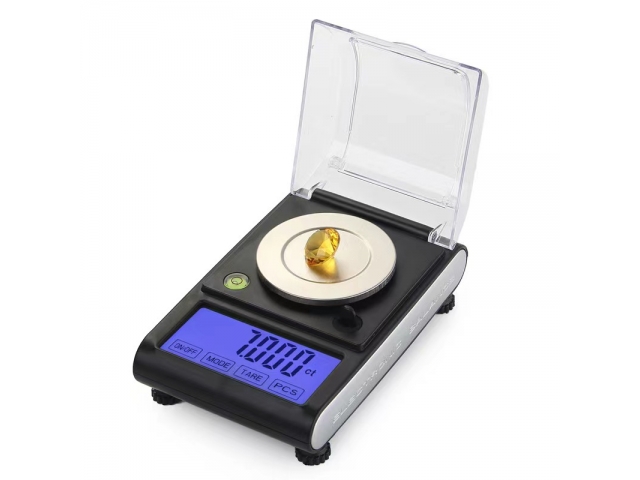
In the intricate and value-driven world of precious metal and gemstone processing, trading, and collection, precision measurement stands as an irreplaceable core link that determines the authenticity, fairness, and professionalism of every transaction and production process. Among all specialized measuring tools, the jewelry scale has emerged as a fundamental and indispensable device, tailored exclusively for the ultra-fine weighing requirements of small, high-value items such as fine gold, silver accessories, platinum ornaments, diamonds, colored gemstones, and precious stone fragments. Unlike ordinary household weighing tools that are designed for rough mass measurement of daily necessities, the jewelry scale is engineered with extreme sensitivity and fine readability, capable of capturing minuscule weight variations that are completely undetectable by conventional scales. These tiny weight differences carry enormous practical significance in the jewelry field, as even a marginal change in mass can translate to substantial value fluctuations for precious materials with high unit value. Whether for professional jewelry crafting, second-hand precious material recycling, personal collection verification, or boutique jewelry retail transactions, the jewelry scale provides objective, accurate, and reliable weight data that serves as the primary basis for value judgment, quality inspection, and record archiving. Its existence standardizes the operational logic of the entire jewelry industry chain, eliminates subjective estimation errors, and builds a solid foundation of credibility for both industrial practitioners and individual users who pursue precision and authenticity in every jewelry-related activity.
The inherent structural and operational advantages of modern jewelry scales distinguish them sharply from traditional mechanical weighing tools and ordinary electronic scales. Traditional mechanical balance scales rely on physical lever balance principles, which are prone to errors caused by mechanical wear, environmental air flow, and manual visual judgment, and their measurement resolution can hardly meet the ultra-fine weighing needs of tiny gemstones and ultra-thin precious metal slices. In contrast, mainstream jewelry scales adopted in current markets adopt high-precision sensor sensing technology, with core components built to perceive subtle pressure changes generated by tiny objects placed on the weighing platform. When a jewelry piece or gemstone is stably placed on the flat weighing surface, the internal load sensor converts the micro-pressure signal generated by the object’s gravity into a precise electronic signal, which is then intelligently processed, calculated, and corrected by the built-in microcontroller chip, and finally presented as an intuitive digital value on the high-definition display screen. This fully electronic intelligent measurement mode completely avoids the mechanical errors and visual deviations of traditional tools, realizing real-time, stable, and high-precision weighing. Most professional-grade jewelry scales achieve a readability of 0.001 grams, enabling accurate measurement of ultra-light materials such as gold powder, tiny diamond fragments, and micro gemstone particles that are invisible to the weighing range of ordinary electronic scales.
Diversified functional design endows jewelry scales with strong adaptability to complex and diverse application scenarios in the jewelry industry, making them far more than a single-functional weighing tool. The tare zeroing function is one of the most practical and commonly used core functions, solving the weighing dilemma caused by the need for auxiliary containers in fine measurement. In actual use, tiny gemstones, fragmented precious metal materials, or small loose jewelry parts cannot be directly placed on the weighing platform due to their small size, easy rolling, or easy loss, requiring the use of lightweight weighing trays, plastic containers, or glass slides for auxiliary placement. The tare function allows users to place the empty auxiliary container on the weighing platform first, trigger the zeroing operation to eliminate the weight data of the container itself, and then place the measured object into the container for weighing, so that the final displayed data is completely the net weight of the target item. This function effectively avoids measurement errors caused by container weight superposition, ensuring the accuracy of net weight data for each measurement. Meanwhile, the automatic zero tracking function built into high-quality jewelry scales can automatically sense subtle zero drift caused by minor environmental changes, fine dust accumulation, or slight temperature fluctuations during long-term use, and automatically correct the zero point in real time, maintaining the accuracy of the initial weighing state at all times.
Unit conversion capability is another essential functional feature of jewelry scales, which greatly improves the convenience and universality of equipment use in cross-scenario and cross-field applications. Different types of precious jewelry and gemstones have long adopted exclusive customary measurement units in industry transactions and collection identification, which differ from the conventional gram unit used in daily life. Precious metal materials such as gold, silver, and platinum are often measured in grams and pennyweights in refined transactions, while various gemstones including diamonds, rubies, sapphires, and emeralds uniformly take carat as the core measurement unit. A qualified jewelry scale integrates multiple common industry measurement units, realizing one-click free switching between different units without the need for users to manually convert data through formulas, which greatly reduces manual calculation errors and improves work efficiency. For professional practitioners who need to frequently switch measurement standards according to different transaction objects and business scenarios, the multi-unit conversion function simplifies the weighing process, unifies the data presentation standard, and ensures the consistency and standardization of weight data in business communication, transaction recording, and material sorting.
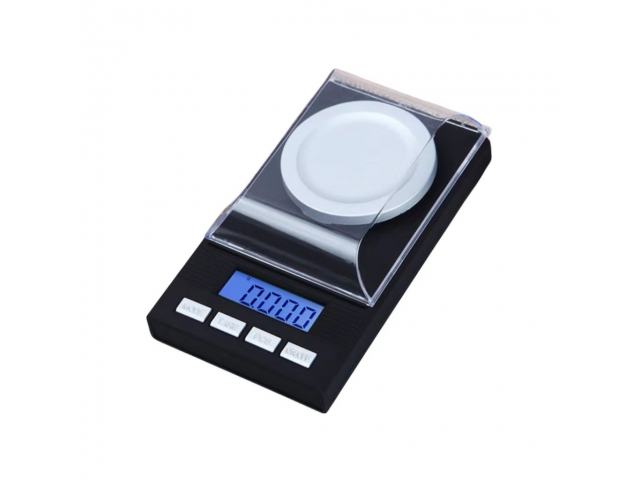
The portable and compact structural design of modern jewelry scales further expands their application boundary, enabling accurate precision weighing to break the limitation of fixed professional venues. Early professional precision weighing equipment is large in size, heavy in weight, fixed in placement, and complex in operation, which can only be used in fixed professional laboratories or production workshops, and cannot meet the mobile weighing needs of outdoor acquisition, on-site transaction, and field identification. In response to the diversified mobile use demands of the jewelry industry, most current jewelry scales adopt miniaturized and lightweight structural design, with small overall size, light body weight, and integrated body structure that is easy to carry and store. Many models support dual power supply modes of built-in rechargeable batteries and external power connection, which can maintain long-term stable operation without fixed power supply conditions. This allows practitioners to carry the equipment to complete on-site weighing and data recording for personal customization services, door-to-door precious material recycling, outdoor jewelry exhibition transactions, and field collection identification, realizing the integration of mobility and precision. Even individual collection enthusiasts can easily store and carry the equipment to complete self-inspection and weight verification of their collected jewelry and gemstones at any time.
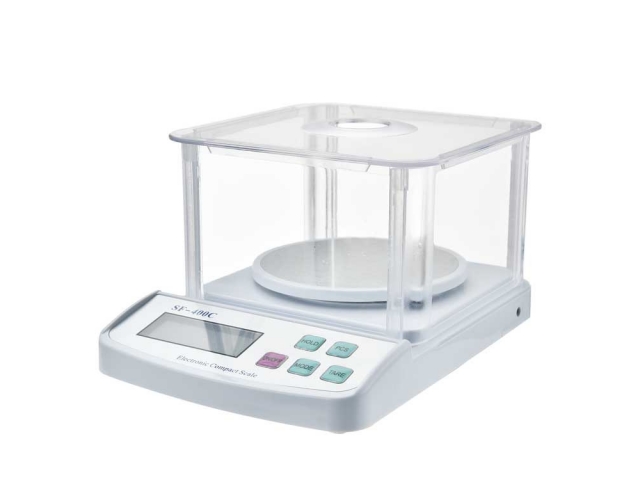
Environmental adaptability and anti-interference performance are key indicators that determine the long-term stable use of jewelry scales, and also core advantages that distinguish high-quality professional equipment from ordinary miniature electronic scales. The internal precision sensors and electronic components of jewelry scales are extremely sensitive to external interference factors, and subtle changes in the use environment may affect the stability of measurement data if the equipment lacks anti-interference design. Professional jewelry scales are equipped with multi-dimensional anti-interference optimization designs, including physical anti-shock structure, wind and dust protection configuration, and electronic signal anti-interference processing. The built-in anti-shock buffer structure can resist slight vibration and accidental light impact during placement and use, avoiding sensor displacement and data jitter caused by vibration. The matching wind shield accessory can effectively block the interference of natural wind flow, indoor convection air, and human body breathing airflow on ultra-light measured objects and the weighing platform, solving the problem of unstable jumping data in ultra-fine weighing. In addition, the internal circuit system has stable temperature compensation performance, which can adapt to subtle temperature changes in conventional indoor environments, avoiding measurement accuracy deviation caused by thermal expansion and contraction of electronic components and sensor structures.
Standardized and standardized operation methods are the prerequisite to ensure the full play of the precision performance of jewelry scales, and incorrect operation is the main cause of inaccurate weighing data for most users. Before each use, users need to place the jewelry scale on a completely flat, horizontal, and stable solid surface, avoiding inclined tables, soft desktop fabrics, and unstable suspended placement, because uneven placement will cause unbalanced stress on the internal sensor of the scale, resulting in systematic measurement errors. After placing the equipment stably, it is necessary to turn on the power and preheat the equipment for a certain period of time, so that the internal electronic components and sensors can reach a stable working state, eliminating the data instability caused by just powering on. Before formal weighing, it is essential to confirm that the scale displays zero value; if there is a non-zero residual value due to placement deviation or slight dust accumulation, the zeroing or tare function should be triggered first to restore the initial accurate state. When placing measured items, it is necessary to handle them gently, avoiding violent placement, throwing, or sliding friction on the weighing platform, so as to prevent instantaneous impact force from damaging the precision sensor and causing permanent accuracy loss.
Reasonable selection of weighing range and accurate judgment of application scenarios are crucial to giving full play to the value of jewelry scales and avoiding measurement errors and equipment loss. Different jewelry scales have different maximum weighing limits and optimal weighing intervals, and the highest measurement accuracy is always concentrated in the middle interval of the rated weighing range. Weighing ultra-heavy items exceeding the rated range will trigger the equipment’s overload protection mechanism on the one hand, and easily cause irreversible deformation and damage to the precision sensor on the other hand, permanently reducing the equipment’s accuracy and service life. Conversely, using a large-range jewelry scale to measure ultra-light tiny gemstones will lead to insufficient measurement sensitivity and increased relative error, failing to meet the precision requirements of fine identification. Therefore, users need to select matching scale models according to conventional weighing objects: ultra-fine particle materials such as diamond fragments, gold powder, and micro gemstones are suitable for high-precision models with small weighing range and 0.001g readability; daily weighing of finished gold and silver jewelry, medium-sized gemstones, and bulk precious metal materials can adopt conventional precision models with moderate range and 0.01g readability, so as to balance weighing accuracy and equipment applicability.
Regular calibration and daily maintenance are core measures to maintain the long-term accuracy and stable performance of jewelry scales, and also key habits that professional practitioners must adhere to in daily work. After long-term use, affected by subtle mechanical fatigue of internal sensors, dust accumulation on the weighing platform, and environmental humidity changes, the zero point and measurement accuracy of the jewelry scale will produce subtle drift, which is difficult to be perceived by the naked eye but will directly affect the authenticity of weighing data. Regular calibration can effectively correct this drift and restore the equipment’s optimal working state. For high-frequency use scenarios such as daily batch transaction weighing and studio production measurement, calibration is required every week; for moderate-frequency use such as personal collection inspection and occasional business use, monthly calibration can meet the accuracy requirements. The calibration process needs to be carried out in a stable and interference-free environment, using standard calibration weights that match the equipment’s precision level, and completing zero calibration and span calibration in accordance with standardized steps to ensure that each data point of the equipment is accurate and effective.
Scientific daily maintenance can effectively extend the service life of jewelry scales and maintain consistent precision performance, avoiding equipment failure and accuracy attenuation caused by improper maintenance. In daily use and storage, the most important maintenance work is keeping the equipment clean and dry. The weighing platform, wind shield, and body surface need to be wiped regularly with a soft dry cotton cloth to remove surface dust, residual metal debris, and tiny stains; stubborn stains can be cleaned with a slightly damp soft cloth, and it is strictly forbidden to use corrosive chemical solvents, hard brushes, and sharp tools to clean the equipment, so as to prevent scratching the weighing platform surface, corroding the internal circuit, and damaging the sensitive sensor structure. The equipment should be placed in a dry, ventilated, and dust-free storage environment for a long time, avoiding humid air, direct sunlight, and high-temperature heat sources, because long-term humidity will cause internal circuit oxidation and short circuit, and high-temperature exposure will accelerate the aging of electronic components. In addition, the equipment needs to avoid long-term static pressure placement, and heavy items are prohibited from being placed on the weighing platform for a long time when not in use, so as to prevent sensor fatigue deformation.
The application value of jewelry scales runs through the entire industrial chain of jewelry design and production, transaction circulation, collection identification, and after-sales service, becoming an essential tool to standardize industry operations and protect the legitimate rights and interests of all parties. In the jewelry production and processing link, designers and craftsmen rely on high-precision weighing data to proportion precious metal materials accurately, control the material consumption of customized jewelry, and ensure the consistency of material proportion and finished product quality of batch-produced jewelry, avoiding material waste and product quality deviation caused by manual empirical estimation. In the commodity circulation and transaction link, unified and accurate weight data provides a fair transaction basis for both sellers and buyers, effectively avoiding transaction disputes caused by inconsistent weight standards and subjective estimation errors. In the field of jewelry collection and identification, accurate weight data is one of the important basic parameters for evaluating jewelry specifications and authenticity, providing objective data support for collection valuation, variety identification, and file archiving. For individual consumers, equipping with a portable jewelry scale can effectively verify the weight authenticity of purchased jewelry products, avoid false labeling and insufficient weight of products, and safeguard their own consumption rights and interests.
With the continuous upgrading of jewelry industry refinement requirements and the continuous progress of electronic intelligent technology, the performance and functional design of jewelry scales are also constantly iterating and improving, showing the development trend of higher precision, stronger intelligence, better portability, and wider adaptability. Modern jewelry scales are no longer limited to basic weighing and unit conversion functions, but gradually integrate intelligent data recording, automatic data storage, stable data locking, and low-power intelligent power saving functions, which can automatically lock stable weighing data to avoid data reading errors caused by accidental vibration, and store historical weighing records to facilitate subsequent data query, sorting, and archiving. The continuous optimization of anti-interference technology and sensor technology enables the equipment to maintain stable high-precision output in more complex conventional environments, breaking through the environmental limitations of traditional precision weighing equipment. As a basic precision measuring tool in the jewelry field, the jewelry scale will always accompany the standardized, refined, and intelligent development of the jewelry industry. Its accurate measurement performance and flexible application characteristics not only improve the operational efficiency and professional standard of the industry, but also build a reliable and trustworthy measurement foundation for every jewelry transaction, production link, and collection behavior, becoming an indispensable and important supporting force for the healthy and orderly development of the entire jewelry industry ecosystem.
