





Changzhou Veidt Weighing Co., Ltd. © 2022 ALL RIGHTS RESERVED Privacy Policy | Calibration Weight | Test Weights | Cast Iron Weights | Standard Weights | Laboratory Weights | XML | SITEMAP
NEWS LIST
cast iron weight high precision
Saturday 21st March 2026 Back to list
In the vast and interconnected web of modern industry, commerce, and scientific research, precise weight measurement stands as an unshakable foundation for consistency, safety, and quality. Among the many tools that enable this level of accuracy, high precision cast iron weights hold a unique and irreplaceable position. Unlike lightweight or fragile calibration materials, these weights combine robust physical properties with carefully engineered mass consistency, making them suitable for long-term use in both controlled laboratory environments and harsh industrial settings. They are not merely passive metal objects; they are standardized reference points that ensure every scale, balance, and weighing system across different sectors operates with reliable uniformity, eliminating discrepancies that could disrupt production, compromise product quality, or create safety hazards in heavy-duty operations. The design and production of high precision cast iron weights demand meticulous attention to detail at every stage, from material selection to final finishing, as even the smallest deviation in mass or structure can undermine their core purpose of delivering consistent, repeatable measurement results.
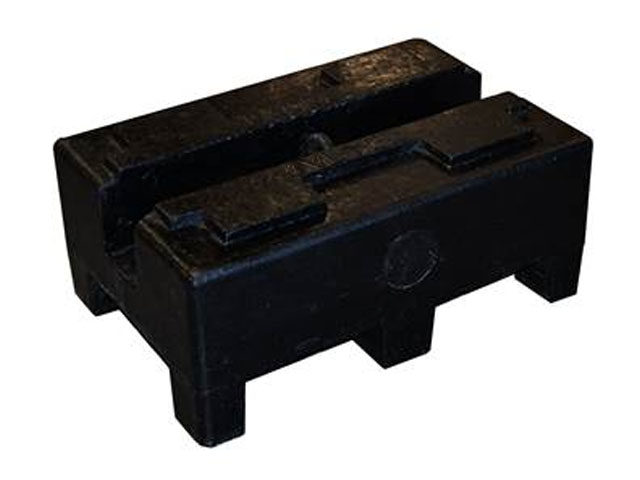
The choice of cast iron as the primary material for high precision weights is far from arbitrary; it is rooted in a unique set of material characteristics that align perfectly with the requirements of precision and durability. Cast iron boasts a high density, which allows for a compact physical form while maintaining a specific target mass, a critical advantage in applications where space is limited or where a low-profile design is needed for stable placement on weighing platforms. This density also contributes to exceptional structural stability, meaning the material resists warping, bending, or deformation under regular use, even when subjected to repeated lifting, stacking, and placement on hard surfaces. Unlike softer metals that may dent or scratch easily, altering their mass over time, cast iron has strong compressive strength and resistance to impact, making it far more durable for daily, heavy-use scenarios. Additionally, cast iron exhibits stable thermal expansion properties within the range of typical working temperatures found in most industrial and laboratory spaces. This stability ensures that the mass of the weight remains consistent across mild temperature fluctuations, avoiding the significant measurement shifts that can occur with materials more sensitive to heat or cold. The natural microstructure of cast iron, with its uniform grain composition, further supports mass uniformity, preventing internal inconsistencies that could lead to uneven weight distribution and inaccurate readings. This combination of density, stability, durability, and thermal resistance makes cast iron the optimal material for crafting precision weights that can maintain their accuracy over years of regular use, outperforming many alternative materials in longevity and long-term reliability.
Producing a high precision cast iron weight involves a sophisticated, multi-stage manufacturing process that prioritizes uniformity, accuracy, and structural integrity, with no room for shortcuts or oversights. The process begins with the careful preparation of raw cast iron material, which is melted and refined to remove impurities, air bubbles, and foreign particles that could create weak spots or mass irregularities. Molten iron is then poured into custom-designed molds that are engineered to exact dimensional specifications, ensuring each weight has a consistent shape, thickness, and volume. The molding process uses precision tooling to maintain tight tolerances, as even a minor variation in mold dimensions can result in a mass that falls outside the required precision range. Once the casting is complete and cooled, the raw weight undergoes a series of post-casting treatments to enhance its stability and precision. One key step is heat treatment, also known as annealing, which relieves internal stress within the metal caused by the cooling process. This stress relief is essential to prevent gradual warping or shape changes over time, ensuring the weight retains its original form and mass indefinitely. After annealing, the weight moves to precision machining and finishing stages, where rough edges are smoothed, surfaces are leveled, and any excess material is carefully removed to fine-tune the mass to the exact target value. Skilled technicians use specialized measuring equipment to check the mass repeatedly during this phase, making incremental adjustments until the weight meets strict precision standards. The final finishing step includes a protective coating that guards against corrosion, moisture damage, and surface wear without adding significant mass that could alter the weight’s accuracy. This coating is applied evenly and cured thoroughly, creating a smooth, non-porous surface that is easy to clean and maintain. Every weight is then subjected to comprehensive quality checks, including mass verification, structural integrity testing, and surface inspection, to ensure it meets the rigorous criteria for high precision performance before it is ready for use.
High precision cast iron weights serve an incredibly diverse range of industries and applications, each relying on their consistent mass to uphold standards of accuracy and safety. One of the most prominent uses is in the calibration and verification of weighing equipment across manufacturing, logistics, and commercial sectors. In manufacturing facilities, these weights are used daily to test and adjust bench scales, floor scales, conveyor belt check weighers, and large industrial platform scales, ensuring that raw materials, components, and finished products are weighed accurately at every stage of production. This accuracy is vital for maintaining consistent product quality, controlling material waste, and adhering to internal quality control protocols. For example, in food and beverage production, precise ingredient weighing ensures batch consistency and compliance with product specifications; in chemical manufacturing, it prevents dangerous material imbalances that could compromise safety or product efficacy. In logistics and warehousing, high precision cast iron weights are used to calibrate freight scales, parcel weighing systems, and truck scales, ensuring accurate billing, proper inventory management, and compliance with transportation weight regulations. Without regular calibration using these reliable weights, businesses risk financial losses from incorrect shipping charges, inventory discrepancies, or non-compliance with industry guidelines.
Beyond industrial weighing calibration, these weights play a critical role in laboratory and scientific research settings, where precise measurements are the backbone of valid experimentation and data collection. Research facilities, academic laboratories, and testing institutions use high precision cast iron weights to calibrate analytical balances, material testing machines, and force measurement equipment. While smaller, ultra-fine weights may be used for micro-measurements, cast iron weights are preferred for larger-scale testing and calibration tasks that require a stable, heavy reference mass. Their durability and resistance to environmental factors make them suitable for use in labs that handle a wide range of materials, from metals and plastics to biological and agricultural samples. In materials science and engineering research, these weights are used to apply consistent, known loads during strength and durability testing, ensuring that test results are reliable and comparable across different trials. Additionally, they are essential in metrology labs that focus on maintaining and standardizing measurement practices, serving as secondary reference standards that support the consistency of national and local measurement systems.
Another key application area for high precision cast iron weights is in heavy machinery and equipment balancing, where their stable mass helps ensure operational safety and efficiency. In industries such as construction, mining, and material handling, large-scale machinery like cranes, elevators, and lifting equipment relies on precisely weighted counterbalances to prevent tipping, reduce mechanical strain, and operate smoothly. High precision cast iron weights are ideal for this purpose because their consistent mass allows engineers to calculate and apply the exact amount of counterweight needed for optimal balance. In elevator systems, for instance, properly calibrated counterweights reduce the energy required to move the elevator car, extending the lifespan of mechanical components and improving overall energy efficiency. In construction machinery, accurate counterweighting is a critical safety measure, preventing equipment failure and accidents during lifting and heavy-duty operations. These weights are also used in vibration testing and equipment calibration for industrial machinery, helping to reduce excessive movement and wear that can lead to costly downtime and repairs.
To preserve the precision and extend the service life of high precision cast iron weights, proper handling, storage, and routine maintenance are essential, even though these weights are designed for durability. One of the most important maintenance practices is regular cleaning to remove dust, dirt, oil, and other contaminants that can accumulate on the surface and slightly alter the mass over time. Cleaning should be done with a soft, lint-free cloth and a mild, non-abrasive cleaning agent; harsh chemicals or rough scrubbing tools should be avoided to prevent damage to the protective coating and the underlying metal. After cleaning, weights should be dried thoroughly to prevent moisture buildup, which can lead to corrosion and rust, especially in humid or damp environments. When handling high precision weights, it is recommended to use clean gloves or specialized lifting tools to avoid transferring oils, sweat, or moisture from hands to the metal surface, as these residues can accelerate corrosion and cause gradual mass changes.
Proper storage is equally vital for maintaining precision. High precision cast iron weights should be stored in a dry, clean, temperature-stable environment, away from direct sunlight, moisture, and corrosive chemicals. Individual storage compartments or padded cases are ideal for preventing scratches, dents, and surface damage that can occur from stacking or rubbing against other weights or hard surfaces. Heavier weights should be stored on sturdy, level surfaces to avoid structural stress, and all weights should be kept separate from sharp or heavy objects that could cause physical damage. Regular visual inspections are recommended to check for signs of corrosion, chipping, cracking, or coating wear; any visible damage should be addressed promptly to prevent further deterioration and potential loss of accuracy. While these weights are built to maintain their mass consistency for long periods, periodic re-verification of their precision is advisable for weights used in critical applications, ensuring that they continue to meet the required performance standards and that any subtle changes are identified and corrected early.
The long-term value of high precision cast iron weights extends far beyond their immediate function as calibration tools; they are a sustainable, cost-effective investment for businesses and institutions that rely on accurate measurement. Unlike disposable or short-lived calibration materials, cast iron weights can remain in service for decades with proper care, making them a far more environmentally friendly choice. The ability to recycle cast iron also adds to their sustainability, as old or damaged weights can be melted down and reprocessed into new precision components without losing their core material properties. From a financial perspective, their durability eliminates the need for frequent replacements, reducing long-term operational costs compared to less robust alternatives. Their consistent performance also minimizes the risk of costly errors caused by inaccurate measurements, such as product recalls, production delays, regulatory penalties, or safety incidents. In this way, high precision cast iron weights act as a silent safeguard for operational efficiency, quality assurance, and workplace safety across countless industries.
In a world that increasingly demands precision, consistency, and reliability in every industrial and scientific process, high precision cast iron weights remain an indispensable tool. They bridge the gap between theoretical measurement standards and real-world application, providing a tangible, stable reference point that ensures fairness in commerce, quality in manufacturing, safety in heavy industry, and accuracy in scientific discovery. The craftsmanship that goes into creating each weight, from the careful selection of raw materials to the rigorous precision testing, reflects a commitment to excellence that aligns with the highest standards of modern industry. As technology advances and measurement systems become more sophisticated, the fundamental need for a reliable, durable, and consistent reference weight remains unchanged, and high precision cast iron weights continue to meet that need with unwavering performance. They are more than just metal masses; they are a testament to the importance of precision in building a functional, efficient, and safe industrial ecosystem, supporting countless operations worldwide with quiet, unwavering reliability.
Looking ahead, the role of high precision cast iron weights will continue to evolve alongside emerging industry trends, adapting to new calibration needs and operational demands while retaining their core strengths. Manufacturers will continue to refine production techniques to enhance precision even further, exploring advanced molding and finishing methods to reduce tolerances and improve mass uniformity. The focus on sustainability will also drive innovations in eco-friendly material sourcing and coating technologies, making these weights even more aligned with global green manufacturing initiatives. As industries expand and new sectors emerge, the demand for reliable, high-precision reference weights will only grow, reinforcing the position of cast iron weights as a timeless and essential component of modern measurement and industrial practice. Whether in a small laboratory, a large manufacturing plant, a busy logistics hub, or a heavy-duty construction site, high precision cast iron weights will continue to serve as the quiet backbone of accurate measurement, ensuring that every process, product, and operation meets the strict standards of consistency and reliability that define modern industry.
