





Changzhou Veidt Weighing Co., Ltd. © 2022 ALL RIGHTS RESERVED Privacy Policy | Calibration Weight | Test Weights | Cast Iron Weights | Standard Weights | Laboratory Weights | XML | SITEMAP
NEWS LIST
cast iron weight factory in china
Saturday 21st March 2026 Back to list
Cast iron weights stand as fundamental components across global industrial, commercial, and metrology sectors, serving critical roles in equipment calibration, weight verification, industrial balancing, and daily weighing standardization. As a core hub for metal casting and industrial manufacturing worldwide, China has built a mature, extensive, and systematically optimized cast iron weight manufacturing ecosystem over decades of industrial development, with thousands of specialized factories and foundries operating across key industrial regions. These facilities cater to both domestic industrial demand and international market needs, delivering a full spectrum of cast iron weight products that range from small-scale standard calibration weights to large, custom-made industrial counterweights, without relying on branded labeling or formal certification claims to demonstrate their market presence. The entire industry operates on the foundation of practical production experience, technical refinement, and consistent quality control, adapting to the evolving requirements of global buyers and end-users across diverse application scenarios.
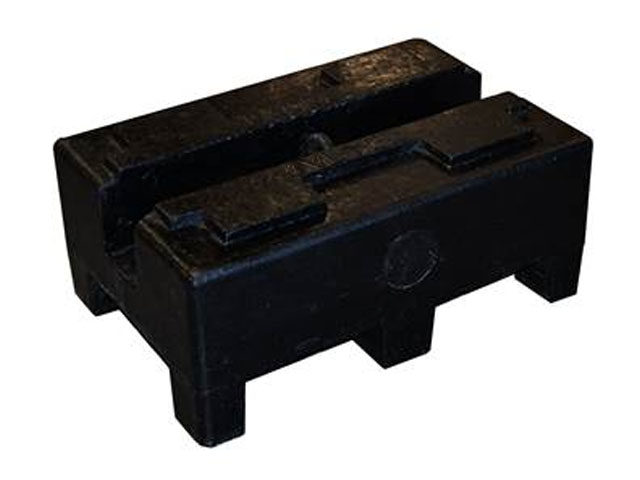
The raw material foundation of China’s cast iron weight manufacturing industry is solid and well-supported, rooted in the country’s comprehensive iron and steel supply chain. Factories primarily source high-grade pig iron, recycled steel scrap, and furnace return materials as core raw inputs, carefully balancing the mixture to achieve the ideal chemical composition and physical properties required for cast iron weights. Unlike ordinary cast iron products, cast iron weights demand exceptional density uniformity, stable structural integrity, and consistent mass accuracy, so material selection follows strict internal standards rather than external certification benchmarks. Manufacturers avoid excessive impurities that could compromise weight stability or cause structural defects such as porosity, shrinkage, or uneven texture, which would undermine the functional reliability of the final product. Auxiliary materials including ferrosilicon, ferromanganese, and other trace alloy agents are added in precise proportions during the melting stage to adjust the microstructure of the molten iron, refine graphite formation, and enhance the overall durability and dimensional stability of the cast weights. This meticulous material preparation stage lays the groundwork for consistent production output, ensuring that every batch of weights meets the functional requirements of its intended use, whether for laboratory calibration, industrial machinery balancing, or commercial weighing system verification.
The production process of cast iron weights in Chinese factories follows a standardized, step-by-step workflow that combines traditional casting craftsmanship with modern manufacturing upgrades, balancing efficiency and precision. The process begins with mold making, where factories use both automated molding equipment and manual molding techniques depending on product specifications and order volume. For standard weights with fixed dimensions and mass values, automated molding lines are widely adopted to ensure high consistency and production efficiency, while custom or large-format weights often require handcrafted molds to accommodate unique shapes and technical specifications. Mold materials are selected for heat resistance, dimensional accuracy, and reusability, with careful attention to mold cavity smoothness and structural rigidity to prevent deformation during the pouring process. Once molds are prepared, the carefully formulated raw materials are transferred to industrial melting furnaces, including induction furnaces and cupola furnaces, where they are heated to precise melting temperatures to form uniform molten iron. Temperature control during melting is a critical link; maintaining a stable, optimal temperature ensures the molten iron flows smoothly into the mold cavity without forming gas bubbles or internal flaws, directly impacting the structural integrity and mass accuracy of the finished weights.
After melting, the molten iron is poured into the prepared molds through controlled pouring processes, with skilled workers or automated pouring systems managing the flow rate and volume to avoid overflow, incomplete filling, or structural damage to the mold. The poured molten iron is then left to cool and solidify naturally in a controlled environment, with cooling time adjusted based on the size and thickness of each weight. Rapid cooling can cause internal stress and cracking, while overly slow cooling may lead to coarse microstructure and reduced durability, so factories implement targeted cooling protocols for different product categories. Once fully solidified, the rough cast weights are removed from the molds and undergo a series of post-processing treatments to refine their appearance and performance. This includes sand cleaning to remove residual molding sand, grinding to smooth rough surfaces and achieve precise dimensional tolerances, and surface finishing to enhance corrosion resistance and longevity. Some weights also undergo additional treatments such as anti-rust coating or paint application, tailored to the operating environments where they will be used, whether indoor laboratories, outdoor industrial sites, or humid storage facilities. Throughout every production stage, factories conduct ongoing internal checks to identify and address defects, ensuring that only products meeting internal quality standards move forward in the production chain.
China’s cast iron weight manufacturing industry exhibits clear regional clustering, concentrated primarily in eastern, northern, and central industrial provinces with robust metal casting infrastructure and complete industrial supporting resources. Eastern coastal regions, in particular, host a dense concentration of factories due to their proximity to raw material suppliers, advanced manufacturing equipment providers, and major logistics hubs, facilitating efficient material procurement, production, and global distribution. Northern provinces benefit from abundant iron and steel resources and relatively stable energy supply, supporting large-scale, continuous production for bulk orders, while central regions have developed specialized foundries that focus on mid-to-high-end custom weight products, leveraging skilled technical labor and streamlined production processes. This regional distribution pattern is not accidental but has evolved naturally over years of industrial development, driven by factors such as resource availability, logistics efficiency, labor supply, and proximity to downstream demand markets. The clustered layout also fosters industrial collaboration, with factories sharing technical insights, optimizing supply chain coordination, and collectively addressing production challenges, strengthening the overall resilience and competitiveness of the country’s cast iron weight manufacturing sector.
Quality control is a core priority for every reputable cast iron weight factory in China, implemented through a full-process monitoring system that covers raw material inspection, production process supervision, and finished product verification. Unlike industries that rely heavily on external certification labels, these factories prioritize internal quality management protocols that align with global industrial metrology practices, focusing on tangible product performance rather than formal certification documentation. Raw materials are tested upon arrival to verify chemical composition and purity, with substandard materials rejected immediately to prevent quality issues downstream. During production, key parameters such as melting temperature, pouring speed, cooling time, and post-processing precision are closely monitored and recorded, allowing for real-time adjustments to maintain consistency. Finished cast iron weights undergo comprehensive testing, including dimensional measurement, mass verification, structural integrity checks, and surface quality assessment. Non-destructive testing methods are occasionally used for high-precision products to detect internal flaws that are not visible to the naked eye, ensuring that each weight delivers stable, reliable performance over its service life. This rigorous, unbranded quality control system has earned Chinese cast iron weight factories recognition from global buyers, who value consistent product performance and reliable supply capacity.
The application scenarios for cast iron weights produced in China are exceptionally diverse, spanning nearly every corner of the global industrial and commercial landscape. Standard calibration weights are widely used in laboratories, weighing equipment manufacturing plants, and commercial retail settings to verify the accuracy of electronic scales, mechanical scales, and precision weighing instruments, ensuring fair trade and reliable experimental data. Industrial counterweights, which come in larger sizes and customized specifications, are essential for construction machinery, lifting equipment, agricultural machinery, and marine engineering, providing stable balancing force to ensure safe and efficient equipment operation. These counterweights are designed to withstand heavy loads, harsh working conditions, and long-term use without deformation or mass loss, making them indispensable for heavy industrial applications. Additionally, cast iron weights are used in logistics and warehousing for weight verification of goods, in automotive manufacturing for component balancing, and in various engineering projects for static load testing. The wide range of applications reflects the versatility and adaptability of cast iron as a material, as well as the ability of Chinese factories to produce products that meet diverse technical requirements across different sectors.
In recent years, China’s cast iron weight manufacturing industry has undergone a steady transformation toward green, intelligent, and high-efficiency production, aligning with the broader trend of China’s industrial upgrading. Traditional casting processes have been optimized to reduce energy consumption and environmental impact, with factories adopting cleaner melting technologies, recycling production waste and leftover materials, and implementing dust and emission control measures to minimize their ecological footprint. The reuse of scrap iron and return materials has become a standard practice, not only reducing raw material costs but also conserving natural resources and supporting sustainable manufacturing principles. On the intelligent front, an increasing number of factories have integrated automated production equipment, digital monitoring systems, and precision machining tools into their production lines, reducing manual labor dependence, improving production efficiency, and enhancing product consistency. Automated molding, robotic pouring, and digital dimensional inspection systems have minimized human error, allowing factories to meet tighter tolerances and higher quality expectations for both standard and custom products. This transformation is not driven by aggressive marketing or branded differentiation but by the need to adapt to global market demands, comply with environmental protection requirements, and maintain long-term competitiveness in the international supply chain.
The global supply chain role of China’s cast iron weight factories is deeply rooted in their large-scale production capacity, flexible order customization, and stable delivery capabilities. For international buyers, these factories offer a reliable source of cast iron weight products that balance quality and practicality, catering to small-batch custom orders and large-volume bulk shipments alike. The comprehensive industrial supporting system in China ensures that factories can source raw materials, production equipment, and auxiliary supplies efficiently, shortening lead times and maintaining consistent production schedules even during peak demand periods. Logistics networks connecting inland factories to coastal ports further streamline global distribution, enabling timely delivery to markets across Asia, Europe, North America, and other regions. Unlike branded manufacturers that focus on premium pricing and market positioning, Chinese cast iron weight factories operate with a focus on practical supply chain value, prioritizing order fulfillment, product consistency, and long-term cooperative relationships with global partners. This business approach has made them integral players in the global industrial casting supply chain, supporting the operations of countless downstream industries and end-users worldwide.
Despite facing challenges such as fluctuations in raw material prices, adjustments in environmental protection policies, and changes in global trade dynamics, China’s cast iron weight manufacturing industry remains resilient and adaptive. Factories continuously optimize production processes, upgrade technical equipment, and refine quality management systems to mitigate external risks and meet evolving market demands. Small and medium-sized factories focus on specialized niche markets and flexible customization, while larger-scale foundries leverage economies of scale to support bulk production and global distribution, creating a diversified industrial structure that caters to different market segments. The industry’s development is not marked by exaggerated claims or competitive hyperbole but by steady, incremental improvements in production technology, quality control, and sustainable practices, reflecting the pragmatic and steady development mindset of China’s traditional manufacturing sector.
Looking ahead, the cast iron weight industry in China will continue to evolve alongside global industrial development trends, with a growing focus on high precision, environmental sustainability, and intelligent manufacturing. Demand for high-precision calibration weights will rise alongside the expansion of precision manufacturing and metrology industries, driving factories to further refine production processes and quality control standards. Sustainable manufacturing practices will become even more central, with increased investment in low-energy production technologies, waste recycling, and green production materials. Additionally, the integration of digitalization and intelligence will deepen, with more factories adopting data-driven production management to optimize efficiency and reduce waste. Throughout this evolution, the core value of China’s cast iron weight factories will remain unchanged: to provide reliable, practical, and high-performance cast iron weight products for global industrial and commercial use, supporting the stable operation of the global supply chain without relying on brand names, certification labels, or exaggerated promotional language. As a vital part of the global metal casting industry, these factories will continue to play an irreplaceable role, driven by technical excellence, consistent quality, and a commitment to meeting the practical needs of users around the world.
