





Changzhou Veidt Weighing Co., Ltd. © 2022 ALL RIGHTS RESERVED Privacy Policy | Calibration Weight | Test Weights | Cast Iron Weights | Standard Weights | Laboratory Weights | XML | SITEMAP
NEWS LIST
cast iron weight class m2
Saturday 21st March 2026 Back to list
Cast iron weight class M2 stands as a widely utilized category of industrial mass standards, designed to strike a reliable balance between moderate measurement accuracy, robust physical durability and cost-effective functionality for non-critical, high-frequency industrial and commercial applications. Unlike precision weights engineered for laboratory calibration or highly regulated legal trade scenarios, M2 class cast iron weights are tailored to meet the daily operational needs of industries where consistent, repeatable mass reference is essential, but ultra-tight tolerance levels are not a mandatory requirement. This category of weights has cemented its place in global industrial operations due to its adaptability to rugged working conditions, long service life and accessible production standards, making it a staple tool for businesses across manufacturing, logistics, construction, agriculture and general equipment maintenance. To fully understand the value and proper application of M2 class cast iron weights, it is critical to explore their material composition, core performance traits, manufacturing processes, real-world use cases, handling and maintenance protocols, and key considerations for selection and deployment in diverse operational settings.
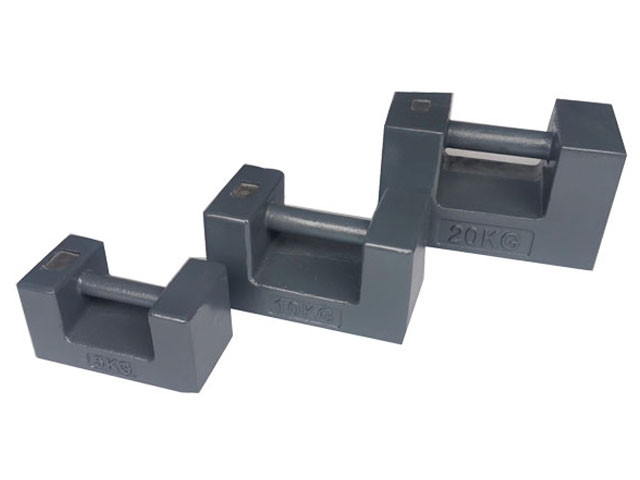
At the heart of M2 class cast iron weights is the carefully formulated cast iron material, which is selected for its unique combination of density stability, mechanical strength and workability. The primary material used in production is high-quality grey cast iron, with a controlled carbon content ranging from 2.5% to 4.0%, where carbon is distributed in the form of flake graphite throughout the metal matrix. This specific microstructure delivers several key benefits that make it ideal for industrial weight production: consistent density across the entire mass of the weight, resistance to minor impact and abrasion during regular handling, and minimal dimensional distortion over extended periods of use. The density of the cast iron used for M2 weights is typically maintained between 7.0 and 7.3 grams per cubic centimeter, a level that ensures compact sizing even for heavier nominal masses, while also reducing the impact of air buoyancy on measurement results in standard atmospheric conditions. Unlike more brittle iron alloys or softer metals that may bend or chip under stress, this grade of cast iron offers a reliable level of hardness, with a Brinell hardness value that supports resistance to surface wear from stacking, transportation and daily handling. It is important to note that while this cast iron is durable, it is not immune to environmental factors, particularly moisture and corrosive substances, which is why targeted surface treatment is an integral part of the production process to enhance longevity and preserve mass stability.
The manufacturing process of M2 class cast iron weights follows a structured, quality-focused workflow that prioritizes uniform mass distribution, consistent tolerance compliance and functional design, without the ultra-precise finishing required for higher-grade weights. The process begins with rigorous raw material selection, where foundries source pure pig iron, recycled clean steel scrap and carefully measured alloying elements to ensure the final casting meets the required density and mechanical properties. Impurities such as excessive sulfur and phosphorus are strictly limited during the melting phase, as these elements can weaken the metal structure and create internal voids that would alter the mass of the finished weight. Melting takes place in controlled induction furnaces, with temperatures held between 1400 and 1450 degrees Celsius to ensure complete fusion of materials and removal of trapped gases and slag. Once molten, the iron is poured into prefabricated sand molds, which are crafted to produce standard shapes such as rectangular blocks, cylindrical weights and lock-style weights with integrated lifting points for easy handling. The casting process is carried out slowly to prevent turbulence, which can cause air pockets and uneven density; risers are also integrated into the mold design to allow for proper solidification and shrinkage compensation, ensuring the final casting is free from internal defects that could compromise mass consistency.
After the casting has cooled and solidified completely, the rough weight undergoes a series of post-processing steps to refine its shape, surface quality and mass accuracy. The first step is sand removal and trimming, where excess material, sprue and risers are cut away, and rough edges are smoothed to eliminate sharp corners that could cause injury or damage during handling. Next, the weights undergo a heat treatment process known as annealing, which involves heating the castings to a moderate temperature and allowing them to cool gradually. This annealing process relieves internal stresses formed during casting, preventing warping or dimensional changes over time and further stabilizing the material structure for consistent mass retention. Following annealing, the weights are subjected to surface finishing, which includes sandblasting or shot blasting to remove scale and oxide layers, creating a clean, uniform surface ready for protective coating. The protective coating is a vital component of M2 class cast iron weights, as it acts as a barrier against moisture, humidity and mild corrosive elements commonly found in industrial environments. Most manufacturers apply a durable epoxy coating or enamel paint in high-visibility colors, which not only prevents rust and corrosion but also makes the weights easy to identify and locate in busy workspaces. Some heavier industrial weights may also feature a sealed adjustment cavity, which is used during the final calibration phase to fine-tune the mass to meet M2 class tolerance requirements; this cavity is permanently sealed after adjustment to prevent dust, moisture or foreign objects from entering and altering the weight’s mass.
One of the defining characteristics of M2 class cast iron weights is their moderate tolerance range, which distinguishes them from higher-precision M1 class weights and lower-grade M3 class weights. The tolerance levels for M2 class weights are carefully defined to suit general industrial calibration and mass reference tasks, with allowable deviations that increase proportionally with the nominal mass of the weight. For smaller lightweight units, such as 1-kilogram or 5-kilogram weights, the permissible error is relatively small, ensuring sufficient accuracy for routine scale checks and basic equipment calibration. As the nominal mass increases to 20 kilograms, 50 kilograms, 100 kilograms and even larger industrial sizes up to several tons, the tolerance range expands slightly, aligning with the practical needs of heavy-duty weighing equipment such as floor scales, platform scales and weighbridges used in warehouses, freight yards and manufacturing facilities. This balanced tolerance design means M2 class weights are not intended for applications where absolute precision is non-negotiable, such as pharmaceutical compounding, precious metal trading or laboratory research, but they excel in scenarios where consistent, reliable mass reference is needed for daily operations, internal quality control and equipment performance verification. The key advantage here is that this moderate precision level allows for a more cost-effective production process, making M2 class weights a budget-friendly choice for businesses that need to maintain accurate weighing systems without investing in high-cost precision weights.
The versatility of M2 class cast iron weights is reflected in their extensive range of applications across countless industrial and commercial sectors, each leveraging the weights’ durability and practical accuracy to support smooth operations. In the manufacturing industry, these weights are used daily to calibrate production floor scales, checkweighers and counting scales, ensuring that raw material intake, component production and finished goods packaging maintain consistent weight standards. This internal calibration helps manufacturers avoid production errors, reduce material waste and ensure that batch sizes remain consistent throughout the production process. In logistics and warehousing, M2 class weights are essential for verifying the accuracy of pallet scales, freight scales and shipping scales, where correct weight measurements are critical for efficient inventory management, load planning and transportation logistics. For construction and heavy equipment industries, these weights serve dual purposes as both calibration tools and counterweights; they are used to calibrate weighing systems for construction materials such as cement, sand and steel, and also act as stable counterweights for cranes, elevators and other heavy machinery to maintain balance and operational safety. Agricultural businesses rely on M2 class cast iron weights to calibrate scales used for weighing grains, feed, livestock and harvested crops, providing a reliable reference for internal inventory tracking and farm-to-market logistics without the need for ultra-precision weights.
Beyond industrial and commercial use, M2 class cast iron weights are also widely used in educational settings, such as vocational schools and technical training centers, where they serve as practical teaching tools for students learning about mass measurement, scale calibration and basic metrology principles. Their sturdy construction makes them resistant to damage from frequent student use, and their moderate accuracy level is ideal for teaching core concepts without overwhelming learners with ultra-precise equipment requirements. Additionally, these weights are commonly used in equipment testing and maintenance facilities, where technicians use them to verify the performance of load cells, tension meters and other force-measuring devices, ensuring that equipment operates within functional parameters for safe and efficient use. In all these applications, the key appeal of M2 class cast iron weights remains consistent: they offer a dependable, long-lasting solution that delivers sufficient accuracy for the task at hand, while standing up to the rough handling, frequent transport and variable environmental conditions common in non-laboratory settings.
Proper handling and maintenance are essential to preserve the accuracy, structural integrity and service life of M2 class cast iron weights, even though they are designed for rugged use. One of the most important handling practices is to avoid direct contact with bare hands, as the oils, sweat and moisture on human skin can penetrate the protective coating over time, leading to localized rust and corrosion that can alter the weight’s mass. Instead, users should wear clean, dry cotton gloves or use dedicated lifting hooks, tongs or handling tools when moving or placing the weights. For larger, heavier M2 class weights, mechanical lifting equipment such as hoists or forklifts with padded attachments should be used to prevent dropping, dragging or impact damage, which can cause chipping, bending or internal structural damage that affects mass consistency. When stacking weights, they should be placed on a flat, stable surface, with larger and heavier weights at the bottom to prevent tipping and avoid excessive pressure on smaller units that could cause deformation.
Environmental management is another critical aspect of maintaining M2 class cast iron weights. Ideally, these weights should be stored in a dry, well-ventilated area with stable ambient temperatures, away from direct sunlight, heat sources, chemical fumes and excessive humidity. Exposure to damp conditions, such as unventilated warehouses, outdoor storage or areas with frequent condensation, can break down the protective coating and lead to widespread rust, which not only damages the appearance of the weight but also gradually changes its mass, rendering it inaccurate for calibration purposes. For weights used in harsh environments, such as construction sites or manufacturing facilities with high moisture or chemical exposure, additional protective measures such as regular wiping with a dry, lint-free cloth and periodic application of a thin layer of neutral rust inhibitor can help extend the life of the coating and prevent corrosion. It is also important to keep the surface of the weights clean and free from dust, dirt, grease and other debris, as accumulated contaminants can add small amounts of mass that may affect measurement results over time; cleaning should be done with a soft, dry cloth, and abrasive cleaners or harsh chemicals should be avoided to prevent damage to the protective coating.
Regular performance checks and periodic recalibration are also key to ensuring that M2 class cast iron weights remain within their specified tolerance ranges. While these weights are designed for stable mass retention, regular use, minor impacts and gradual coating wear can lead to slight mass shifts over time. The frequency of recalibration depends on the intensity of use and environmental conditions; weights used daily in harsh industrial settings may require more frequent checks, while those used occasionally in controlled environments can be recalibrated less often. During recalibration, the weight’s actual mass is measured against a certified reference standard, and any deviations beyond the M2 class tolerance range are addressed by qualified technicians. It is important to note that unauthorized modifications, such as adding or removing material from the weight or tampering with the sealed adjustment cavity, should never be attempted, as this will permanently compromise the weight’s accuracy and structural integrity. Weights that show significant damage, such as large cracks, deep chips, severe rust or warping, should be removed from service and replaced, as continued use of damaged weights can lead to inaccurate measurements and operational errors.
When selecting M2 class cast iron weights for specific operational needs, there are several practical factors to consider to ensure the right fit for the intended application. First, businesses should assess their accuracy requirements to confirm that M2 class weights are suitable; as a general rule, they are ideal for internal calibration, non-regulated weighing tasks and equipment testing, while higher-precision weights should be used for legal trade or ultra-precise applications. Next, the nominal mass range and weight increments should be matched to the weighing equipment being calibrated; for example, small bench scales require lightweight M2 weights in small increments, while large weighbridges need heavy-duty block weights in larger sizes to cover full calibration ranges. The shape and design of the weights are also important: lock-style weights are easy to stack and handle for small to medium-scale calibration, while solid block weights with lifting points are more practical for heavy-duty industrial use. Additionally, the quality of the protective coating and overall construction should be evaluated, as weights with a thick, durable coating and smooth, defect-free surface will offer better corrosion resistance and longer service life.
Another key consideration is the consistency and uniformity of a set of M2 class weights, especially when used in combination for full-range scale calibration. A well-matched set of weights will have consistent mass tolerance and material properties, ensuring that combined measurements are reliable and repeatable. Businesses should also consider the portability and storage needs of the weights; smaller sets can be stored in dedicated cases for easy transport between workstations, while larger industrial weights may require permanent storage near the weighing equipment they calibrate. Taking the time to select the right type, size and quantity of M2 class cast iron weights ensures that businesses get maximum value from their investment, with a tool that meets their operational needs and performs reliably for years.
In the broader landscape of industrial mass standards, M2 class cast iron weights occupy a unique and irreplaceable niche, filling the gap between high-precision, high-cost laboratory weights and basic, low-accuracy counterweights. They represent a practical, sustainable solution for industries that prioritize durability, affordability and functional accuracy, aligning with the day-to-day realities of industrial operations where equipment is used heavily, environments are variable and budget efficiency is a key concern. Unlike specialized weights that require careful handling and controlled storage, M2 class cast iron weights are built to work in the real world, adapting to the demands of busy factories, warehouses, construction sites and farms without compromising on the consistent performance needed to keep operations running smoothly.
Looking ahead, the relevance of M2 class cast iron weights remains strong, even as industrial measurement technology continues to advance. While digital weighing systems and automated calibration tools have become more sophisticated, they still rely on physical mass standards like M2 class weights for verification and reference, as these tangible weights provide a stable, independent benchmark that digital systems alone cannot replicate. Manufacturers continue to refine the production process for M2 class weights, improving coating technologies for better corrosion resistance, optimizing casting techniques for more consistent density and enhancing design for better ergonomics and handling. These incremental improvements ensure that M2 class cast iron weights remain a modern, practical tool for contemporary industrial needs, retaining their core advantages of durability and affordability while adapting to evolving industry standards.
In conclusion, cast iron weight class M2 is far more than a basic industrial tool; it is a thoughtfully engineered solution that balances performance, durability and cost to meet the diverse needs of modern industry. From its carefully selected cast iron material and controlled manufacturing process to its wide-ranging applications and straightforward maintenance requirements, every aspect of M2 class weights is designed to deliver reliable, consistent performance in practical, real-world settings. By understanding the material properties, tolerance characteristics, proper usage and maintenance protocols of M2 class cast iron weights, businesses and operators can make informed decisions about selection and deployment, ensuring accurate, efficient operations while maximizing the lifespan and value of these essential industrial tools. As a staple of industrial metrology, M2 class cast iron weights will continue to play a vital role in supporting global industry, offering a dependable, accessible mass reference solution for countless applications for years to come.
