





Changzhou Veidt Weighing Co., Ltd. © 2022 ALL RIGHTS RESERVED Privacy Policy | Calibration Weight | Test Weights | Cast Iron Weights | Standard Weights | Laboratory Weights | XML | SITEMAP
NEWS LIST
calibration weight stainless steel
Thursday 12th March 2026 Back to list
In the vast and intricate world of precision measurement, where even the tiniest deviation can disrupt entire workflows, compromise data integrity, and undermine the reliability of industrial and scientific processes, the stainless steel calibration weight stands as an unassuming yet irreplaceable tool. Far more than a simple metal block with a defined mass, it serves as a universal reference point, a silent guardian of accuracy that bridges the gap between theoretical measurement standards and real-world practical application. Across laboratories, manufacturing facilities, research institutions, and commercial weighing operations spanning countless industries, these precision-crafted weights play a pivotal role in ensuring that scales, balances, and other weighing instruments perform consistently and reliably. The choice of stainless steel as the primary material for these critical components is not arbitrary; it is a deliberate decision rooted in a unique blend of physical properties, durability, and performance characteristics that make it uniquely suited to meet the rigorous demands of precision calibration. Unlike alternative materials that may falter in challenging environments, degrade over time, or introduce unwanted variables into measurement processes, stainless steel calibration weights offer a stable, long-lasting solution that maintains its integrity through years of regular use, making them an indispensable asset for any operation that prioritizes measurement accuracy.
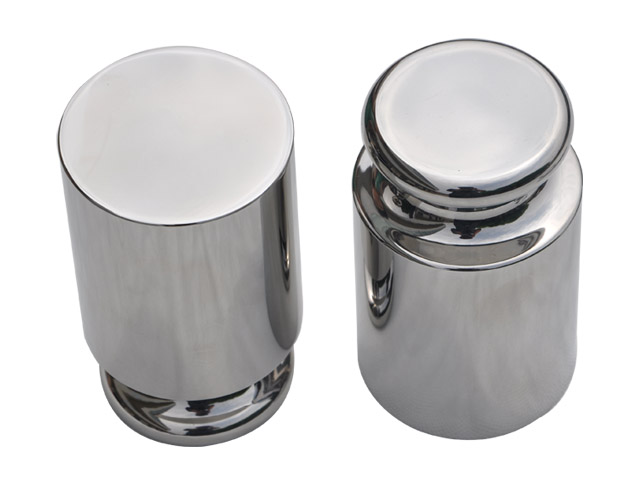
To fully grasp the significance of stainless steel calibration weights, it is essential to first understand the core purpose of calibration itself. Calibration is the process of verifying and adjusting the accuracy of a measuring instrument by comparing its readings to a known, standardized reference—in this case, the fixed mass of a calibration weight. Without this regular calibration, weighing devices can drift out of alignment due to a multitude of factors: regular wear and tear, exposure to environmental stressors, changes in temperature or humidity, mechanical shock, or even gradual buildup of contaminants on the weighing surface. Over time, this drift can lead to significant inaccuracies, with consequences that range from minor inconveniences to severe operational and financial setbacks. In sectors such as pharmaceuticals, food and beverage production, chemical manufacturing, and aerospace engineering, precise mass measurement is not just a matter of quality control—it is a critical requirement for safety, compliance with strict operational protocols, and the delivery of consistent, high-quality end products. A seemingly small error in weighing raw materials, finished goods, or experimental samples can result in wasted resources, flawed research outcomes, non-compliant products, or even safety hazards in high-stakes applications. This is where stainless steel calibration weights step in, providing a dependable, unchanging reference that keeps weighing systems calibrated and trustworthy, ensuring that every measurement taken is as close to true mass as possible.
The material composition of stainless steel is the foundation of its superiority for calibration weight applications, offering a rare combination of traits that few other metals can match. At its core, stainless steel is an alloy defined by its high chromium content, which forms a thin, passive oxide layer on the surface that acts as a powerful barrier against corrosion, rust, and oxidation. This corrosion resistance is a game-changer for calibration weights, as it allows them to maintain their structural integrity and mass stability even in harsh operating environments—including humid laboratories, industrial settings with exposure to mild chemicals, coastal areas with salt-laden air, and spaces prone to moisture buildup. Unlike iron or steel weights that rust and pit over time, altering their mass and rendering them inaccurate, stainless steel weights resist these damaging effects, preserving their precise mass value for extended periods. Additionally, stainless steel boasts exceptional density uniformity, a critical attribute for calibration weights. Each weight is crafted to have a consistent density throughout its structure, eliminating internal voids, uneven material distribution, or structural inconsistencies that could cause mass variations. This uniformity ensures that the weight’s nominal mass remains constant, regardless of minor surface wear or environmental exposure, providing a reliable reference every time it is used.
Beyond corrosion resistance and density uniformity, stainless steel offers remarkable mechanical durability and resistance to physical damage, further enhancing its suitability for calibration use. Calibration weights are frequently handled, transported, and placed on weighing surfaces, making them susceptible to scratches, dents, and impact damage. Stainless steel’s high tensile strength and hardness allow it to withstand routine handling without sustaining permanent deformation that would alter its mass. Even with regular use, the material retains its shape and structural integrity, avoiding the warping, chipping, or wear that can plague softer or less durable materials. This durability translates directly to longevity; a well-crafted stainless steel calibration weight can remain in service for years, if not decades, with proper care, reducing the need for frequent replacements and delivering long-term value for users. Moreover, stainless steel has a low magnetic permeability, a vital feature for calibrating sensitive electronic balances and precision scales that rely on non-magnetic operation. Magnetic interference from a calibration weight can disrupt the internal mechanisms of these high-precision instruments, leading to faulty readings, but stainless steel minimizes this risk, ensuring that the calibration process itself does not introduce errors. The material is also easy to clean and maintain, a practical advantage that supports consistent accuracy. Surface contaminants such as dust, oils, or residue can add minute amounts of mass to a weight, skewing calibration results, but stainless steel’s smooth, non-porous surface allows for quick and thorough cleaning with gentle cleaning agents and soft cloths, restoring the weight to its pristine condition without damaging its surface or altering its mass.
The manufacturing process of stainless steel calibration weights is a meticulous, precision-driven endeavor that leaves no room for error, as even the smallest flaw during production can compromise the weight’s accuracy. Every step, from the initial selection of raw materials to the final finishing and mass verification, is executed with extreme care to meet strict precision standards. The process begins with the sourcing of high-quality stainless steel billets or sheets, chosen for their consistent composition, purity, and absence of internal defects. These raw materials are then subjected to precision machining, which may include cutting, turning, milling, and grinding to shape the steel into the desired form—whether cylindrical, square, slotted, or with a grip handle for easy handling. Each dimension is carefully controlled to ensure the weight’s physical characteristics align with its intended mass value, with tolerances kept to an extremely narrow range to maintain precision. After shaping, the weights undergo specialized surface treatment, such as polishing or passivation, to enhance corrosion resistance, create a smooth, easy-to-clean finish, and remove any residual stresses or contaminants from the machining process. Passivation, in particular, strengthens the protective oxide layer on the stainless steel surface, boosting its ability to resist rust and chemical damage in diverse environments.
Once the physical shaping and surface treatment are complete, the most critical stage of production begins: precision mass adjustment and calibration. Each stainless steel weight is meticulously weighed on ultra-high-precision balances, and technicians make micro-scale adjustments to fine-tune the mass to its nominal value, removing tiny amounts of material or making controlled modifications to ensure the weight falls within the acceptable tolerance range for its intended accuracy class. This process requires skilled craftsmanship and advanced measuring equipment, as even a fraction of a milligram can impact the weight’s performance. After adjustment, every weight undergoes rigorous testing and verification to confirm its mass accuracy, stability, and compliance with strict metrological standards. Unlike mass-produced, low-quality weights, premium stainless steel calibration weights are individually inspected and tested to ensure they meet the required precision benchmarks, with no shortcuts taken in quality assurance. The end result is a calibration weight that is not just a piece of shaped metal, but a precision-engineered instrument that delivers consistent, repeatable performance in every calibration scenario.
Stainless steel calibration weights are available in a diverse range of sizes, styles, and accuracy classes to cater to the varied needs of different applications, ensuring that there is a suitable weight for every type of weighing instrument and operational requirement. Ranging from minuscule milligram weights used for calibrating laboratory analytical balances to large kilogram weights designed for industrial floor scales and heavy-duty weighing systems, the versatility of these tools is unmatched. Smaller, ultra-precise weights are typically used in research laboratories, pharmaceutical labs, and jewelry manufacturing, where measurements are taken at the micro or milligram level, and even the slightest inaccuracy is unacceptable. These compact weights are often designed with smooth, compact profiles to fit easily on sensitive balance pans and are handled with specialized tools to avoid contamination or mass alteration. Larger stainless steel weights, on the other hand, are built for durability and ease of handling in industrial settings, often featuring grip handles or robust designs to withstand the rigors of factory floors, warehouses, and manufacturing facilities. Some weights are designed as individual pieces, while others are part of comprehensive weight sets that include a range of nominal masses, allowing users to calibrate their scales across multiple measurement ranges with a single kit. These sets are often paired with protective cases to keep the weights safe during storage and transport, preventing damage, contamination, and loss.
The versatility of stainless steel calibration weights is further highlighted by their widespread use across an extensive array of industries and applications, each relying on their precision and reliability to maintain operational excellence. In scientific and research laboratories, these weights are foundational to experimental accuracy, ensuring that measurements of chemicals, samples, and materials are precise and reproducible—critical for validating research findings, conducting experiments, and advancing scientific knowledge. In the pharmaceutical industry, where strict guidelines govern the production of medications, stainless steel calibration weights are essential for calibrating equipment used to weigh active pharmaceutical ingredients, excipients, and finished dosages, ensuring dosage accuracy, product safety, and compliance with strict manufacturing standards. In the food and beverage sector, they play a key role in quality control and portioning, helping manufacturers maintain consistent product weights, adhere to labeling requirements, and avoid costly product recalls or non-compliance issues. Industrial manufacturing facilities rely on these weights to calibrate scales used for weighing raw materials, components, and finished products, optimizing production processes, reducing waste, and ensuring product consistency. Commercial enterprises such as warehouses, logistics centers, and retail operations use stainless steel calibration weights to verify the accuracy of shipping scales, checkout scales, and inventory weighing systems, ensuring fair trade practices, accurate billing, and reliable inventory management. Even in educational settings, these weights serve as valuable teaching tools, helping students understand the principles of mass, measurement, and calibration, and fostering a foundation in precision science.
Proper handling and maintenance are essential to preserving the accuracy and longevity of stainless steel calibration weights, as even the highest-quality weight can lose its precision if mistreated or neglected. Adhering to basic care practices ensures that these tools continue to perform reliably over their lifespan. First and foremost, weights should always be handled with clean, dry hands or specialized handling tools such as cotton gloves or tweezers to prevent the transfer of oils, sweat, or dirt from skin to the weight’s surface, which can add unwanted mass and cause contamination. When not in use, weights should be stored in a clean, dry, and dust-free environment, ideally in a protective case designed to prevent scratches, impacts, and exposure to moisture or chemicals. Avoid placing weights on rough or dirty surfaces, and never use them for purposes other than calibration, such as makeshift tools or paperweights, as this can cause physical damage or contamination. Regular cleaning is also crucial; weights should be wiped down gently with a soft, lint-free cloth and a mild, non-abrasive cleaning solution to remove surface contaminants, taking care not to scratch the polished surface. Harsh chemicals, abrasive scrubbers, or rough handling should be avoided at all costs, as these can damage the protective oxide layer, cause pitting, or alter the weight’s mass. Additionally, it is recommended to have calibration weights periodically re-verified by precision measurement experts to confirm their ongoing accuracy, especially if they are used frequently or exposed to harsh conditions. This proactive approach to maintenance ensures that any potential drift or damage is identified early, and the weight can be adjusted or replaced if needed, maintaining the integrity of the entire weighing system.
In a world that is increasingly reliant on data-driven decision-making, precise measurement has never been more critical, and stainless steel calibration weights remain at the heart of this precision ecosystem. They are a testament to the idea that reliability and consistency are just as important as cutting-edge technology in achieving accurate results; even the most advanced weighing scale is only as reliable as the calibration standard used to verify it. The enduring appeal of stainless steel as the material of choice for these critical tools lies in its perfect balance of practicality, performance, and longevity—traits that have stood the test of time and continue to meet the evolving demands of modern measurement applications. Unlike disposable or low-quality alternatives, stainless steel calibration weights offer a sustainable, long-term solution that reduces waste and ensures consistent performance, aligning with the growing emphasis on durability and reliability in industrial and scientific practices. They do not rely on complex technology or frequent upgrades to deliver value; instead, their strength lies in their simplicity, stability, and unwavering commitment to maintaining accurate mass reference.
As industries continue to advance, and the demand for tighter measurement tolerances and higher levels of precision grows, the role of stainless steel calibration weights will only become more vital. From cutting-edge research labs pushing the boundaries of scientific discovery to large-scale manufacturing facilities powering global supply chains, these unassuming metal weights will continue to serve as the quiet backbone of accurate measurement. They represent a fusion of material science, precision engineering, and practical functionality, embodying the core principles of metrology: accuracy, consistency, and reliability. Every time a scale is calibrated, every time a measurement is taken with confidence, and every time a process runs smoothly thanks to precise mass control, the stainless steel calibration weight plays an integral part. It is a small but mighty tool that often operates behind the scenes, yet its impact on the quality, safety, and efficiency of countless operations cannot be overstated. In the quest for precision across all facets of industry and science, the stainless steel calibration weight remains an essential, irreplaceable asset—one that will continue to uphold the standards of accurate measurement for years to come.
