





Changzhou Veidt Weighing Co., Ltd. © 2022 ALL RIGHTS RESERVED Privacy Policy | Calibration Weight | Test Weights | Cast Iron Weights | Standard Weights | Laboratory Weights | XML | SITEMAP
NEWS LIST
Calibration Weight Set
Saturday 10th July 2021 Back to list
A calibration weight set is a collection of precision measuring tools composed of multiple weights with different mass values, used to verify and calibrate the accuracy of various weighing instruments (such as scales, electronic scales, etc.). As a standard instrument for quality transmission, the calibration weight set plays a crucial role in laboratories, industrial production, quality inspection institutions, and other fields.
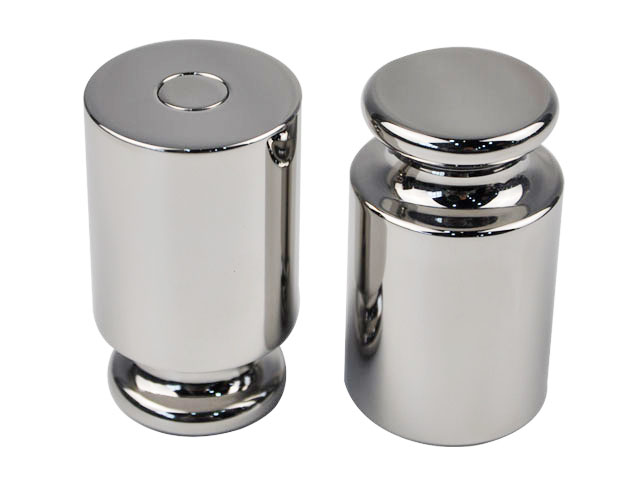
A complete set of weights typically includes weights of different specifications ranging from milligrams to kilograms, arranged in decimal or specific ratio combinations to meet calibration requirements for different range ranges. Modern weight sets are often made of stainless steel, non-magnetic stainless steel, or alloy materials, which have high stability, corrosion resistance, and resistance to magnetic interference.
Classification and grading of calibration weight sets
Classified by accuracy level
The International Organization for Legal Metrology classifies weights into the following levels:
E-grade: highest precision, used for calibrating F-grade weights and high-precision balances
F-grade: High precision, used for calibrating M-grade weights and precision scales
M-grade: Medium precision, used for industrial production and routine testing
M1-M3 grade: industrial grade accuracy, used for general weighing equipment
Classify by combination method
Decimal calibration weight set: such as 1g, 2g, 5g, 10g, 20g, 50g, etc
Combination calibration weight set: achieve multiple mass values through different weight combinations
Single standard weight: a single high-precision weight used for specific range calibration
Classified by material
Stainless steel weights: the most commonly used and cost-effective
Non magnetic stainless steel weights: used in high-precision applications to avoid magnetic field interference
Cast iron weights: Low cost, used in industrial environments
Chrome plated weights: surface coating enhances corrosion resistance
Regularly calibrating the calibration weight set has multiple important meanings:
Ensure measurement accuracy: ensure the reliability of quality value transmission
Maintain equipment performance: promptly detect and correct weight quality deviations
Improving product quality: reducing production quality issues caused by inaccurate weighing
Reduce operational risks: avoid economic losses caused by measurement errors
Key points of daily maintenance
Use specialized tweezers or gloves for handling, avoid direct hand contact
Store in a dry, stable temperature and humidity environment
Regularly check the surface condition of the weights and use a soft cloth for cleaning
Avoid mechanical impact and chemical corrosion
Establish a comprehensive weight management file
As the cornerstone of quality measurement, the accuracy of the calibration weight set directly affects the reliability of the entire measurement system. Through scientific and reasonable calibration and maintenance, the calibration weight set can ensure long-term optimal performance, providing solid support for scientific research, production, and quality inspection work. With the continuous development of measurement technology, weight calibration technology will also continue to advance, opening up new possibilities for accurate measurement.
