





Changzhou Veidt Weighing Co., Ltd. © 2022 ALL RIGHTS RESERVED Privacy Policy | Calibration Weight | Test Weights | Cast Iron Weights | Standard Weights | Laboratory Weights | XML | SITEMAP
NEWS LIST
calibration weight for ultra precision scale
Saturday 21st March 2026 Back to list
In the realm of high-precision measurement, ultra precision scales stand as indispensable tools across scientific research, industrial manufacturing, pharmaceutical development, and materials analysis, where even the tiniest deviation in weight readings can lead to significant errors in experimental results, product quality, and data reliability. At the heart of maintaining the accuracy and consistency of these sensitive weighing instruments lies the calibration weight—a meticulously crafted reference mass that serves as the foundational standard for verifying, adjusting, and validating scale performance over time. Unlike standard weights used for general weighing purposes, calibration weights designed for ultra precision scales are engineered to meet extraordinarily tight dimensional and mass tolerances, with every aspect of their production, material composition, and finishing tailored to minimize variables that could compromise measurement integrity. These weights are not mere metal objects; they are precision-engineered artifacts that bridge the gap between theoretical mass standards and real-world weighing applications, ensuring that ultra precision scales can deliver consistent, repeatable, and trustworthy readings across countless weighing cycles.
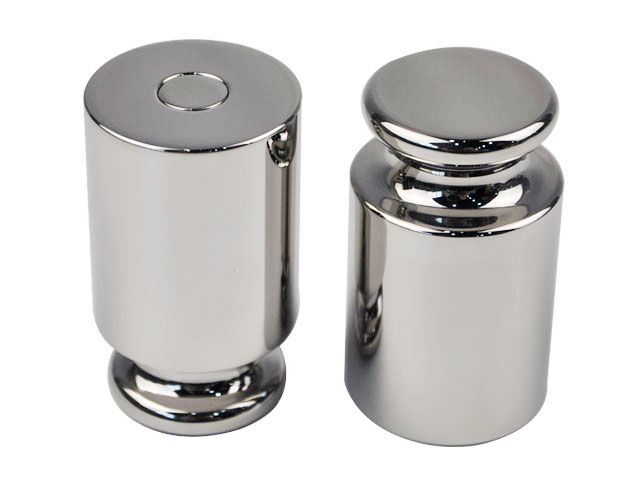
The development and production of calibration weights for ultra precision scales demand a level of craftsmanship and quality control that far exceeds that of ordinary industrial weights, as even minor flaws in material, structure, or surface finish can introduce measurable errors in high-sensitivity weighing environments. The selection of raw materials is one of the most critical stages in this process, as the material’s physical and chemical properties directly impact the weight’s stability, durability, and resistance to external interference. Materials chosen for these high-end calibration weights typically exhibit uniform density, low magnetic susceptibility, excellent corrosion resistance, and minimal thermal expansion, all of which are vital to preserving a consistent mass value under varying environmental conditions. Common materials include specialized non-magnetic stainless steel alloys, which offer a balanced combination of hardness, density stability, and resistance to oxidation and surface contamination; these alloys are carefully formulated to avoid magnetic properties that could interact with the internal components of electronic ultra precision scales, causing subtle shifts in weight measurements that would go undetected with less sensitive equipment. Other advanced materials may be used for the highest precision tiers, selected for their ability to maintain a constant mass over extended periods and resist damage from frequent handling, cleaning, and environmental exposure.
Density consistency is a non-negotiable characteristic of calibration weights for ultra precision scales, as variations in density across the weight’s structure can create discrepancies between its actual mass and its perceived mass during weighing. Ultra precision scales operate in environments where air buoyancy can affect measurement outcomes, especially when weighing lightweight samples or using extremely small calibration weights; a calibration weight with tightly controlled density ensures that the impact of air buoyancy is predictable and can be accounted for during calibration procedures, rather than introducing random, unquantifiable errors. Manufacturers employ strict material processing techniques to achieve uniform density, including precise melting, casting, and machining processes that eliminate internal voids, inclusions, or material inconsistencies that could alter mass distribution. Each weight is crafted as a single, solid piece for the highest precision grades, avoiding laminated or assembled structures that could shift or degrade over time, which is critical for maintaining long-term mass stability. This single-piece construction also prevents the accumulation of moisture, dust, or debris within internal gaps, a common issue with multi-component weights that can gradually change mass and reduce calibration accuracy.
Surface finish and dimensional precision are equally vital to the performance of calibration weights for ultra precision scales, as rough surfaces, sharp edges, or irregular dimensions can trap contaminants, cause uneven weight distribution, or lead to improper placement on the scale’s weighing pan. The surface of these weights is polished to a smooth, non-porous finish that resists the adhesion of dust, oil, fingerprints, and moisture, all of which can add minute amounts of mass and skew calibration results. This smooth finish also simplifies cleaning and maintenance, allowing users to remove surface contaminants without altering the weight’s physical structure or mass. Dimensional accuracy is strictly controlled during the machining process, with weights typically produced in standard cylindrical or compact geometric shapes that ensure stable, centered placement on the scale’s sensitive weighing platform. Smaller calibration weights, used for micro and ultra-micro precision scales, feature delicate, compact designs that minimize contact area with the scale and handling tools, reducing the risk of damage or mass transfer during use. Every dimension, from diameter and height to edge radius and surface flatness, is measured and verified to meet strict specifications, ensuring that each weight fits the intended calibration protocol and interacts consistently with the scale during testing.
Tolerance control is the defining feature that separates calibration weights for ultra precision scales from standard weights, as these specialized weights must adhere to extremely narrow allowable mass deviations to match the sensitivity of the scales they calibrate. The tolerance range for a calibration weight is determined by its intended precision class and the scale it is designed to calibrate, with higher precision weights having significantly smaller allowable deviations from their nominal mass value. For ultra precision scales, which can detect minute mass changes at the microgram or even sub-microgram level, calibration weights must have tolerances that are a fraction of the scale’s minimum readability, ensuring that any deviation in the weight’s mass is too small to impact the calibration process. Manufacturers use advanced mass comparators and precision measurement equipment to verify each weight’s actual mass against its nominal value, sorting and categorizing weights to meet specific tolerance requirements. This rigorous testing process is repeated multiple times throughout production, from initial machining to final finishing and quality assurance, to eliminate any weights that fall outside the specified tolerance range. Unlike mass-produced weights, which may have broader tolerances suitable for general use, these ultra-precise weights undergo individual testing and validation, ensuring that each unit meets the strict performance standards required for high-end scale calibration.
Environmental factors play a major role in the performance of both ultra precision scales and their corresponding calibration weights, making it essential for calibration weights to be resilient to common environmental variables that can affect mass and measurement accuracy. Temperature fluctuations are a primary concern, as most materials expand or contract with changes in temperature, which can alter both the weight’s dimensions and its apparent mass. The materials used in high-precision calibration weights are selected for their low coefficient of thermal expansion, minimizing dimensional changes across the typical temperature range of laboratory and controlled industrial environments. Humidity is another key factor, as high humidity can lead to moisture absorption on the weight’s surface, while low humidity can increase the risk of static electricity buildup, which can interfere with electronic scale sensors. The non-porous, corrosion-resistant materials used in these weights resist moisture absorption, and their smooth, non-static surface reduces the likelihood of static charge accumulation that could disrupt delicate weighing measurements. Additionally, calibration weights for ultra precision scales are designed to resist exposure to mild chemicals, dust, and airborne contaminants, which are common in laboratory and manufacturing settings; this resistance ensures that the weight’s mass remains stable even with regular use in moderately challenging environments, without requiring frequent recalibration or replacement due to environmental damage.
Proper handling and usage protocols are critical to preserving the accuracy and lifespan of calibration weights for ultra precision scales, as even careful but improper handling can introduce surface contaminants, cause minor damage, or alter mass. Unlike standard weights, which can be handled with bare hands, ultra-precise calibration weights require specialized handling tools to prevent contact with skin oils, fingerprints, or moisture. Users typically wear lint-free, powder-free gloves and use non-abrasive, non-magnetic forceps or tweezers to lift and place weights, avoiding direct contact with the weight’s surface. When placing a calibration weight on the scale’s pan, it is positioned gently and centrally to avoid damaging the scale’s sensitive load cell and to ensure an accurate, stable reading. Rushing or rough handling can not only damage the weight itself, causing scratches or dents that alter mass, but also disrupt the scale’s internal components, leading to long-term performance issues. After use, calibration weights are returned to a protective, lined storage case that shields them from dust, moisture, and physical damage when not in use; these cases are designed to hold each weight securely, preventing movement and scratches during storage and transport. It is also recommended to store calibration weights in the same controlled environment as the ultra precision scales they calibrate, allowing the weight to acclimate to the ambient temperature and humidity before use, eliminating temperature-related mass discrepancies that could affect calibration results.
Regular maintenance and periodic verification are essential to ensuring that calibration weights for ultra precision scales retain their accuracy over time, as even the most well-crafted weights can experience subtle mass changes or surface wear with prolonged use. Over weeks and months of use, weights may accumulate tiny amounts of surface contaminants, even with careful handling, or develop minor surface scratches that can trap debris. Routine cleaning involves gently wiping the weight’s surface with a clean, lint-free cloth dampened with a mild, non-abrasive cleaning solution or pure alcohol, followed by immediate drying with a fresh cloth to prevent moisture residue. Aggressive cleaning methods, abrasive materials, or harsh chemicals are avoided, as these can damage the weight’s surface finish or alter its mass. Beyond cleaning, periodic recalibration of the calibration weights themselves is necessary to confirm their mass remains within the specified tolerance range. This verification is performed using specialized high-precision mass measurement equipment, allowing users to detect any subtle shifts in mass that may have occurred due to wear, environmental exposure, or accidental damage. If a weight is found to have drifted outside its tolerance range, it is removed from service for reconditioning or replacement, ensuring that it does not compromise future scale calibrations. Establishing a consistent maintenance and verification schedule is key to upholding the reliability of the entire weighing system, as a single inaccurate calibration weight can lead to a chain of erroneous scale readings and flawed data across multiple applications.
The applications of calibration weights for ultra precision scales span a wide range of industries and fields where precise weight measurement is critical to operational success and data integrity. In scientific research laboratories, these weights are used to calibrate analytical and ultra-micro balances used in chemistry, physics, materials science, and biological research, where experiments often involve tiny sample sizes and require exact mass measurements to ensure reproducible results. In the pharmaceutical industry, ultra precision scales are used to measure active pharmaceutical ingredients, excipients, and dosage forms, and accurate calibration weights are essential to meeting strict quality control standards and ensuring product consistency and safety. In advanced manufacturing, particularly for electronics, aerospace, and precision engineering components, even minute weight differences can indicate defects or material inconsistencies, making calibrated ultra precision scales vital for quality inspection and compliance. These weights also play a key role in academic research institutions, metrology laboratories, and quality assurance facilities, where they serve as the primary reference for mass measurement traceability and internal quality control protocols. Across all these applications, the common thread is the need for unwavering measurement accuracy, and calibration weights act as the reliable foundation that makes this precision possible.
One common misconception about calibration weights for ultra precision scales is that they are interchangeable with standard industrial weights, but this oversight can lead to significant measurement errors and compromised data integrity. Standard weights are manufactured with broader tolerances, less strict material controls, and minimal attention to magnetic susceptibility or surface finish, making them unsuitable for calibrating high-sensitivity ultra precision scales. Using an inappropriate weight for calibration can result in the scale being adjusted to an incorrect reference point, leading to consistent inaccuracies in all subsequent weighings. These errors may be undetectable with casual testing but can have far-reaching consequences, from flawed research conclusions and failed product batches to non-compliance with internal quality standards. Selecting the correct calibration weight for a specific ultra precision scale requires matching the weight’s tolerance class, nominal mass range, and design to the scale’s capacity, readability, and intended use, ensuring that the calibration process is valid and reliable. Taking the time to choose the right weight and follow proper calibration protocols is a small investment that yields significant returns in terms of measurement confidence, data accuracy, and operational efficiency.
As measurement technology continues to advance and industries demand increasingly precise data, the role of calibration weights for ultra precision scales becomes even more critical. Manufacturers of these weights are continuously refining materials, production techniques, and quality control processes to push the boundaries of mass stability and tolerance control, keeping pace with the evolving capabilities of ultra precision scales. Researchers and industry professionals rely on these specialized weights to maintain the validity of their measurements, ensuring that scientific discoveries are grounded in accurate data, manufacturing processes produce consistent high-quality products, and quality control systems effectively identify deviations. The true value of these calibration weights lies not in their physical form, but in the trust and reliability they bring to every weighing operation; they are silent partners in precision measurement, working behind the scenes to uphold the standards that drive scientific progress, industrial innovation, and quality excellence. By prioritizing proper selection, handling, maintenance, and verification of these critical components, users can maximize the performance and lifespan of their ultra precision scales, ensuring consistent, accurate measurements for years to come. In a world where precision matters more than ever, calibration weights for ultra precision scales remain an essential and irreplaceable element of reliable mass measurement systems, supporting countless critical operations across global industries and research fields.
