





Changzhou Veidt Weighing Co., Ltd. © 2022 ALL RIGHTS RESERVED Privacy Policy | Calibration Weight | Test Weights | Cast Iron Weights | Standard Weights | Laboratory Weights | XML | SITEMAP
NEWS LIST
calibration weight for precision balance
Thursday 12th March 2026 Back to list
In the realm of precision measurement, where even the tiniest deviation can compromise the integrity of experimental data, industrial production metrics, and analytical results, calibration weights stand as the unsung cornerstones of reliable weighing operations. Precision balances, designed to detect minuscule changes in mass with exceptional sensitivity, rely entirely on calibrated reference weights to maintain their performance consistency over time. Without these standardized mass references, even the most sophisticated weighing instruments would drift into inaccuracy, rendering their readings untrustworthy and undermining the quality control, research, and manufacturing processes that depend on precise mass measurement. Calibration weights are not merely passive metal objects; they are meticulously crafted tools that bridge the gap between theoretical mass values and real-world weighing outcomes, ensuring that every measurement taken by a precision balance aligns with established metrological principles. Their role extends far beyond simple adjustment; they safeguard the validity of data across countless industries, from pharmaceutical development and chemical analysis to materials science and precision manufacturing, where consistent, accurate mass data is non-negotiable for operational success and compliance with rigorous quality standards.
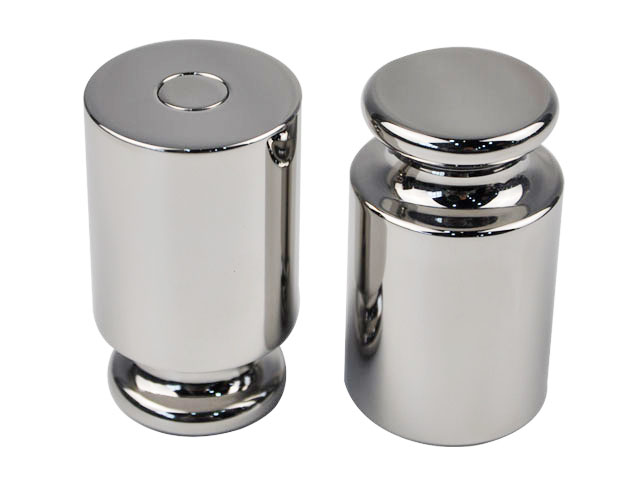
The design and manufacturing of calibration weights for precision balances are governed by strict attention to material properties, dimensional stability, and resistance to external factors that could alter mass integrity. Selecting the right materials is a foundational step, as the physical and chemical characteristics of the weight directly impact its long-term accuracy and suitability for use with sensitive precision balances. Common materials include high-grade stainless steel, chosen for its exceptional resistance to corrosion, abrasion, and magnetic interference—critical traits for maintaining mass stability in diverse laboratory and industrial environments. Stainless steel weights also boast a consistent density profile, minimizing the risk of volume-related errors that can occur when weighing in air, where buoyancy effects may skew results for materials with divergent densities. Other specialized materials may be used for ultra-fine calibration applications, such as non-magnetic alloys that eliminate magnetic attraction between the weight and the balance’s internal components, a common source of measurement distortion in high-sensitivity balances. Every calibration weight is engineered to have a smooth, uniform surface free of imperfections, as scratches, dents, or residual contaminants can trap dust, moisture, or chemical residues, gradually altering the weight’s actual mass and introducing systematic errors into balance calibration routines. The manufacturing process also emphasizes precise machining to ensure uniform weight distribution, preventing off-center loading issues that can disrupt the balance’s internal weighing mechanism and produce erratic readings.
Understanding the classification and selection of calibration weights is essential for maximizing the performance of precision balances, as mismatched weight grades and balance sensitivities are a leading cause of calibration failure. Calibration weights are categorized based on their permissible error margins, with each category tailored to meet the resolution and accuracy demands of specific types of precision balances. Higher-precision weights, characterized by extremely narrow tolerance ranges, are reserved for analytical and micro-balances that measure mass to the sub-milligram level, where even a slight deviation in the reference weight can amplify into significant measurement errors. Mid-range precision weights are suitable for general laboratory precision balances used for routine analytical work and quality testing, offering a balanced combination of accuracy and practicality for day-to-day operations. Lower-tolerance weights, while still meeting strict metrological standards, are intended for larger-capacity precision balances used in industrial settings where high sensitivity is less critical but consistent mass reference remains necessary. When selecting calibration weights, several key factors must be evaluated beyond tolerance class: the maximum weighing capacity of the balance, its minimum readability, the typical sample sizes being measured, and the environmental conditions of the weighing space. A weight set that covers the full range of the balance’s operating capacity is ideal, as it allows for multi-point calibration to verify linearity and accuracy across the entire weighing range, rather than just a single point. Additionally, weights should be selected to avoid overloading the balance during calibration, as excessive force can damage the instrument’s delicate load cell or internal lever systems, leading to permanent performance degradation.
Proper handling and operational protocols for calibration weights are just as vital as their material quality and classification, as careless use can quickly diminish their accuracy and shorten their usable lifespan. Even minor mishandling, such as touching the weight surface with bare hands, can leave behind oils, salts, and skin residues that accumulate over time and add unintended mass to the weight. For this reason, trained personnel always use specialized tools—such as lint-free forceps, non-slip tweezers, or clean, powder-free gloves—to handle calibration weights, ensuring no direct contact between skin and the weight surface. When placing a weight on a precision balance, it should be positioned gently and centrally on the weighing pan to avoid mechanical shock and ensure even load distribution, which prevents stress on the balance’s internal sensors and promotes stable, consistent readings. Rushing the calibration process or moving weights abruptly can also cause air currents around the balance pan, a often-overlooked factor that can disrupt sensitive measurements and lead to false calibration results. Before each calibration session, the weighing pan and the surface of the calibration weight should be inspected for dust, debris, or condensation; a soft, lint-free cloth or compressed air can be used to remove loose particles, but harsh cleaning agents or abrasive materials should never be used, as they can scratch or corrode the weight surface. During calibration, it is crucial to allow sufficient stabilization time for both the balance and the weight, as temperature fluctuations and thermal expansion can temporarily alter mass dimensions. Precision balances are highly responsive to changes in ambient temperature, and placing a cold or warm weight on the pan can create temporary measurement drift until thermal equilibrium is reached.
Environmental control plays a pivotal role in preserving the accuracy of calibration weights and ensuring valid balance calibration, as external conditions can exert a profound impact on both the weights and the precision balances themselves. Calibration weights should be stored and used in environments with stable temperature, controlled humidity, and minimal air movement, as these factors directly influence mass stability and measurement repeatability. High humidity can promote moisture absorption on the weight surface or lead to corrosion in less resistant materials, while extreme dryness can cause static electricity buildup, which may attract dust particles or interfere with the balance’s electronic components. Temperature variations are particularly problematic, as even small changes can cause the metal in calibration weights to expand or contract slightly, changing their effective mass and introducing calibration errors. Drafts from open windows, air vents, or foot traffic can also create air pressure fluctuations around the balance pan, causing unstable readings and making it impossible to achieve accurate calibration. For optimal results, calibration should be performed in a dedicated weighing area isolated from vibration, as even minor vibrations from nearby equipment, footfalls, or machinery can disrupt the balance’s internal mechanisms and prevent accurate weight detection. Additionally, calibration weights should be allowed to acclimate to the ambient temperature of the weighing space for several hours before use, especially if they have been stored in a different environment, to eliminate thermal discrepancies that could skew measurement results.
Regular maintenance and periodic recalibration of calibration weights are indispensable practices for sustaining long-term measurement reliability, as even the most well-crafted weights are subject to gradual wear and performance drift over time. Daily visual inspections should be conducted to check for signs of damage, corrosion, surface pitting, or accumulated contaminants; any weight showing visible defects should be removed from service immediately for cleaning, inspection, or recalibration, as damaged weights cannot provide accurate reference values. Routine cleaning should be performed using gentle, non-abrasive methods tailored to the weight’s material, avoiding harsh chemicals that could react with the metal and alter its mass. For stainless steel weights, a mild solvent or distilled water can be used to remove stubborn residues, followed by thorough drying with a lint-free cloth to prevent water spots. Beyond visual checks and cleaning, calibration weights require periodic recalibration against higher-tier reference standards to verify their mass accuracy and detect any subtle deviations that may have occurred due to wear, handling, or environmental exposure. The frequency of recalibration depends on usage intensity, storage conditions, and the criticality of the measurements being taken; weights used daily in high-demand settings will require more frequent checks than those used occasionally in low-stress environments. Keeping detailed records of each calibration weight’s usage, cleaning schedule, and recalibration history is a best practice that supports traceability and accountability, allowing operators to track performance trends and address potential issues before they compromise measurement accuracy. Neglecting maintenance and recalibration not only risks inaccurate balance readings but can also lead to costly errors in product formulation, experimental data analysis, and quality assurance testing.
The impact of high-quality calibration weights extends across every industry that relies on precision weighing, highlighting their universal importance in modern science, manufacturing, and commerce. In pharmaceutical and biotechnology labs, precise mass measurements are critical for formulating medications, conducting clinical research, and complying with strict quality standards; even a small error in active ingredient measurement can compromise drug efficacy and patient safety, making reliable calibration weights an essential part of regulatory compliance. In chemical research and material science, accurate mass data is foundational for identifying compounds, determining reaction stoichiometry, and characterizing material properties, where inconsistent measurements can lead to flawed conclusions and wasted research resources. Manufacturing industries, from aerospace and electronics to food and beverage production, depend on precision weighing for quality control, raw material verification, and product consistency; calibrated weights ensure that production processes remain within specified tolerances, reducing waste, rework, and product defects. In academic and research institutions, calibration weights enable students and researchers to conduct experiments with confidence, knowing that their mass measurements are reliable and reproducible— a cornerstone of scientific integrity. Even in forensic and environmental testing labs, where precise measurements can have far-reaching legal and ecological implications, calibration weights provide the consistent reference needed to produce defensible, accurate results. Across all these sectors, calibration weights serve as the quiet backbone of quality and precision, turning the sensitive capabilities of precision balances into actionable, trustworthy data that drives innovation, compliance, and operational excellence.
Investing time and resources into selecting, handling, and maintaining calibration weights is not just a routine task—it is a strategic commitment to measurement quality that yields tangible long-term benefits. While it may be tempting to prioritize cost or convenience over precision in calibration weight selection, cutting corners in this area inevitably leads to increased errors, repeated calibrations, equipment downtime, and compromised data integrity. Precision balances are sophisticated investments designed to deliver exceptional accuracy, and their performance is only as reliable as the reference weights used to calibrate them. By prioritizing high-quality, appropriately graded calibration weights, adhering to strict handling and storage protocols, and maintaining a consistent schedule of maintenance and recalibration, operators can maximize the lifespan of their precision balances, minimize measurement variability, and ensure that every weighing result is accurate, repeatable, and fit for its intended purpose. In a world where precision and reliability are paramount, calibration weights remain an irreplaceable component of the metrological ecosystem, providing the stable, consistent mass reference that makes high-precision weighing possible. Every detail, from material selection to daily handling, contributes to the overall effectiveness of these tools, reinforcing their role as essential assets for any operation that demands uncompromising accuracy in mass measurement.
