





Changzhou Veidt Weighing Co., Ltd. © 2022 ALL RIGHTS RESERVED Privacy Policy | Calibration Weight | Test Weights | Cast Iron Weights | Standard Weights | Laboratory Weights | XML | SITEMAP
NEWS LIST
calibration weight for pound scale
Saturday 21st March 2026 Back to list
In every setting where weight measurement in pounds plays a vital role—from small retail shops and commercial kitchens to large industrial warehouses, logistics hubs, and laboratory testing spaces—the reliability of pound scales stands as a non-negotiable factor. These scales are relied upon to deliver consistent, precise readings that guide daily operations, financial transactions, quality control protocols, and even safety compliance measures. At the heart of maintaining this reliability lies the calibration weight for pound scale, a seemingly simple yet profoundly important tool that serves as the fixed reference point for verifying and adjusting scale accuracy. Without properly calibrated weights, even the most well-built pound scales can drift from their intended precision over time, leading to a cascade of unintended consequences that impact efficiency, cost, and trust across countless applications. Calibration weights designed specifically for pound-based scales are crafted to match the imperial measurement system, with values marked in pounds and often fractional pound increments to align with the full range of scale capacities, from small countertop scales used for precise portioning to heavy-duty floor scales that measure large bulk loads. Each weight is engineered to hold a stable, unchanging mass under normal operating conditions, making it the universal benchmark for scale calibration across diverse industries and everyday use cases.
To understand the true value of calibration weights for pound scales, it is essential to first grasp why regular calibration is necessary for all weighing equipment. Pound scales, whether mechanical or digital, are not immune to factors that compromise their accuracy over weeks, months, and years of use. Daily wear and tear on internal components, minor bumps or shifts during transportation or repositioning, exposure to temperature fluctuations, humidity, dust, or residue buildup, and even repeated loading and unloading of items can gradually alter the scale’s internal balance and sensor responsiveness. Mechanical scales may experience spring tension changes or gear misalignment, while digital scales can face sensor drift or calibration setting shifts that cause readings to run high or low. A scale that reads just a fraction of a pound off might seem insignificant at first glance, but over time, these small inaccuracies add up to tangible impacts. In commercial settings, under-weighing products can lead to lost revenue for businesses, while over-weighing can erode customer trust and lead to unnecessary financial losses for buyers. In industrial settings, inaccurate weight readings can disrupt production workflows, compromise material mixing ratios, or lead to incorrect inventory counts, while in laboratories or research settings, imprecise measurements can skew test results and invalidate data sets. Calibration weights eliminate this uncertainty by providing a known, fixed mass that allows operators to check scale readings in real time and make precise adjustments to restore accuracy, ensuring that every pound measurement aligns with a consistent standard.
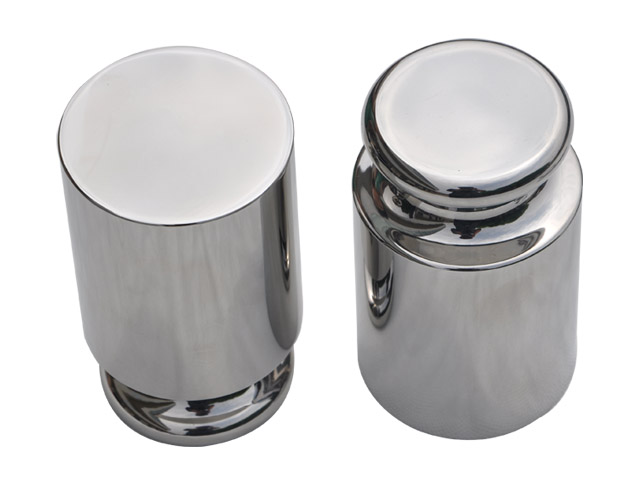
Calibration weights for pound scales are manufactured with careful attention to material selection, structural design, and mass consistency, all tailored to withstand regular handling and long-term use without losing their calibrated mass. The most common materials used for these weights include cast iron, stainless steel, and solid brass, each chosen for specific environmental and operational needs. Cast iron weights are a popular choice for heavy-duty industrial and commercial applications, as they offer exceptional durability, resistance to physical impact, and stability for larger pound increments, such as 10-pound, 25-pound, 50-pound, and higher values. These weights are often finished with a protective coating to prevent rust and corrosion, making them suitable for use in warehouses, shipping areas, and manufacturing floors where conditions may be less controlled. Stainless steel calibration weights, by contrast, are preferred for more sensitive environments, including commercial food service, laboratories, pharmacies, and retail settings, where cleanliness and resistance to moisture, oils, and chemical residues are critical. Stainless steel resists corrosion and is easy to clean and sanitize, ensuring that no external contaminants alter the weight’s mass, and it is commonly used for smaller pound increments, fractional pounds, and precision weight sets. Solid brass weights are reserved for high-precision applications where minimal mass variation is required, offering a dense, stable material that holds its calibration value exceptionally well over time. Regardless of the material, all calibration weights for pound scales are crafted to strict mass tolerances, with no unnecessary gaps, hollow spaces, or adjustable internal components that could shift or change the overall weight, ensuring that each weight retains its designated pound value through consistent use.
The design of pound scale calibration weights also prioritizes practicality and safe handling, as proper usage directly impacts both the longevity of the weight and the accuracy of the calibration process. Most standard weights feature a compact, symmetrical shape—such as cylindrical, square, or rectangular blocks—with smooth, rounded edges to prevent damage to scale platforms and to avoid injury during handling. Larger heavy-duty weights often include integrated grip handles or lifting points, allowing operators to place and remove them safely without dropping or jarring the weight, which could cause dents, scratches, or internal structural damage that alters mass. Smaller precision weights, typically used for compact bench scales and portion scales, are often designed as flat discs or small cubes, easy to handle with clean, dry hands or soft-tipped tools to avoid transferring oils, dust, or debris onto the weight surface. Many calibration weights come in organized sets that cover a range of pound increments, from fractional pounds like half a pound or a quarter pound up to larger full-pound values, enabling operators to calibrate scales across their entire measurement range, not just at a single weight point. This full-range calibration is crucial, as scales can display different levels of inaccuracy at light, medium, and heavy load points; testing with multiple calibration weights ensures that the scale performs consistently from its minimum to maximum capacity, eliminating linearity errors that might go unnoticed with a single weight test.
Using calibration weights correctly on a pound scale is a straightforward process, but it requires attention to detail and consistent technique to yield reliable results. Before beginning any calibration, the scale should be placed on a flat, stable, level surface free from vibration, drafts, or external interference that could affect readings. The scale platform should be completely clean and free of any debris, dust, or leftover items, as even small particles can add extra mass and skew calibration results. The calibration weights themselves should also be inspected and cleaned gently with a soft, lint-free cloth to remove any surface contaminants; it is important to avoid harsh chemicals, abrasive scrubbers, or excessive moisture that could damage the weight’s protective finish or alter its mass. Once the scale and weights are prepared, the scale should be powered on and allowed to warm up for the recommended time, especially for digital models, to ensure internal sensors reach a stable operating state. The operator then begins by placing the smallest appropriate calibration weight gently in the center of the scale platform, waiting for the reading to stabilize fully before comparing it to the known pound value of the weight. If the scale reading matches the weight’s designated mass, no adjustment is needed for that increment; if there is a discrepancy, the scale’s calibration settings can be adjusted following the manufacturer’s guidelines to align the reading with the calibration weight. This process is repeated with increasingly larger weights across the scale’s full capacity, verifying accuracy at multiple intervals to ensure consistent performance. After calibration is complete, the weights should be removed carefully and stored properly, and a final test with a random known weight can be performed to confirm that the scale is functioning accurately before resuming regular use.
Proper storage and maintenance of calibration weights for pound scales are just as important as correct usage, as these steps preserve the weight’s mass stability and extend its usable life. Calibration weights should never be left exposed on work surfaces, floors, or in areas where they can be knocked over, scratched, or exposed to moisture, extreme temperatures, or corrosive substances. Instead, they should be stored in a dedicated, padded storage case or tray that keeps each weight separate and prevents them from rubbing against one another, which can cause surface wear and minor mass loss over time. The storage area should be clean, dry, and temperature-stable, avoiding direct sunlight, damp basements, or industrial areas with chemical fumes that could corrode or damage the weight material. When handling weights, operators should avoid touching the surface with bare hands excessively, as skin oils and sweat can leave residues that accumulate and affect mass; for small precision weights, using soft-tipped tweezers or clean cotton gloves is recommended to maintain purity. Regular inspection of calibration weights is also essential: check for signs of damage, such as dents, cracks, rust, chipped coating, or warping, as any physical defect can compromise the weight’s accuracy. If a weight shows visible damage or if there is suspicion that its mass has shifted, it should be removed from use and re-evaluated before being used for future calibrations. With proper care, a high-quality calibration weight can maintain its consistent mass for years, providing a reliable reference for countless scale calibration cycles and ensuring ongoing measurement accuracy.
The applications for calibration weights with pound scales span nearly every industry and everyday setting where imperial weight measurements are standard, highlighting their universal importance. In retail environments, such as grocery stores, delis, and specialty shops, pound scales are used to weigh fresh produce, meat, cheese, and bulk goods, and accurate calibration ensures that customers are charged fairly and businesses maintain compliance with fair trade practices. In commercial food service and catering, precise pound measurements are critical for recipe consistency, portion control, and inventory management, directly impacting food cost, taste consistency, and customer satisfaction. Industrial facilities rely on heavy-duty pound scales to measure raw materials, finished products, packaging supplies, and shipping cargo; accurate calibration prevents overproduction, reduces material waste, and ensures accurate shipping weights that avoid costly billing errors or delivery delays. Logistics and shipping companies use pound scales to weigh packages, pallets, and freight, where even a small weight error can lead to incorrect shipping charges, delayed deliveries, or compliance issues with transportation weight limits. Laboratories and testing facilities use precision pound scales for research, product development, and quality testing, where accurate measurements are essential for validating test results, ensuring product safety, and meeting internal quality standards. Even in small businesses, home workshops, and agricultural settings, pound scales are used for weighing supplies, feed, tools, and homemade products, and calibration weights keep these tools reliable for personal and small-scale commercial use. In every one of these scenarios, the calibration weight acts as the silent foundation of trustworthy weight measurement, turning a simple scale into a dependable tool for decision-making and operation.
One common misconception about pound scales is that they only need calibration when they appear to be malfunctioning, but this belief overlooks the gradual, often unnoticeable drift that occurs with regular use. Calibration is not a one-time task but a routine maintenance step that should be scheduled at regular intervals based on usage frequency and operating conditions. Scales used daily in high-volume settings may require calibration every few weeks, while scales used less frequently in low-impact environments may only need calibration every few months. Additionally, calibration should be performed any time a scale is moved to a new location, dropped or bumped, or exposed to extreme environmental conditions, as these events can immediately disrupt accuracy. Relying on a scale’s last known calibration or assuming it remains accurate without verification is a risky practice that can lead to consistent, unrecognized errors. Calibration weights make this routine maintenance accessible and straightforward, allowing businesses and operators to take control of measurement accuracy without relying on external service providers for every minor adjustment. This not only saves time and resources but also ensures that scales are always operating at their best, minimizing the risk of errors and their associated costs.
As measurement needs continue to evolve and industries place greater emphasis on consistency and accountability, the role of calibration weights for pound scales remains unchanged and irreplaceable. While modern digital scales come with advanced features and automated settings, they still require a fixed, physical reference point to validate their readings, and calibration weights provide that unchanging standard. Unlike digital tools or temporary references, calibration weights offer tangible, reliable accuracy that does not rely on batteries, software, or electronic components, making them a timeless solution for scale maintenance. Investing in high-quality calibration weights and implementing a regular calibration schedule is a small but impactful step for any individual or business that uses pound scales, as it protects against financial losses, preserves customer trust, maintains operational efficiency, and ensures that all weight measurements are consistent and reliable. Whether used for small-scale retail transactions, large industrial operations, or precise laboratory work, calibration weights for pound scales are an essential part of responsible scale ownership, turning potential measurement uncertainty into consistent, actionable accuracy that supports success across every application.
