





Changzhou Veidt Weighing Co., Ltd. © 2022 ALL RIGHTS RESERVED Privacy Policy | Calibration Weight | Test Weights | Cast Iron Weights | Standard Weights | Laboratory Weights | XML | SITEMAP
NEWS LIST
calibration weight for ounce scale
Saturday 21st March 2026 Back to list
Precision in weight measurement is a cornerstone of countless daily operations and professional workflows, and ounce scales stand as one of the most widely used tools for quantifying small to moderate masses across diverse settings. From crafting small batches of handmade goods and portioning ingredients in home kitchens to conducting detailed laboratory tests, processing materials in small-scale manufacturing, and managing inventory in retail spaces, ounce scales deliver consistent, easy-to-read measurements that rely on one critical component to maintain their reliability: calibration weights designed specifically for ounce-based increments. Without these precisely crafted reference weights, even the most well-built ounce scale will gradually lose accuracy over time, affected by regular use, minor physical impacts, changes in environmental conditions like temperature and humidity, and normal wear on internal weighing mechanisms. A calibration weight for an ounce scale serves as a fixed, known reference point, allowing users to verify the scale’s readings, make necessary adjustments, and ensure that every measurement taken aligns with true mass values, eliminating the risk of errors that can disrupt processes, compromise quality, or lead to inconsistent results in both personal and professional applications.
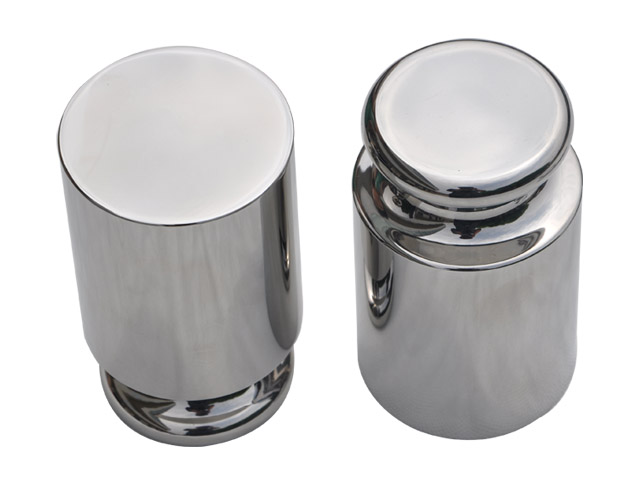
To understand the full value of ounce scale calibration weights, it is first important to recognize the unique nature of ounce measurements and how they differ from other weight units. The ounce is a compact unit of mass that falls into the category of smaller, more precise measurements, making ounce scales ideal for tasks where larger weight units like pounds or kilograms would be too imprecise. This focus on smaller increments means that even a tiny deviation in the scale’s calibration can have a noticeable impact on the final reading; a difference of just a fraction of an ounce may seem insignificant in some contexts, but it can alter ingredient ratios in baking, affect the potency of mixed solutions in a lab, change the portion size of packaged goods, or throw off the balance of handmade crafts that require exact material amounts. Calibration weights for ounce scales are manufactured to match these specific ounce increments, ranging from very small fractional ounces—such as one-eighth, one-quarter, and one-half ounces—to full ounces and larger multi-ounce values, covering the full weighing range of most standard and specialty ounce scales. Each weight is engineered to hold a consistent mass with minimal deviation, ensuring that when placed on the scale’s weighing platform, it provides a clear, accurate benchmark for the scale to measure against.
The materials used to create ounce scale calibration weights are carefully selected to prioritize stability, durability, and resistance to factors that could alter their mass over time, as even minor changes to the weight itself will render it useless as a reference tool. Common materials include high-grade stainless steel and solid brass, both of which offer exceptional resistance to corrosion, rust, and tarnish—issues that can add or remove tiny amounts of mass from a weight and throw off its accuracy. Stainless steel is particularly popular for its lightweight yet sturdy build, smooth surface that resists dust and debris buildup, and ability to withstand regular handling without scratching or denting easily. Brass calibration weights, meanwhile, offer a denser composition that holds mass consistently in stable environments, making them a reliable choice for indoor settings where environmental conditions are controlled. Unlike generic weights or everyday objects that people may mistakenly use as makeshift references, such as coins or small household items, purpose-built ounce calibration weights are free from inconsistencies in mass distribution, surface texture, and material density. Everyday items may seem to weigh a certain amount, but their mass can vary slightly due to manufacturing differences, wear, or accumulated dirt, making them completely unsuitable for reliable scale calibration. Only dedicated calibration weights are designed to maintain a fixed, unchanging mass, ensuring that every calibration session produces trustworthy results.
Selecting the right calibration weights for an ounce scale requires careful consideration of the scale’s specifications and intended use, as mismatched weights will not provide an accurate calibration and may even lead to false confidence in the scale’s performance. The first factor to evaluate is the scale’s weighing range and readability; a scale designed for very small fractional ounce measurements will need calibration weights that match those tiny increments, while a scale that handles larger ounce values up to several pounds (converted to ounces for measurement) will require a set of weights that covers the full upper end of its capacity. It is generally recommended to use multiple calibration weights across the scale’s entire weighing range, rather than relying on a single weight, to test for linear accuracy—meaning the scale remains consistent from its lightest measurable weight to its maximum capacity. For example, a scale that measures from one-eighth of an ounce to 16 ounces should be calibrated with small fractional weights, mid-range single and double ounce weights, and a larger weight near its maximum capacity to ensure that every segment of the measurement scale performs accurately. Additionally, the physical size and design of the calibration weight should match the scale’s weighing platform; weights that are too large may not sit evenly on the platform, while weights that are overly small may be difficult to place precisely in the center, which is the optimal spot for accurate readings on most ounce scales.
Proper handling of ounce scale calibration weights is just as important as selecting the right weights, as careless handling can damage the weight or introduce contaminants that affect its mass. Users should always handle calibration weights by their edges or designated grip areas, avoiding direct contact with the flat weighing surface as much as possible; skin oils, dirt, and moisture from hands can leave a residue on the weight that adds a tiny but measurable amount of mass, gradually throwing off its accuracy over time. For extremely small calibration weights used for precision fractional ounce measurements, it is advisable to use soft, non-abrasive tools like plastic tweezers or lint-free gloves to handle the weight, eliminating any risk of surface contamination. When placing a calibration weight on the scale, it should be set down gently and evenly, never dropped or slid across the platform, as sudden impacts can damage the scale’s internal sensors or mechanical components, as well as cause dents or scratches on the weight itself. After use, the weight should be lifted carefully and returned to its storage space immediately, rather than being left on the scale or exposed to open air where dust, moisture, or accidental bumps can occur.
The step-by-step process of calibrating an ounce scale with a dedicated calibration weight follows a consistent, straightforward routine that ensures reliable results, regardless of whether the scale is a digital model or a mechanical balance. Before beginning any calibration, the scale should be placed on a flat, stable, level surface free from vibrations, drafts, or sudden movements—any of these factors can disrupt the scale’s ability to take a steady reading. The scale should then be turned on and allowed to warm up for a few minutes, especially digital models, which need time to stabilize their internal electronic components. Once the scale is ready, it should be zeroed out or tared to remove any residual readings and ensure the display shows zero with nothing on the platform. Next, the selected calibration weight is placed gently in the center of the weighing platform, and the user waits for the scale’s reading to stabilize completely; this may take a few seconds for mechanical scales and a moment for digital scales to process the weight. The displayed reading is then compared to the known mass of the calibration weight. If the reading matches the weight’s stated value exactly, the scale is properly calibrated and ready for use; if there is a discrepancy, the scale can be adjusted following the basic operational guidelines for that model, repeating the process with the calibration weight until the reading aligns perfectly with the reference mass. For comprehensive calibration, this process should be repeated with multiple weights across the scale’s range, as mentioned earlier, to confirm consistent accuracy at all measurement levels.
Regular calibration with dedicated ounce weights is not a one-time task but a recurring practice that adapts to the scale’s frequency of use and working environment. Scales that are used daily, moved frequently, or exposed to varying environmental conditions will require more frequent calibration—often every few weeks or months—while scales that are used occasionally and kept in a fixed, stable location may only need calibration every few months to a year. Even scales that are used lightly can drift out of calibration over time due to natural wear on internal parts, so setting a consistent calibration schedule is key to maintaining long-term reliability. It is also important to check the calibration weight itself periodically for signs of damage or wear, such as scratches, dents, corrosion, or visible dirt buildup. A damaged or contaminated calibration weight cannot provide an accurate reference, so any weight that shows these signs should be cleaned gently with a soft, lint-free cloth and a mild, non-abrasive cleaning solution if needed, then dried thoroughly before use. If damage is significant enough to alter the weight’s shape or mass, it should be replaced to ensure continued calibration accuracy.
The applications where accurate ounce scale calibration makes a tangible difference span nearly every industry and daily activity that relies on precise small-weight measurements. In home and artisanal settings, bakers and cooks use ounce scales to portion ingredients like spices, extracts, and small amounts of flour or sugar, where even a small measurement error can ruin a recipe’s texture or flavor; jewelry makers and crafters rely on accurate ounce measurements to weigh precious metals, beads, and small components, ensuring that each piece meets design specifications and material requirements. In laboratory and research settings, ounce scales (and their metric equivalents) are used to measure chemical reagents, sample materials, and experimental compounds, where precise weights are critical to producing consistent, repeatable test results and valid scientific data. Small-scale manufacturing and packaging operations use ounce scales to portion small parts, raw materials, and finished products, maintaining consistency across batches and meeting internal quality standards without relying on larger, less precise weighing tools. Retail environments, such as specialty food shops, craft stores, and small bulk item vendors, use ounce scales to weigh products for customers, ensuring that buyers receive the exact amount they pay for and building trust through consistent, honest measurements. In all these scenarios, the calibration weight acts as the silent foundation of accuracy, turning a simple weighing tool into a reliable resource for consistent results.
One common misconception about ounce scale calibration is that a scale that seems to “work fine” does not need regular calibration, but this line of thinking overlooks the gradual, often unnoticeable drift in accuracy that occurs with all weighing devices over time. A scale may give a reading that seems correct to the naked eye, but a small, consistent error can compound over multiple uses, leading to significant discrepancies in large batches, long-term projects, or cumulative inventory counts. For example, a scale that consistently reads one-eighth of an ounce higher than the true mass will add up to a full ounce of error after just eight measurements, which can be costly in terms of wasted materials or inaccurate product portions. Calibration weights eliminate this risk by providing a fixed, objective reference, allowing users to catch and correct small errors before they become larger problems. Another misconception is that all calibration weights are interchangeable regardless of unit, but using a gram weight or pound weight to calibrate an ounce scale will not provide accurate results, as the unit conversions and incremental differences do not align perfectly. Only weights designed specifically for ounce measurements can provide the precise reference needed for an ounce scale to perform at its best.
Storage of ounce calibration weights is another key element of maintaining their accuracy and longevity, as proper storage protects the weights from environmental damage and physical harm when they are not in use. Calibration weights should be stored in a dedicated, padded case or compartmentalized container that keeps each weight separate from the others, preventing them from rubbing against each other and causing scratches or dents. The storage area should be clean, dry, and free from extreme temperatures, high humidity, or exposure to chemicals and corrosive substances—all of which can damage the weight’s surface or alter its mass. Avoid storing calibration weights near windows, heating vents, or areas with high moisture, such as kitchens or bathrooms, unless the storage container is fully sealed and moisture-resistant. When stored correctly, a high-quality ounce calibration weight can maintain its accurate mass for years, providing consistent calibration results throughout the lifespan of the scale it is used with. It is also helpful to keep the storage case near the scale when possible, making it easy to access the weights quickly for regular calibration checks and reducing the risk of loss or misplacement.
Beyond basic calibration, ounce scale weights can also be used for routine spot checks between full calibration sessions, adding an extra layer of quality control to daily weighing tasks. A quick spot check involves placing a single, commonly used calibration weight on the scale at the start of a work session or periodically throughout the day to confirm that the scale is still reading accurately. This takes only a few seconds but can catch sudden changes in accuracy caused by accidental bumps, power fluctuations (for digital scales), or sudden environmental changes. If a spot check reveals a minor discrepancy, a full calibration can be performed immediately to correct the issue before any inaccurate measurements are taken. This proactive approach to scale maintenance ensures that measurements remain reliable at all times, reducing the risk of errors that could disrupt work, waste materials, or compromise the quality of finished products or test results.
As weighing technology continues to evolve, with digital ounce scales becoming more compact, user-friendly, and capable of finer readability, the role of calibration weights remains unchanged and essential. Even the most advanced digital scales with built-in calibration features still require external reference weights to verify their accuracy, as internal calibration systems can also drift over time without an external benchmark. Mechanical ounce scales, which rely on balanced springs and levers, are even more dependent on regular calibration with reference weights, as their mechanical components are more susceptible to wear and tension changes. No matter the type of ounce scale, the calibration weight remains the most reliable way to confirm that measurements are true and consistent, bridging the gap between the scale’s internal mechanisms and the actual mass of the items being weighed.
In summary, calibration weights for ounce scales are far more than just small, heavy objects—they are precision tools that uphold the integrity of weight measurement in every setting where ounce increments matter. From everyday home use to specialized professional applications, these carefully crafted weights ensure that ounce scales deliver accurate, consistent results day after day, year after year. By selecting the right weights, handling them with care, following a regular calibration schedule, and storing them properly, users can extend the lifespan of their ounce scales, avoid costly measurement errors, and maintain confidence in every reading they take. The simplicity of calibration weights belies their critical importance; they are the unsung heroes of precise weighing, turning a basic measuring tool into a dependable asset for quality, consistency, and reliability in countless tasks and industries. Taking the time to understand and properly use these weights is a small investment that pays off in every measurement taken, ensuring that accuracy remains a top priority in all weighing-related endeavors.
