





Changzhou Veidt Weighing Co., Ltd. © 2022 ALL RIGHTS RESERVED Privacy Policy | Calibration Weight | Test Weights | Cast Iron Weights | Standard Weights | Laboratory Weights | XML | SITEMAP
NEWS LIST
calibration weight for metric scale
Saturday 21st March 2026 Back to list
In every setting where precise weight measurement plays a vital role, from quiet laboratory environments to busy industrial floors and commercial spaces that rely on consistent quantification, metric scales stand as foundational tools for capturing accurate mass data. These devices, whether compact analytical balances used for small-scale sample testing or larger platform scales designed for bulk material handling, depend on a critical companion to maintain their reliability over time: calibration weights tailored for metric measurement systems. Without these precisely engineered reference masses, even the most carefully built metric scales would gradually lose their ability to deliver consistent, trustworthy readings, leading to discrepancies that can disrupt workflows, compromise quality control, and create inefficiencies across countless applications. Calibration weights for metric scales are not mere metal objects; they are carefully crafted reference standards that restore and preserve the alignment between a scale’s internal measurement mechanisms and the universally recognized metric units of mass, ensuring that every reading reflects true and consistent weight values regardless of usage frequency, environmental changes, or mechanical wear.
To understand the full significance of metric calibration weights, it is essential to first grasp the core function of calibration itself within the context of weighing equipment. All metric scales operate on internal mechanical or electronic systems that translate the force exerted by a placed object into a numerical weight reading, aligned with metric units such as milligrams, grams, and kilograms. Over time, a range of factors can disrupt this delicate alignment: regular use can cause minor shifts in internal components, exposure to temperature fluctuations can expand or contract sensitive parts, dust and debris can accumulate on weighing surfaces or internal sensors, and minor physical impacts can alter the scale’s calibration baseline. Even scales that remain stationary and used infrequently will experience gradual drift in their measurement accuracy, as no mechanical or electronic system can maintain perfect calibration indefinitely without periodic reference checks. This is where metric calibration weights become indispensable: they provide a fixed, known mass value that allows users to reset the scale’s internal settings, correct any drift, and ensure that the device’s output matches the actual mass of the objects being weighed. Each weight is manufactured to match a specific metric denomination, creating a full spectrum of reference points that cover the entire weighing range of a given metric scale, from the smallest fractional measurements needed for laboratory work to the heavy masses required for industrial and logistical weighing.
The design and construction of metric calibration weights are guided by a commitment to stability, consistency, and resistance to external factors that could alter their mass, as even the tiniest change in a weight’s actual mass can lead to measurable inaccuracies in scale calibration. Manufacturers prioritize materials that offer high density, resistance to corrosion, and minimal susceptibility to expansion or contraction due to temperature or humidity changes, as these properties are key to preserving the weight’s reference value over extended periods. Common materials used in these weights include various grades of stainless steel, brass, and cast iron, each chosen to suit specific usage environments and precision requirements. Stainless steel is widely favored for many calibration weight applications due to its smooth surface, resistance to rust and oxidation, and ability to withstand regular handling without retaining debris or moisture; it is particularly well-suited for laboratory settings and indoor commercial use where cleanliness and stability are paramount. Brass, with its inherent density and durability, is often used for mid-range precision weights that require consistent mass retention and can handle moderate handling in workshop or light industrial settings. Cast iron, on the other hand, is the material of choice for larger, heavier metric calibration weights designed for calibrating high-capacity floor scales, platform scales, and weighbridges, as it offers exceptional structural strength and mass stability for heavy-duty reference needs. Each material is selected not for decorative purposes, but to uphold the core goal of maintaining a fixed, unchanging mass that can serve as a reliable calibration benchmark for years when properly cared for.
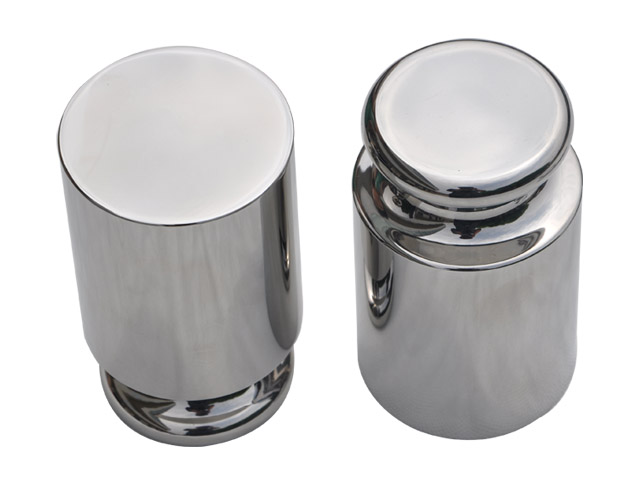
Beyond material selection, the physical design of metric calibration weights is carefully optimized to support safe handling, stable placement on scale platforms, and prevention of mass alteration from daily use. Most standard metric calibration weights feature a compact, symmetrical shape—most commonly cylindrical—with a flat base and a slightly raised top or integrated handle for easy lifting and placement. This cylindrical design ensures that the weight sits evenly on the scale’s weighing pan, distributing mass uniformly and eliminating the risk of uneven placement that could skew calibration readings. Smaller precision weights, particularly those used for calibrating high-sensitivity analytical scales that measure in milligrams and fractions of a gram, often come with protective cases and may feature slim, lightweight designs that require gentle handling to avoid damage or mass loss. Heavier cast iron weights for industrial scales often have a more robust, block-like design with reinforced edges to withstand the rigors of frequent movement in busy industrial settings, and some include built-in lifting points to facilitate safe handling without direct contact that could transfer oils or debris. Every design choice, from the weight’s shape to its surface finish, serves to minimize variables that could affect its mass: smooth, polished surfaces prevent dust and moisture from adhering, while uniform density throughout the weight ensures that the marked metric value accurately reflects the entire mass of the object. Unlike ordinary metal objects that may have uneven density or surface imperfections, metric calibration weights are machined and finished to strict internal standards that prioritize mass consistency, making them uniquely suited for their role as reference tools.
Proper handling and storage of metric calibration weights are equally critical to preserving their accuracy and extending their usable life, as even small oversights in care can lead to gradual changes in mass that render them ineffective for calibration. One of the most fundamental rules of handling calibration weights is avoiding direct contact with bare hands, as human skin naturally produces oils, sweat, and tiny skin particles that can accumulate on the weight’s surface over time. These residues add minimal but measurable mass, which can create discrepancies when calibrating high-precision metric scales, especially those designed for small-scale measurements. Instead, users should always wear clean, lint-free cotton gloves or use specialized handling tools such as tweezers or weight lifters when moving or placing calibration weights, ensuring that no foreign substances are transferred to the weight’s surface. When not in use, metric calibration weights should be stored in a clean, dry, and temperature-stable environment, ideally in a fitted protective case that keeps each weight in its designated spot and prevents scratches, dents, or contact with other metal objects that could alter their shape or mass. Storage areas should be free from excessive humidity, direct sunlight, and extreme temperature fluctuations, as these conditions can cause corrosion, material expansion, or contraction that affects the weight’s reference value. For sets of metric calibration weights that include multiple denominations, storage cases are often designed with individual compartments to keep weights organized and prevent them from rubbing against one another, which could wear down surfaces and lead to mass loss over time. Regular gentle cleaning is also recommended for calibration weights, using only soft, lint-free cloths and mild, non-abrasive cleaning agents that remove dust and debris without scratching or corroding the surface; harsh chemicals or scrubbing tools should never be used, as they can damage the weight’s finish and alter its mass.
The application of metric calibration weights spans a vast array of industries and settings, each relying on consistent scale accuracy to meet operational and quality standards. In laboratory and research environments, where precise sample measurements are critical to experimental validity, analytical balances and precision metric scales require regular calibration with small, high-precision metric weights to ensure that readings for chemicals, biological samples, and sensitive materials are exact. Even minor inaccuracies in these settings can lead to flawed experimental results, wasted resources, and delayed research timelines, making consistent calibration a non-negotiable part of daily laboratory operations. In manufacturing and production facilities, metric scales are used to measure raw materials, component parts, and finished products, and accurate calibration directly impacts product quality, material waste reduction, and production efficiency. For example, a food production facility relies on calibrated metric scales to measure ingredients consistently, ensuring that every batch of product meets formulation standards and maintains uniform taste, texture, and portion size; a manufacturing plant producing mechanical parts uses calibrated scales to verify component weights, ensuring that parts fit together correctly and meet product specifications. In commercial and retail settings, metric scales used for weighing goods sold by weight depend on calibrated weights to ensure fair and consistent transactions between businesses and consumers, building trust and ensuring that quantities are accurately reflected in pricing. Logistics and warehousing operations use large metric scales to weigh packages, pallets, and bulk shipments, and calibrated weights ensure that shipping costs are calculated accurately, inventory records are correct, and compliance with internal logistics standards is maintained. Across every one of these settings, the role of metric calibration weights remains consistent: to provide a reliable reference point that keeps weighing equipment aligned with standard metric mass units, supporting accuracy, consistency, and reliability in every measurement.
Calibration frequency for metric scales using these reference weights varies depending on several key factors, including the scale’s usage intensity, the environment in which it operates, and the level of precision required for its intended applications. Scales that are used multiple times daily, such as those in busy retail counters, high-volume manufacturing lines, or active laboratories, require more frequent calibration to counteract the effects of regular use and mechanical drift. In contrast, scales that are used infrequently or in stable, low-impact environments may require calibration less often, though periodic checks are still necessary to address gradual, passive drift. Environmental conditions also play a major role in determining calibration frequency: scales used in humid, dusty, or temperature-fluctuating environments, such as outdoor loading docks, industrial workshops, or field research sites, will experience faster calibration drift and need more frequent checks with metric weights. Additionally, any scale that has been moved, physically impacted, or undergone maintenance or repair should be calibrated immediately with appropriate metric weights, as these actions can disrupt the scale’s internal alignment and compromise measurement accuracy. Rather than following a rigid, one-size-fits-all schedule, most users develop a calibration routine tailored to their specific needs, conducting regular scheduled calibrations and spot checks using metric weights to catch and correct drift before it leads to significant inaccuracies. This proactive approach to calibration ensures that metric scales remain reliable at all times, preventing costly errors and maintaining consistent operational standards.
One common misconception about metric calibration weights is that they are only necessary for high-precision or expensive scales, but this is far from accurate. Every metric scale, regardless of its size, capacity, or initial cost, relies on internal mechanisms that are subject to drift and inaccuracy over time, and every scale benefits from regular calibration with properly matched metric weights. A small, portable metric scale used for personal or small business purposes may not require the same ultra-precise calibration weights as a laboratory analytical balance, but it still needs a reference mass of appropriate metric denomination to reset its internal settings and ensure accurate readings. Similarly, a large industrial weighbridge may require heavy, robust calibration weights, but its need for reliable reference points is just as critical as a small tabletop scale. Calibration weights are designed to match the full range of metric scale capacities and precision levels, with lightweight milligram and gram weights for small precision scales, mid-range gram and kilogram weights for standard commercial and workshop scales, and heavy kilogram weights for large industrial scales. This wide range of available denominations ensures that users can select the exact weights needed to calibrate their specific equipment fully, covering the entire weighing range of the scale from minimum to maximum capacity. Using weights that match the scale’s metric units and capacity range is essential, as mismatched weights or non-metric reference objects cannot provide accurate calibration and may actually cause further inaccuracies in the scale’s readings.
The long-term value of investing in proper metric calibration weights and consistent calibration practices extends far beyond immediate measurement accuracy, impacting overall operational efficiency, cost savings, and quality assurance. When scales are regularly calibrated with reliable metric weights, businesses and users avoid the hidden costs of inaccurate measurements: wasted raw materials from over-measurement, lost revenue from under-measurement, rejected finished products that fail quality standards, and time spent reworking or re-measuring items due to incorrect initial readings. In laboratory and research settings, calibrated scales ensure that experimental data is reliable and reproducible, preventing the need to repeat experiments and saving valuable time and research resources. In commercial settings, calibrated scales build trust with customers and partners, as consistent, accurate measurements demonstrate a commitment to fairness and transparency. Additionally, properly calibrated scales have a longer operational lifespan, as regular calibration can identify minor mechanical or electronic issues before they escalate into major problems that require costly repairs or replacement. Calibration weights themselves, when cared for properly, have a long usable life, providing a reliable calibration resource for years without needing replacement, making them a cost-effective long-term investment for any individual or organization that relies on metric scales for daily operations.
As measurement technology continues to evolve, with metric scales becoming more advanced, compact, and integrated with digital tracking and data management systems, the role of calibration weights remains unchanged and irreplaceable. Even the most sophisticated digital metric scales with advanced internal sensors and automated features still require physical reference masses to validate their accuracy and reset their calibration baselines, as digital systems alone cannot compensate for mechanical drift, environmental changes, or component wear. Calibration weights for metric scales have also evolved alongside technology, with improved manufacturing processes that enhance mass consistency and durability, and specialized designs that cater to the unique needs of modern weighing equipment. However, the core purpose of these weights remains rooted in basic metrological principles: providing a fixed, verifiable metric mass that serves as a universal reference for accurate weighing. This timeless function ensures that metric calibration weights will continue to be a foundational tool in all fields that rely on precise weight measurement, adapting to new technologies while maintaining the core standards of accuracy and consistency that define reliable metric weighing.
In summary, calibration weights for metric scales are essential, often underappreciated tools that form the backbone of accurate and consistent weight measurement across every industry and application. From their careful material selection and precision design to their critical role in scale calibration and long-term operational reliability, every aspect of these weights is engineered to support the core goal of maintaining accurate metric mass measurements. Proper handling, storage, and regular use of these weights ensure that metric scales remain reliable over time, delivering consistent readings that support quality control, operational efficiency, and fair practices. Whether in a laboratory, manufacturing plant, retail space, or warehouse, the impact of metric calibration weights is far-reaching, touching every process that depends on accurate weight data. By prioritizing regular calibration with high-quality, well-maintained metric weights, users can ensure that their weighing equipment performs reliably, minimizes errors, and supports consistent, high-quality outcomes in all daily operations, solidifying the role of these unassuming reference masses as indispensable components of modern measurement systems.
