





Changzhou Veidt Weighing Co., Ltd. © 2022 ALL RIGHTS RESERVED Privacy Policy | Calibration Weight | Test Weights | Cast Iron Weights | Standard Weights | Laboratory Weights | XML | SITEMAP
NEWS LIST
calibration weight for laboratory scale
Thursday 12th March 2026 Back to list
In the intricate ecosystem of laboratory operations, precision weighing stands as a cornerstone of reliable research, accurate testing, and consistent experimental outcomes. Every measurement taken on a laboratory scale serves as a foundational data point, whether for chemical synthesis, material analysis, pharmaceutical formulation, or quality control testing, and even the slightest deviation in weight readings can cascade into flawed results, wasted resources, and compromised scientific integrity. At the heart of maintaining this critical precision lies the calibration weight—a seemingly simple yet indispensable tool that serves as the reference standard for verifying and adjusting the accuracy of laboratory scales across all types and capacities. Unlike generic weights used for basic balancing tasks, calibration weights are engineered with meticulous attention to detail, crafted to meet stringent tolerance thresholds that align with the sensitivity and performance demands of modern laboratory weighing equipment. These weights act as a universal benchmark, bridging the gap between a scale’s internal mechanisms and the true weight values they are designed to measure, ensuring that every reading reflects objective reality rather than mechanical drift or operational error.
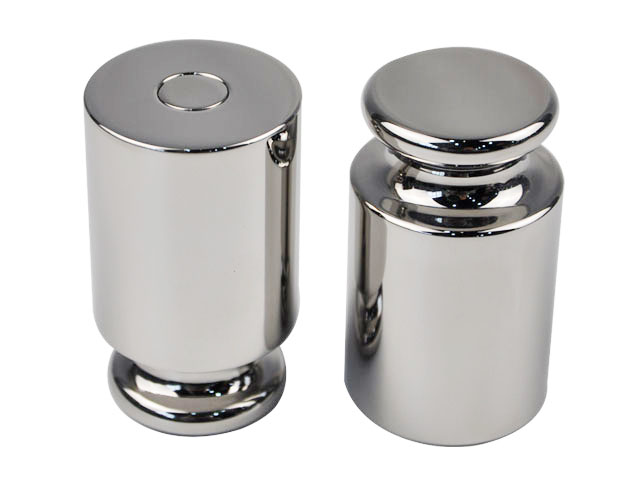
The design and manufacturing of calibration weights for laboratory scales are guided by a commitment to stability, durability, and resistance to external factors that could alter their mass. Material selection is a pivotal consideration, as the physical and chemical properties of the metal directly impact the weight’s long-term performance and suitability for diverse laboratory environments. Common materials include high-grade stainless steel, brass, and aluminum, each chosen for distinct advantages that cater to different laboratory needs. Stainless steel, for instance, is favored for its exceptional corrosion resistance, low magnetic susceptibility, and ability to withstand frequent handling and environmental exposure without succumbing to rust, tarnish, or surface degradation—traits that make it ideal for general laboratory use, including settings with moderate humidity or exposure to mild chemical fumes. Brass weights offer a dense, stable composition with excellent wear resistance, making them suitable for heavier calibration tasks where durability under repeated use is paramount, while aluminum weights provide a lightweight option for smaller, more sensitive scales where minimal mass impact is essential. Regardless of the material, every calibration weight undergoes precision machining and finishing processes to eliminate surface imperfections, ensure uniform density, and maintain a consistent mass that remains stable over extended periods, free from the gradual changes that can plague inferior or poorly crafted weights.
Beyond material composition, the physical form and specifications of calibration weights are tailored to complement the design and functionality of laboratory scales, ranging from compact micro-weights for ultra-sensitive analytical balances to larger, block-style weights for heavier-capacity precision scales. Weights are available in a comprehensive range of nominal values, spanning from fractions of a milligram for high-precision micro-analytical work to multiple kilograms for bulk sample testing, allowing laboratories to select weights that align perfectly with their scale’s weighing range and resolution. Many calibration weights are also sold in coordinated sets, packaged in protective, dust-proof cases that include specialized handling tools such as non-magnetic tweezers and lint-free gloves, designed to preserve the weight’s integrity by preventing direct skin contact. Bare hand contact can transfer natural oils, moisture, and microscopic debris onto the weight’s surface, gradually altering its mass and undermining calibration accuracy; the inclusion of proper handling accessories in these sets underscores the importance of meticulous care in preserving the reference standard’s reliability. The shape of calibration weights is equally intentional, with cylindrical, flat, or hooked designs crafted to fit securely on a scale’s weighing pan without shifting or causing uneven load distribution, ensuring that the calibration process captures true weight readings rather than skewed results from improper placement.
Selecting the appropriate calibration weights for a laboratory scale is not a one-size-fits-all decision, but rather a deliberate process that hinges on the scale’s intended use, sensitivity, and required measurement accuracy. Laboratories that conduct ultra-fine analytical work, such as pharmaceutical research, forensic testing, or trace element analysis, rely on scales with extremely high resolution, often measuring down to the microgram level, and thus require calibration weights with exceptionally tight tolerance levels. These weights are manufactured to minimize deviations from their stated nominal mass, ensuring that even the smallest incremental measurements remain accurate. In contrast, general-purpose laboratory scales used for routine sample preparation, educational demonstrations, or bulk material weighing demand calibration weights with slightly broader tolerances that still meet the practical accuracy needs of the task, striking a balance between precision and cost-effectiveness. Key factors influencing this selection include the scale’s maximum weighing capacity, its readability (the smallest increment it can measure), the frequency of use, and the environmental conditions of the laboratory—such as temperature fluctuations, air currents, or exposure to chemicals—that may affect both the scale and the calibration weight over time. Taking the time to match calibration weights to the specific scale’s capabilities ensures that calibration efforts are meaningful, rather than using weights that are either overly precise for the scale’s limits or insufficiently accurate to validate its performance.
The calibration process itself, facilitated by these reference weights, is a routine yet critical laboratory procedure that safeguards measurement reliability and mitigates the risk of inaccurate data. Over time, laboratory scales are subject to a range of factors that can cause measurement drift: regular use can wear down internal components, temperature changes can expand or contract mechanical parts, dust accumulation can disrupt load cell functionality, and even minor bumps or vibrations can offset the scale’s internal calibration settings. Without regular recalibration using trusted reference weights, these subtle changes go unnoticed, leading to consistent errors in weighing that can invalidate experiments, skew test results, and lead to costly rework. The calibration workflow typically begins with preparing both the scale and the calibration weights: the scale is placed on a stable, level surface free from vibrations or air drafts, allowed to acclimate to the laboratory’s ambient temperature to eliminate thermal expansion effects, and cleaned of any dust or residue that could interfere with readings. The calibration weights are also inspected for cleanliness and handled exclusively with designated tools to avoid contamination, ensuring their mass remains unaltered. Once prepared, the operator follows the scale’s operational guidelines to initiate calibration mode, placing the appropriate calibration weight on the center of the weighing pan and allowing the scale to detect and adjust to the reference mass. This process is repeated across multiple weight values across the scale’s operating range to verify linearity, repeatability, and corner load performance, ensuring the scale delivers accurate readings at every point of its capacity, not just at a single reference point.
Proper maintenance and storage of calibration weights are equally vital to preserving their accuracy and extending their service life, as even minor damage or contamination can render a reference weight unreliable and compromise all subsequent calibration efforts. Storage is a foundational aspect of maintenance, with calibration weights kept in their dedicated protective cases when not in use, shielded from dust, moisture, direct sunlight, and contact with other metal objects that could cause scratches or surface abrasions. The cases are typically stored in a controlled environment with stable temperature and humidity, avoiding areas near chemical storage, heating vents, or laboratory equipment that emits heat or fumes, as these conditions can accelerate corrosion or material degradation. Regular inspection of calibration weights is essential to identify signs of wear, such as scratches, dents, discoloration, or surface residue, which may indicate a change in mass. If a weight appears contaminated, it should be cleaned gently using a lint-free cloth and a mild, non-abrasive cleaning solution suitable for its material, taking care not to scrub aggressively or use harsh chemicals that could damage the surface. Weights that show visible damage or significant wear should be removed from service and replaced promptly, as attempting to use a compromised calibration weight defeats the purpose of calibration and introduces avoidable error into laboratory measurements. Additionally, establishing a consistent schedule for inspecting and verifying calibration weights helps laboratories stay proactive, ensuring that reference standards remain reliable and that scale calibration remains effective over time.
The impact of high-quality calibration weights extends far beyond individual weighing tasks, influencing the overall efficiency, credibility, and compliance of laboratory operations as a whole. In research settings, accurate weighing ensures that experimental variables are controlled, results are reproducible, and scientific findings are grounded in factual data—critical for advancing knowledge, publishing research, and developing new products or technologies. In industrial and regulatory laboratories, precise measurements supported by reliable calibration weights are essential for meeting quality standards, ensuring product consistency, and upholding safety protocols, particularly in fields where even small weight discrepancies can pose risks to public health or product performance. Educational laboratories also rely on accurate calibration weights to train students in proper laboratory techniques, instilling a commitment to precision and attention to detail that is foundational to scientific practice. By investing in well-crafted calibration weights and adhering to strict calibration and maintenance protocols, laboratories create a culture of accuracy that permeates every operation, reducing waste from failed experiments, minimizing the need for repeat testing, and fostering trust in the data generated. Calibration weights, though often overlooked as a basic supply, are therefore an unsung pillar of laboratory excellence, enabling the precision that defines rigorous scientific work and reliable analytical testing.
As laboratory technology continues to evolve, with scales becoming increasingly sensitive and automated, the role of calibration weights remains unchanged in its importance—serving as the immutable reference that keeps modern weighing equipment grounded in accuracy. Even the most advanced digital scales with internal self-calibration features benefit from periodic verification using external calibration weights, as internal systems can still drift over time and require validation against a physical reference standard. This enduring relevance highlights why calibration weights are a non-negotiable component of any well-equipped laboratory, regardless of size, specialization, or technological sophistication. Whether in a small academic lab, a bustling industrial testing facility, or a cutting-edge research institute, the careful selection, proper use, and diligent maintenance of calibration weights for laboratory scales are investments in accuracy, reliability, and scientific integrity. They represent a commitment to excellence that ensures every weight measurement is trustworthy, every experiment is valid, and every piece of data generated contributes meaningfully to the pursuit of scientific progress and practical application. In the quest for precision in the laboratory, calibration weights are not just tools—they are the quiet guardians of accuracy that underpin every successful weighing task and every reliable scientific outcome.
