





Changzhou Veidt Weighing Co., Ltd. © 2022 ALL RIGHTS RESERVED Privacy Policy | Calibration Weight | Test Weights | Cast Iron Weights | Standard Weights | Laboratory Weights | XML | SITEMAP
NEWS LIST
calibration weight for lab equipment
Saturday 21st March 2026 Back to list
In every laboratory setting, from academic research facilities to industrial quality control labs, the reliability of measurement data stands as the foundation of all scientific work, experimental outcomes, and compliance with consistent operational standards. Among the most essential yet often underappreciated tools that uphold this measurement integrity are calibration weights, which serve as the universal reference for verifying and adjusting a wide range of laboratory weighing equipment, including analytical balances, precision scales, microbalances, and portable weighing devices. Without these precisely crafted mass standards, even the most advanced weighing instruments would produce inconsistent, inaccurate readings, leading to flawed experimental results, unreliable product testing, and compromised data that can derail entire research projects or production processes. Calibration weights function as the bridge between abstract mass standards and tangible laboratory measurements, ensuring that every weight reading taken across different equipment, different labs, and different time periods remains consistent and traceable to a unified global reference for mass, creating a level playing field for scientific inquiry and practical application alike.
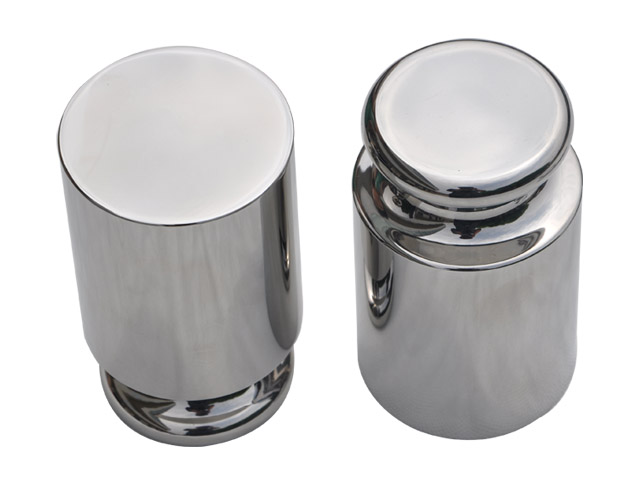
At their core, calibration weights are solid masses manufactured to meet strict dimensional and mass tolerances, designed to maintain a stable, unchanging weight value over extended periods of use when handled and stored properly. Unlike ordinary metal objects or makeshift weights, these specialized tools are engineered with meticulous attention to material composition, structural design, and surface finish, all of which contribute to their long-term stability and resistance to factors that could alter their mass. The materials used for calibration weights are selected based on their ability to resist corrosion, physical wear, magnetic interference, and environmental changes, as even the smallest shift in mass—measured in milligrams or even micrograms for high-precision models—can significantly impact the accuracy of sensitive laboratory equipment. Common materials include high-grade stainless steel, which is favored for its non-magnetic properties, resistance to rust and chemical damage, and smooth surface that repels dust and debris; cast iron, used for larger, heavier weights intended for general-purpose industrial and laboratory scales; and brass, a softer metal suitable for mid-range precision needs, though it requires more careful handling to prevent scratching and tarnishing that could affect mass consistency. Each material is chosen to match the intended use case, with higher-precision labs relying on stainless steel for its superior stability, and larger-scale testing environments utilizing more robust materials for heavy-duty calibration tasks.
The construction of calibration weights is equally critical to their performance, with design elements tailored to both functionality and ease of handling without compromising mass integrity. Most laboratory-grade calibration weights feature a compact, cylindrical shape with a small, raised knob on top, a design that allows for safe handling using specialized forceps or weight lifters, preventing direct contact with bare hands. Direct skin contact is a major risk factor for calibration weight degradation, as natural oils, sweat, and skin particles left on the surface can add tiny amounts of mass over time, or cause gradual corrosion that erodes the metal and reduces the weight’s actual mass. For ultra-high-precision weights used in analytical work, one-piece monobloc construction is standard, eliminating any gaps, seams, or internal cavities that could trap dust, moisture, or foreign particles, which would alter the weight’s value. Lower-tolerance weights, designed for general laboratory use, may feature a two-piece construction with a sealed internal cavity that allows for minor mass adjustments during manufacturing to meet precise tolerance requirements, though these adjustments are permanent and sealed to prevent tampering after production. Weights are available in individual units or as complete sets, which include a range of mass values to cover the full weighing range of different lab equipment, from tiny milligram weights for microbalances to larger gram and kilogram weights for bulk material testing.
Selecting the right calibration weights for specific laboratory equipment is a deliberate process that depends on several key factors, primarily the precision level and weighing range of the instrument being calibrated. A one-size-fits-all approach does not work here, as using a weight with insufficient precision for a high-sensitivity balance will render the calibration ineffective, while using an overly precise weight for a basic general-purpose scale is unnecessary and can lead to unnecessary wear on the delicate weight. Laboratory professionals must first assess the readability and maximum capacity of their weighing equipment; for example, an analytical balance that measures down to the milligram level requires weights with extremely narrow mass tolerances, as even a tiny deviation in the reference weight will translate to a noticeable error in the balance’s readings. In contrast, a top-loading balance used for general sample preparation, with a lower level of sensitivity, can use weights with slightly wider tolerances while still maintaining acceptable measurement accuracy. Another key consideration is the range of measurements the equipment typically handles; calibration should cover both the mid-range and maximum capacity of the scale, as many weighing instruments can develop linearity errors where readings are accurate at low weights but inaccurate at higher weights, or vice versa. Using a set of weights that spans the entire operational range of the equipment ensures full calibration coverage, identifying and correcting any inconsistencies across all possible weighing scenarios.
Proper handling and usage protocols are essential to preserve the accuracy of calibration weights and ensure reliable calibration results every time. Before any calibration procedure, both the weighing equipment and the calibration weights must be prepared in a controlled environment to minimize external interference. Laboratory spaces should be free from drafts, as air currents can create subtle pressure changes that affect the readings of sensitive balances, especially microbalances and analytical models. The weighing pan of the equipment must be clean and free of any sample residue, dust, or debris, and the balance should be placed on a stable, vibration-free surface to prevent movement that could disrupt measurements. Calibration weights should be inspected before use to check for signs of damage, scratching, corrosion, or surface contamination; any visible debris can be gently removed with a soft, lint-free cloth or a specialized cleaning tool designed for precision weights, never with abrasive materials that could scratch the surface. When handling weights, only dedicated forceps, weight lifters, or clean, powder-free gloves should be used, and the weight should be placed gently in the center of the weighing pan to avoid uneven pressure distribution, which can cause inaccurate readings. Rushing the calibration process or handling weights carelessly can lead to permanent damage, such as dents or chips, which alter the mass and make the weight unfit for future use, requiring replacement to maintain measurement accuracy.
The calibration process itself follows a consistent, step-by-step routine that prioritizes accuracy and repeatability, ensuring that the laboratory equipment is properly adjusted to match the reference mass of the calibration weight. Most modern laboratory balances have a dedicated calibration mode that guides users through the process, but manual calibration follows the same core principles: the equipment is allowed to warm up and stabilize for a set period, as electronic weighing sensors need time to reach a consistent operating temperature and eliminate temperature-related measurement drift. Once stabilized, the calibration weight is placed on the weighing pan, and the equipment’s reading is compared to the known mass value of the weight. If a discrepancy is found, the equipment can be adjusted either electronically or mechanically to align its readings with the reference weight, and a second verification check is performed using the same weight to confirm the adjustment was successful. For full equipment validation, multiple weights across different mass values should be used to test linearity, repeatability, and accuracy at various points in the weighing range. This thorough approach ensures that the equipment performs consistently across all intended uses, from measuring tiny amounts of reagents for chemical synthesis to weighing larger samples for material testing, and helps identify any gradual drift in performance that may occur over time with regular use.
Long-term maintenance and storage are just as important as proper handling during use, as calibration weights are long-term investments that retain their value only if preserved correctly. After each use, calibration weights should be returned immediately to their designated storage case, which is typically lined with soft, non-abrasive material to prevent scratching and features individual compartments for each weight to avoid contact between different weights that could cause chipping or scratching. Storage cases should be kept in a cool, dry, low-humidity environment, away from direct sunlight, chemical fumes, and sources of heat or moisture, all of which can accelerate corrosion or material degradation. Avoid storing calibration weights near magnetic objects, as magnetic fields can interfere with the metal composition of certain weights and affect the performance of electronic balances during calibration. Regular inspection of weights is recommended to check for signs of wear, corrosion, or damage; even minor changes in appearance can signal a shift in mass, so any weight that looks compromised should be removed from use and evaluated for accuracy before being reused. Unlike disposable lab supplies, calibration weights can last for years with proper care, making them a cost-effective tool for maintaining consistent measurement quality, but neglecting maintenance can lead to silent inaccuracies that go undetected until experimental results or testing data show unexplained inconsistencies.
Calibration weights play a vital role across every area of laboratory work, supporting diverse applications where precise mass measurement is non-negotiable. In academic and research labs, they are essential for conducting reproducible experiments, ensuring that chemical reactions, biological sample preparation, and material science testing yield consistent results that can be replicated by other researchers worldwide. In pharmaceutical and life sciences labs, accurate weighing is critical for formulating compounds, preparing dosage samples, and conducting quality testing, where even a small measurement error can impact the safety and efficacy of potential treatments. In industrial quality control labs, calibration weights ensure that raw materials, finished products, and production samples meet strict internal and industry-wide standards, preventing defective products from reaching the market and maintaining consistent production quality. Environmental testing labs rely on calibrated scales to measure soil, water, and air samples accurately, providing reliable data for environmental monitoring and research. Even in educational lab settings, calibration weights teach students the importance of measurement precision and good laboratory practices, instilling habits that carry over into professional scientific work. In every case, the calibration weight serves as the silent standard that holds all measurement data accountable, making it an indispensable tool for upholding the credibility of laboratory work across disciplines.
One common misconception about calibration weights is that they are infallible and never require re-evaluation, but in reality, all weights are subject to gradual wear and minor mass changes over time, even with perfect handling and storage. Regular performance checks are necessary to confirm that a calibration weight still maintains its intended mass value, as repeated use, minor accidental drops, or subtle environmental exposure can cause tiny but impactful changes in mass. These checks are typically performed using higher-precision reference weights in a controlled setting, allowing lab managers to identify any drift and replace or adjust weights as needed. Implementing a consistent schedule for equipment calibration and weight inspection creates a proactive approach to measurement quality, reducing the risk of inaccurate data, minimizing costly repeat experiments, and ensuring that all laboratory operations run smoothly and efficiently. This commitment to maintaining calibration weight integrity reflects a broader commitment to scientific rigor, a core principle that defines reliable and reputable laboratory work.
Beyond their direct role in calibrating equipment, calibration weights also promote consistency across different laboratories and different teams, creating a universal language of mass measurement that transcends geographic and institutional boundaries. When two labs use calibration weights that meet the same strict tolerance standards, their measurement data can be compared and combined with confidence, eliminating discrepancies that would arise from using unstandardized reference points. This consistency is especially valuable in collaborative research projects, multi-site industrial testing, and large-scale scientific studies where data from multiple sources must be integrated to draw meaningful conclusions. Calibration weights eliminate the variables that come with inconsistent measurement tools, allowing researchers and technicians to focus on the quality of their samples and experiments rather than questioning the reliability of their equipment. In this way, calibration weights are not just tools for individual labs, but critical components of the global scientific infrastructure that supports progress, innovation, and reliable data-driven decision-making.
In summary, calibration weights are an essential cornerstone of laboratory operations, quietly enabling accurate, consistent, and reliable mass measurement across every scientific discipline and industrial application. Their precise design, careful material selection, and strict manufacturing standards make them the most trusted reference for verifying and adjusting laboratory weighing equipment, ensuring that every measurement is grounded in a stable, universal mass standard. Proper selection, handling, maintenance, and storage of these weights are simple yet critical practices that directly impact the quality of laboratory data, the success of experiments, and the integrity of testing processes. Investing time and care into managing calibration weights is not just a routine task, but a fundamental commitment to scientific accuracy, operational excellence, and the credibility of all work conducted within the laboratory. As laboratory technology continues to advance and the demand for precise measurement grows, the role of calibration weights remains unchanged and irreplaceable, standing as a timeless tool that upholds the highest standards of scientific measurement for years to come.
