





Changzhou Veidt Weighing Co., Ltd. © 2022 ALL RIGHTS RESERVED Privacy Policy | Calibration Weight | Test Weights | Cast Iron Weights | Standard Weights | Laboratory Weights | XML | SITEMAP
NEWS LIST
calibration weight for jewelry scale
Thursday 12th March 2026 Back to list
In the world of jewelry making, trading, and appraisal, precision in weight measurement is not just a detail but a cornerstone of trust, fairness, and professional integrity. Every piece of precious metal, every loose gemstone, and every finished jewelry item carries value tied directly to its weight, and even the tiniest deviation in a scale’s reading can lead to unintended consequences for both sellers and buyers. This is where calibration weights for jewelry scales step in as an indispensable tool, serving as the reliable reference point that keeps weighing equipment accurate and consistent over time. Unlike ordinary household objects that lack standardized mass, these specialized weights are crafted to meet strict dimensional and mass tolerances, designed specifically to match the high-precision requirements of jewelry scales, which often measure in milligrams, tenths of a gram, or carats—units so small that even a speck of dust or a minor shift in calibration can alter results significantly. Whether used by professional jewelers in busy workshops, gemologists assessing rare stones, hobbyists crafting handmade pieces, or pawnbrokers evaluating precious items, calibration weights are the silent backbone of accurate jewelry weighing, ensuring that every measurement is grounded in reliability and consistency.
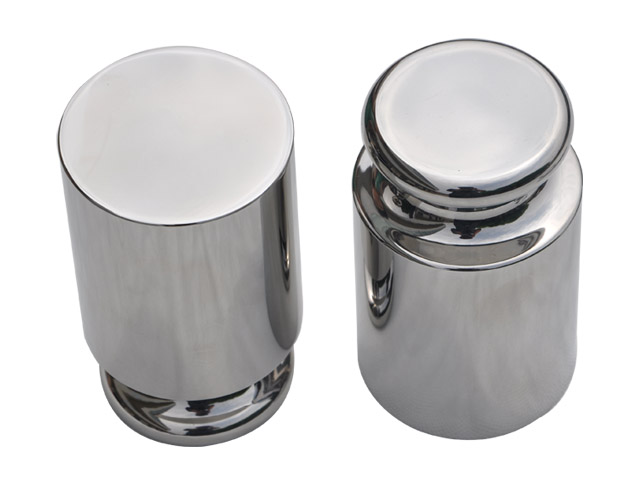
To understand the true value of calibration weights for jewelry scales, it is essential to first grasp the unique nature of jewelry weighing equipment itself. Jewelry scales are far more sensitive than standard household or commercial scales, engineered to detect minuscule changes in mass that would go unnoticed on regular weighing devices. A standard kitchen scale may measure in whole grams, but a jewelry scale can often detect variations as small as 0.001 grams, a level of precision necessary for weighing small diamonds, gold flakes, silver beads, and other delicate jewelry components. This extreme sensitivity, however, makes these scales prone to calibration drift—a gradual shift in accuracy caused by a range of factors, including frequent use, minor bumps or jostling, changes in ambient temperature, exposure to moisture or dust, and even simple wear and tear on internal components. Over time, even the most well-made jewelry scale will lose its initial accuracy without regular calibration, and relying on an uncalibrated scale can lead to a host of issues: undercharging for precious metals, overestimating the weight of gemstones, mispricing finished jewelry, or eroding customer confidence in the accuracy of transactions. Calibration weights act as the corrective force here, providing a known, stable mass that allows users to reset their scales to the correct baseline, eliminating drift and restoring precise measurement capabilities.
When selecting calibration weights for jewelry scales, several key factors come into play, all centered around matching the weight to the scale’s specifications and intended use. The first and most critical consideration is the weight’s mass value, which should align with the calibration requirements outlined in the jewelry scale’s user manual. Most jewelry scales require calibration at specific points within their weighing range, often at a mid-range or maximum capacity weight, such as 5 grams, 10 grams, 20 grams, 50 grams, or 100 grams for gram-based scales, or corresponding carat values for gemstone-specific scales. Using a calibration weight that is too light or too heavy for the scale’s range will render the calibration process ineffective, as the scale’s internal sensors will not be properly adjusted to the full scope of its weighing capabilities. Beyond mass value, the material of the calibration weight is another vital consideration, as it directly impacts durability, stability, and resistance to environmental factors that can alter mass. High-quality calibration weights for jewelry use are typically made from dense, non-corrosive materials such as stainless steel, brass, or coated alloys, chosen for their ability to maintain a consistent mass over time without rusting, tarnishing, or wearing down. These materials are also resistant to fingerprints, oil, and dust—common contaminants in jewelry workshops that can add minute amounts of weight and throw off measurements if left on the calibration weight or scale pan.
The physical design of calibration weights for jewelry scales is also tailored to the needs of precise weighing, with features that enhance usability and accuracy. Most jewelry-scale calibration weights are compact and lightweight, with a smooth, flat surface or a small handle for easy, controlled placement on the scale’s weighing pan. This design prevents accidental damage to the delicate scale pan and ensures that the weight is positioned evenly, directly over the scale’s load cell, which is essential for obtaining a true calibration reading. Larger calibration weight sets often include multiple individual weights of varying masses, allowing users to perform multi-point calibration—a process that adjusts the scale’s accuracy at several points across its weighing range, rather than just one. Multi-point calibration is particularly beneficial for high-precision jewelry scales, as it ensures consistent accuracy whether weighing a tiny 0.1-gram gemstone or a larger 50-gram gold bar, eliminating discrepancies that can occur with single-point calibration. Additionally, many calibration weights come with protective cases or storage trays, which keep the weights clean, prevent scratches or dents, and reduce the risk of loss; proper storage not only extends the lifespan of the calibration weights but also preserves their mass integrity, as physical damage can alter the weight’s exact mass and compromise future calibrations.
Using calibration weights correctly is just as important as choosing the right ones, as improper handling or calibration technique can lead to false readings and continued inaccuracy. Before beginning the calibration process, it is crucial to prepare both the scale and the workspace to minimize external interference, which is especially critical for sensitive jewelry scales. The scale should be placed on a flat, stable, vibration-free surface away from windows, vents, fans, or other sources of air movement, as even a slight draft can disrupt the scale’s sensors and cause fluctuating readings. The workspace should be free of dust and debris, and the scale’s weighing pan should be gently wiped clean with a soft, lint-free cloth to remove any particles that could add unwanted weight. The calibration weight itself should also be inspected and cleaned if necessary, using a soft cloth to wipe away fingerprints or dust—never harsh chemicals or abrasive materials, which can damage the weight’s surface. It is also recommended to allow the scale to warm up for several minutes after turning it on, as electronic components need time to stabilize, and to perform calibration at a consistent room temperature, as extreme heat or cold can affect both the scale’s internal parts and the calibration weight’s mass.
The calibration process itself, while varying slightly between different scale models, follows a general set of steps that center on the calibration weight as the reference standard. Most digital jewelry scales have a dedicated calibration mode, activated by pressing a specific button or combination of buttons, which prompts the scale to ready itself for calibration. Once in calibration mode, the user places the calibration weight gently and evenly in the center of the scale pan, taking care not to drop or slide the weight, as impact can damage the scale’s load cell or affect the weight’s mass. The scale will then recognize the known mass of the calibration weight and adjust its internal settings to align with that reference, a process that typically takes only a few seconds. After the scale confirms successful calibration, the weight is carefully removed, and the scale should be tested with a separate reference object or a smaller calibration weight to verify accuracy. It is important to avoid touching the scale pan or calibration weight unnecessarily during the process, as skin oils and moisture can add subtle weight, and to keep the area around the scale still and quiet to prevent vibration interference. For users who rely on their jewelry scales daily, repeating this calibration process regularly is key—weekly or bi-weekly calibration is recommended for high-frequency use, while monthly calibration may suffice for occasional hobbyist use. Calibration should also be performed any time the scale is moved to a new location, after a minor drop or impact, or if inconsistent readings are noticed during regular use, as these are all signs that calibration drift may have occurred.
Proper maintenance of calibration weights is essential to preserving their accuracy and ensuring long-term reliability for jewelry scale calibration. Even the highest-quality calibration weights can lose their mass consistency if not cared for properly, making routine upkeep a simple yet vital practice for anyone who uses these tools. The first rule of calibration weight maintenance is gentle handling: always hold the weight by its edges or handle, avoiding direct contact with the flat weighing surface to prevent oil and fingerprint buildup. After each use, wipe the weight down with a clean, dry, lint-free cloth to remove any contaminants, and store it in its protective case or tray in a cool, dry area away from direct sunlight, moisture, and harsh chemicals. Avoid placing calibration weights near jewelry cleaning solutions, polishing compounds, or other workshop chemicals that could corrode or damage the weight’s surface. Periodically inspect the weight for signs of wear, scratches, dents, or tarnish; even small physical imperfections can alter the weight’s mass, so any damaged weights should be replaced promptly to avoid inaccurate calibrations. It is also wise to avoid using calibration weights for any purpose other than scale calibration—using them as paperweights, tool holders, or for other tasks increases the risk of damage and contamination, compromising their effectiveness as a reference standard. With consistent, careful maintenance, a set of high-quality calibration weights can remain accurate and functional for years, providing a reliable reference point for jewelry scale calibration time and time again.
The impact of using proper calibration weights extends far beyond accurate weight readings, touching every aspect of jewelry work, from craftsmanship to customer relations. For professional jewelers, accurate weighing ensured by regular calibration is essential for pricing materials correctly, managing inventory, and creating custom pieces with precise material quantities. When crafting jewelry, knowing the exact weight of gold, silver, platinum, or gemstones allows for accurate material costing, preventing waste and ensuring that profit margins remain stable. For gemologists and appraisers, calibration weights are critical for providing objective, trustworthy weight assessments, which are a key component of gemstone and jewelry valuation. In retail and pawn settings, accurate scales calibrated with reliable weights build customer trust, as buyers and sellers can feel confident that transactions are fair and transparent, with no hidden discrepancies in weight. Even for hobbyists and casual jewelry makers, calibration weights help maintain consistency in craft, ensuring that handmade pieces meet personal quality standards and that material usage is tracked accurately. In a field where reputation is built on attention to detail and fairness, the role of calibration weights cannot be overstated—they are not just a tool, but a commitment to precision and integrity that defines quality jewelry work.
One common misconception about jewelry scale calibration is that ordinary household items, such as coins, buttons, or small trinkets, can serve as substitute calibration weights. This is a risky practice that should be avoided at all costs, as these items do not have standardized, verified masses. The weight of a coin, for example, can vary slightly due to wear, dirt, or manufacturing differences, and using it to calibrate a jewelry scale will result in inherent inaccuracy that may go unnoticed until a costly mistake is made. Unlike these makeshift alternatives, dedicated calibration weights are manufactured and tested to meet strict mass tolerances, with every weight’s exact mass verified to ensure it matches its stated value. This level of precision is non-negotiable for jewelry scales, where even a 0.01-gram error can translate to significant differences in value for precious materials. Investing in proper calibration weights is a small yet meaningful step for anyone who works with jewelry, as it eliminates the guesswork and risk associated with unstandardized weighing references, providing peace of mind that every measurement is correct.
As jewelry design and trading continue to evolve, with a growing emphasis on precision and transparency, the role of calibration weights remains as relevant as ever. Modern jewelry scales are becoming increasingly advanced, with enhanced digital displays, faster stabilization times, and improved sensor technology, but even the most sophisticated scales still rely on calibration weights to maintain accuracy. The fundamental principle of weighing—comparing an unknown mass to a known reference mass—remains unchanged, and calibration weights are the purest expression of this principle in the jewelry industry. Whether working with traditional precious metals and gemstones or experimenting with new, innovative materials, jewelry professionals and enthusiasts alike depend on these small, unassuming tools to keep their measurements honest and precise. There is no replacement for the reliability of a well-made, properly maintained calibration weight, as it is the only way to ensure that a jewelry scale performs consistently, day in and day out, across all types of weighing tasks.
In conclusion, calibration weights are an essential, irreplaceable tool for anyone who uses a jewelry scale, serving as the foundation of accurate, reliable weight measurement in the jewelry industry. Their specialized design, precise manufacturing, and role in correcting calibration drift make them indispensable for jewelers, gemologists, hobbyists, and traders alike, supporting fair transactions, quality craftsmanship, and professional integrity. Selecting the right calibration weights, using them correctly, and maintaining them diligently are simple yet critical practices that directly impact the quality and accuracy of jewelry weighing. In a field where every milligram matters, where trust is built on precision, and where success hinges on attention to detail, calibration weights stand as a symbol of commitment to excellence. They are not just an accessory to the jewelry scale, but a vital component that turns a simple weighing device into a tool of accuracy, fairness, and reliability—one that supports the entire lifecycle of jewelry creation, appraisal, and trade. By prioritizing proper calibration with high-quality weights, anyone working with jewelry can ensure that their measurements are always consistent, trustworthy, and aligned with the highest standards of the craft.
