





Changzhou Veidt Weighing Co., Ltd. © 2022 ALL RIGHTS RESERVED Privacy Policy | Calibration Weight | Test Weights | Cast Iron Weights | Standard Weights | Laboratory Weights | XML | SITEMAP
NEWS LIST
calibration weight for bench scale
Saturday 21st March 2026 Back to list
Bench scales are versatile weighing tools that find their place in countless daily and industrial scenarios, from small retail shops and food production lines to warehouse inventory checks and laboratory preliminary weighing tasks. These devices rely on consistent and accurate readings to support reliable operations, and one component that stands as the cornerstone of their precision is the calibration weight. A calibration weight for bench scale is a precisely manufactured mass standard, designed to serve as a fixed reference point for verifying, adjusting, and maintaining the measurement accuracy of bench scales over time. Without properly selected and handled calibration weights, even the most sturdily built bench scales will gradually drift from their intended accuracy, leading to inconsistent measurements, operational errors, and potential disruptions to workflow and quality control.
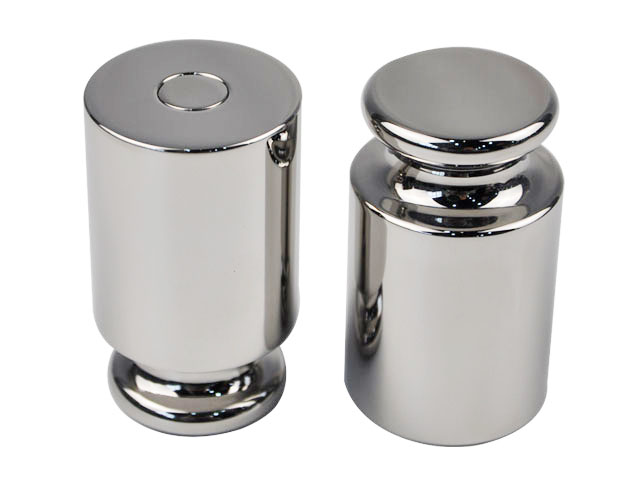
To understand the importance of calibration weights for bench scales, it is first necessary to recognize how bench scales operate and why regular calibration is non-negotiable. A typical bench scale uses a load cell or mechanical balancing mechanism to convert the force exerted by a placed object into a numerical weight reading. Over time, various factors can alter this conversion process: frequent use can cause minor wear to internal components, changes in ambient temperature and humidity can affect the sensitivity of measuring elements, accidental bumps or overloading can shift the scale’s internal balance, and even dust accumulation on the weighing platform can disrupt consistent readings. Calibration weights act as an objective, unchanging benchmark to counteract these shifts. When a calibration weight of a known, fixed mass is placed on the bench scale’s platform, the scale’s displayed reading should match the weight’s stated value within an acceptable tolerance range. If a discrepancy exists, the scale can be adjusted to align its output with the calibration weight’s true mass, restoring its measurement accuracy. This process is not a one-time task; it must be performed at regular intervals, as well as after any event that could impact the scale’s performance, such as moving the scale to a new location, cleaning the internal parts, or noticing sudden inconsistencies in weighing results.
Selecting the appropriate calibration weight for a bench scale is a nuanced process that depends on several key factors, starting with the scale’s weighing capacity and readability. A calibration weight set that works for a small bench scale used for portioning small ingredients will not be suitable for a heavy-duty bench scale designed for weighing bulk items in a warehouse, and vice versa. The first step in selection is matching the weight range to the scale’s maximum capacity: it is advisable to have calibration weights that cover the lower, mid-range, and upper limits of the scale’s regular operating range, not just the maximum capacity. For example, a bench scale with a maximum capacity of 20 kilograms used for daily tasks between 1 and 15 kilograms should have calibration weights spanning from 1 kilogram up to 15 kilograms, to ensure accuracy across the entire range of typical use, rather than only testing at the 20-kilogram maximum. The second critical factor is the tolerance level of the calibration weight, which must align with the scale’s required precision. Bench scales vary widely in their sensitivity; some are designed for general-purpose use with a larger tolerance for minor deviations, while others are used for tasks that demand tighter precision, such as packaging products to meet specific weight requirements. The calibration weight’s tolerance must be narrower than the scale’s acceptable measurement error to provide a valid reference, ensuring that any detected deviation in the scale’s reading is truly a result of the scale’s inaccuracy, not the weight’s own variability.
Material composition is another vital consideration when choosing calibration weights for bench scales, as the environment where the scale and weights are used will directly impact the weight’s durability and long-term accuracy. Common materials for bench scale calibration weights include stainless steel, cast iron, and aluminum, each with distinct properties suited for different settings. Stainless steel calibration weights are highly resistant to corrosion, rust, and minor scratches, making them ideal for humid environments, food processing areas, or spaces where exposure to moisture or mild chemicals is common. They are also relatively dense, allowing for compact sizing even at higher mass values, which makes them easy to handle and store. Cast iron calibration weights are more affordable and durable for heavy-duty, industrial use, often used for larger bench scales with higher capacity requirements, though they require protective coating to prevent rust in damp conditions. Aluminum weights are lightweight and easy to maneuver, perfect for smaller bench scales with lower capacity and for users who need to transport calibration weights between multiple workstations. When selecting a material, it is essential to assess the working environment: avoid materials that can corrode, warp, or accumulate debris easily, as any physical change to the calibration weight will alter its true mass and render it ineffective as a reference standard.
The design and form of calibration weights also play a role in their compatibility with bench scales. Most bench scale calibration weights come in compact, stackable shapes, such as cylindrical blocks or flat discs, which fit easily on the standard weighing platform of a bench scale without overhanging or shifting during measurement. Some weights feature a small handle or indentation for safe handling, which helps prevent direct contact with the main surface of the weight and reduces the risk of contamination. Weight sets are often available in standardized combinations that cover a range of mass values, allowing users to mix and match weights to reach specific target masses for calibration. This modular design is particularly useful for bench scales that require calibration at multiple points across their weighing range, as it eliminates the need for multiple individual, single-mass weights. When choosing between individual weights and sets, consider the frequency of calibration and the variety of weighing ranges needed; a comprehensive set is more cost-effective and practical for regular, multi-point calibration, while individual weights may suffice for occasional calibration of a scale with a narrow operating range.
Proper handling of calibration weights during bench scale calibration is just as important as selecting the right weight, as improper handling can introduce errors and compromise the weight’s accuracy. One of the most fundamental rules is to avoid touching the weighing surface of the calibration weight with bare hands. Human skin naturally produces oils, sweat, and tiny particles of debris, which can transfer to the weight’s surface and add a small but measurable amount of extra mass, leading to inaccurate calibration readings. For smaller calibration weights, specialized tweezers or lint-free gloves should be used for handling; for larger weights, soft, clean cotton gloves are recommended to maintain a secure grip without direct skin contact. When placing the calibration weight on the bench scale platform, it should be set down gently and centered on the platform to avoid uneven pressure, which can skew the scale’s reading. Dragging the weight across the platform or dropping it onto the surface can damage both the weight and the scale’s internal load cell, leading to permanent inaccuracies for both tools. Additionally, calibration weights should be allowed to acclimate to the ambient temperature of the scale’s working area before use. Metal weights expand slightly in warm temperatures and contract in cold temperatures, which can slightly alter their mass; leaving the weights in the same room as the scale for at least a few hours before calibration ensures that the weight and the scale are at the same temperature, eliminating temperature-related measurement errors.
The step-by-step process of calibrating a bench scale with calibration weights follows a consistent, methodical flow to ensure reliable results. First, the bench scale should be placed on a flat, stable surface free from vibrations, drafts, or sudden movements that could disrupt the weighing process. The scale should be turned on and allowed to warm up for the recommended period, as specified for the device, to ensure all internal components reach a stable operating state. The weighing platform should be cleared of any debris, dust, or leftover items, and the scale should be zeroed out to establish a clean baseline reading. Next, the smallest calibration weight in the selected range is placed gently on the center of the platform, and the displayed reading is recorded and compared to the weight’s stated mass. If the reading matches the known value within the acceptable tolerance, the scale is accurate at that range; if not, the scale’s calibration adjustment feature is used to align the reading with the weight’s mass. This process is repeated with mid-range and higher-value calibration weights, covering all critical points in the scale’s regular operating range. After adjusting at each weight level, a final verification test is performed by rechecking each weight to confirm that the adjustments hold consistent across the entire range. Once calibration is complete, the weight is removed gently, and the scale is zeroed again to prepare for regular use. It is important to document each calibration session, including the date, the weights used, the readings obtained, and any adjustments made; this documentation creates a traceable record of the scale’s performance over time and helps identify patterns of drift that may indicate the need for maintenance or repair.
Long-term maintenance of calibration weights is essential to preserve their accuracy and extend their usable life, as even the highest-quality weights will degrade without proper care. Calibration weights should be stored in a dedicated, clean, and dry case when not in use, separate from other tools or materials to prevent scratches, dents, or contamination. The storage case should have individual compartments for each weight to avoid contact between multiple weights, which can cause surface damage or particle transfer. The storage area should be free from extreme temperatures, high humidity, direct sunlight, and exposure to chemicals or corrosive fumes, all of which can damage the weight’s material and alter its mass. Regular inspection of calibration weights is necessary to check for signs of wear, rust, scratches, or debris buildup. Minor dust or particles can be removed with a soft, lint-free microfiber cloth or a gentle blast of compressed air; harsh cleaning agents, solvents, or abrasive scrubbers should never be used, as they can damage the weight’s surface and remove small amounts of material, changing its mass. If a weight shows signs of significant damage, such as deep scratches, dents, or corrosion, it should be removed from use and replaced immediately, as a damaged weight can no longer provide a reliable reference for calibration.
Even with proper selection, handling, and storage, calibration weights will gradually lose their accuracy over time due to normal wear and environmental exposure, so periodic re-verification is a necessary part of maintenance. The frequency of re-verification depends on how often the weights are used and the conditions of their storage and use; weights used daily in industrial settings may need re-verification more frequently than those used occasionally in a controlled office or retail environment. Re-verification involves comparing the weight’s actual mass to a higher-level reference standard to check for any deviation from its stated value. If the deviation falls outside the acceptable tolerance range, the weight can no longer be used for bench scale calibration and must be replaced. This step is crucial to ensure that the calibration process continues to provide accurate results, as an outdated or inaccurate calibration weight will lead to consistent errors in all subsequent bench scale measurements.
Calibration weights for bench scales also play a key role in maintaining consistency across multiple weighing stations in a single facility. In operations where multiple bench scales are used simultaneously, such as a large warehouse or a production facility with multiple packaging lines, using the same set of calibrated reference weights for all scales ensures that all devices produce consistent readings. This eliminates discrepancies between scales that could lead to inconsistent product weights, inventory errors, or miscommunication between work teams. Standardizing calibration practices with a single set of high-quality weights creates a unified measurement standard across the entire operation, streamlining quality control and reducing the risk of errors caused by inconsistent calibration.
There are several common mistakes that users make when using calibration weights with bench scales, all of which can compromise accuracy and lead to unreliable results. One frequent error is using a calibration weight that is mismatched to the scale’s capacity or precision, such as using a weight with a tolerance that is too wide for a high-precision bench scale, or using a small weight for calibrating a large-capacity industrial scale. Another common pitfall is skipping the temperature acclimation process, leading to temperature-induced mass changes that skew calibration results. Many users also make the mistake of handling weights with bare hands or storing them in unsuitable conditions, leading to contamination and gradual accuracy loss. Rushing the calibration process, skipping multi-point checks, or failing to document calibration results are also frequent errors that make it impossible to track the scale’s performance over time. By being aware of these mistakes and following consistent, careful practices for selection, handling, and maintenance, users can avoid these issues and ensure that their bench scales remain accurate and reliable.
In summary, calibration weights are an indispensable part of maintaining the functionality and accuracy of bench scales, serving as the foundation for reliable weighing across countless applications. From small retail settings to large industrial operations, the right calibration weights, when used and maintained properly, ensure that bench scales deliver consistent, precise readings day in and day out. The process of selecting, handling, calibrating, and maintaining these weights is not overly complex, but it requires attention to detail, consistency, and an understanding of how environmental factors and handling practices impact accuracy. Investing time and effort into proper calibration weight management pays off in the form of reduced measurement errors, improved quality control, streamlined operations, and long-term cost savings by extending the life of bench scales and avoiding costly mistakes caused by inaccurate weighing. As a simple yet critical reference standard, the calibration weight for bench scale remains a foundational tool in the world of precision measurement, supporting the smooth operation of businesses and workflows that depend on accurate weight data every day.
