





Changzhou Veidt Weighing Co., Ltd. © 2022 ALL RIGHTS RESERVED Privacy Policy | Calibration Weight | Test Weights | Cast Iron Weights | Standard Weights | Laboratory Weights | XML | SITEMAP
NEWS LIST
calibration weight for balance scale
Thursday 12th March 2026 Back to list
In every field that relies on precise mass measurement—whether it is scientific research, industrial production, laboratory testing, or daily commercial weighing—balance scales stand as indispensable tools for obtaining accurate numerical data. However, the reliability of these balance scales is not inherent; it depends entirely on regular calibration using standardized calibration weights, which serve as the fundamental reference for verifying and adjusting the measuring accuracy of balance scales. Without properly calibrated weights, even the most sophisticated balance scales will gradually deviate from true mass values over time, leading to flawed measurements that can compromise product quality, skew experimental results, disrupt production processes, and create unnecessary operational risks. Calibration weights for balance scales are not mere metal blocks with fixed mass; they are meticulously crafted precision components designed to maintain the integrity of weighing systems, bridging the gap between theoretical mass standards and real-world measurement practices. Their role extends far beyond simple adjustment, as they form the backbone of consistent, trustworthy weighing across countless applications, ensuring that every reading generated by a balance scale aligns with established mass norms and meets the practical demands of diverse working scenarios.
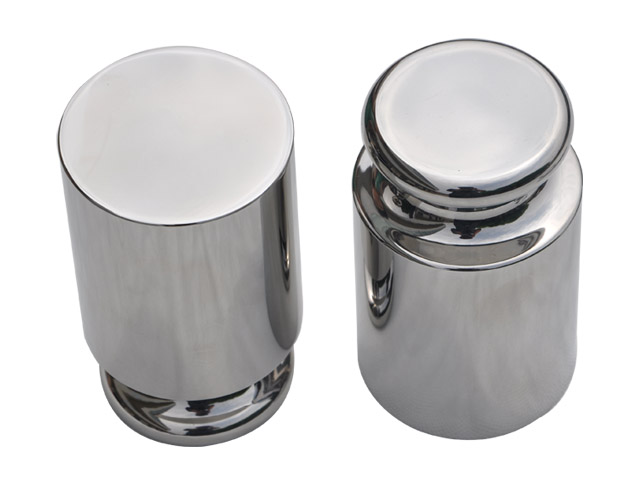
The design and manufacturing of calibration weights for balance scales adhere to strict structural and material standards, prioritizing stability, durability, and resistance to external factors that could alter their mass. Most high-quality calibration weights are constructed from corrosion-resistant metals such as stainless steel or hardened alloy materials, chosen for their ability to withstand long-term use without significant wear, oxidation, or dimensional changes. These materials are selected to minimize the impact of environmental conditions—such as humidity, temperature fluctuations, and exposure to mild chemicals—on the weight’s nominal mass, ensuring that the calibration reference remains consistent over extended periods. The physical structure of calibration weights is equally deliberate: most feature a compact, symmetrical cylindrical or rectangular shape with smooth, polished surfaces to prevent the accumulation of dust, debris, or moisture that could add unintended mass and skew calibration results. Larger calibration weights often include ergonomic handling features to facilitate safe placement on balance scales, while smaller precision weights are designed with minimal surface area to reduce the risk of contamination during handling. Each weight is engineered to match a specific nominal mass value, with tight tolerance levels that define the acceptable deviation from the true mass, ensuring that they can effectively calibrate balance scales of varying precision grades, from basic mechanical balances to high-sensitivity analytical scales used in controlled laboratory environments.
Understanding the classification of calibration weights is crucial for selecting the appropriate weight to match the precision requirements of a given balance scale, as different weight grades cater to distinct measurement needs and operating environments. Calibration weights are categorized based on their allowable mass tolerance, with higher precision grades featuring narrower tolerance ranges for ultra-accurate weighing tasks, and standard grades offering suitable accuracy for routine, general-purpose weighing. High-precision calibration weights are intended for use with analytical balances and precision laboratory scales, where even minute mass deviations can significantly impact results, such as in pharmaceutical research, chemical analysis, or materials science. These weights undergo rigorous manufacturing and testing to ensure minimal mass variation, making them ideal for applications that demand meticulous measurement control. Standard-grade calibration weights, on the other hand, are well-suited for industrial balance scales, commercial weighing equipment, and educational laboratory balances, where moderate precision meets daily operational needs. Selecting the correct class of calibration weight is not a matter of arbitrary choice; it requires assessing the balance scale’s intended use, its inherent precision capabilities, and the acceptable margin of error for the measurements being taken. Using an overly precise weight for a basic balance scale is inefficient, while using a low-precision weight for a high-sensitivity scale will fail to correct deviations effectively, undermining the entire calibration process.
The proper use of calibration weights for balance scales is a structured process that demands careful attention to detail, as even minor mishandling can compromise calibration accuracy and render the entire procedure ineffective. Before initiating calibration, it is essential to prepare both the balance scale and the calibration weights properly: the balance scale should be placed on a stable, level surface free from vibrations, air currents, and extreme temperature changes, as these factors can disrupt the scale’s internal mechanisms and affect readings. Calibration weights should be allowed to acclimate to the ambient temperature of the weighing environment, as significant temperature differences between the weight and the scale can cause thermal expansion or contraction, leading to temporary mass discrepancies and inaccurate calibration. When handling calibration weights, direct contact with bare hands should be avoided whenever possible, as skin oils, sweat, and dirt can transfer to the weight’s surface, altering its mass and introducing calibration errors. For small, high-precision weights, specialized tools such as lint-free gloves or non-magnetic forceps are recommended to maintain cleanliness and prevent contamination. During calibration, the calibration weight should be placed gently and centrally on the balance scale’s weighing platform to avoid uneven pressure distribution, which can cause the scale to register false mass values. The calibration process typically involves comparing the scale’s displayed reading to the nominal mass of the calibration weight, making incremental adjustments to the scale’s settings if discrepancies are detected, and repeating the process with multiple weights across the scale’s operating range to verify accuracy at different mass levels.
Calibration weights play a vital role in upholding quality control and operational consistency across a wide range of industries and professional settings, each with unique weighing demands that rely on accurate balance scale performance. In scientific laboratories, calibration weights are essential for ensuring the validity of experimental data, where precise mass measurements are critical for formulating chemical compounds, analyzing sample compositions, and conducting reproducible research. In pharmaceutical manufacturing, accurate weighing of active ingredients and excipients is non-negotiable to meet product specifications and safety standards, making regular calibration with reliable weights a core part of quality assurance protocols. Industrial production facilities depend on calibrated balance scales to measure raw materials, monitor production outputs, and maintain consistent product dimensions, preventing material waste, production delays, and defective goods caused by inaccurate weighing. Educational institutions use calibration weights to train students in proper laboratory techniques, teaching the importance of precision and accuracy in scientific measurement and instilling good practices for future professional work. Even in commercial settings, such as retail establishments and logistics operations, calibrated balance scales ensure fair trade by providing accurate weight readings for goods, protecting both businesses and consumers from incorrect pricing or misrepresentation. Across all these sectors, calibration weights serve as a universal standard for measurement integrity, ensuring that balance scales perform reliably and that weighing data is consistent, comparable, and fit for its intended purpose.
Regular maintenance and proper storage of calibration weights are essential to preserve their mass stability and extend their service life, as neglect can lead to gradual degradation, increased tolerance deviations, and unreliable calibration performance. Calibration weights should be stored in a clean, dry, and temperature-stable environment when not in use, typically in protective cases or foam-lined boxes that prevent physical damage, scratches, and exposure to dust, moisture, and corrosive substances. Avoiding contact with sharp objects, abrasive surfaces, and harsh chemicals is critical to maintaining the weight’s structural integrity and surface finish, as damage or corrosion can alter its nominal mass and render it unfit for calibration. Routine inspection of calibration weights is recommended to check for signs of wear, corrosion, deformation, or surface contamination; any visible damage or buildup of foreign matter should be addressed promptly with gentle cleaning using appropriate, non-abrasive materials to avoid altering the weight’s mass. It is also important to periodically re-verify the accuracy of calibration weights themselves, as prolonged use, repeated handling, and environmental exposure can cause subtle shifts in their mass over time. Re-verification ensures that the weights continue to meet their specified tolerance standards, providing confidence that they can effectively calibrate balance scales and deliver accurate measurement references. By implementing consistent maintenance and storage practices, users can safeguard the performance of their calibration weights, avoid costly replacements, and ensure long-term reliability in balance scale calibration.
Despite their robust design, calibration weights for balance scales are susceptible to common errors and misuse that can compromise calibration effectiveness, and understanding these pitfalls is key to achieving accurate and consistent weighing results. One of the most frequent issues is using damaged, worn, or contaminated calibration weights, as even small imperfections or foreign particles can create significant discrepancies between the nominal mass and the actual mass of the weight, leading to improperly calibrated scales. Another common mistake is failing to acclimate weights to the weighing environment, resulting in thermal effects that distort measurements and produce false calibration adjustments. Improper handling, such as dropping weights or placing them roughly on the scale, can damage both the calibration weight and the balance scale’s internal components, affecting the precision of both tools over time. Additionally, using mismatched weight classes for a balance scale—such as using a low-precision weight for a high-sensitivity analytical scale—will fail to correct minor deviations, leaving the scale inaccurate and unreliable. Neglecting to perform regular calibration and relying on outdated or untested weights is equally problematic, as balance scales naturally drift in accuracy over time due to mechanical wear, electronic drift, and environmental factors. By recognizing these common errors and adopting disciplined handling, calibration, and maintenance practices, users can mitigate risks, ensure that calibration weights perform as intended, and maintain the long-term accuracy of balance scales.
Looking ahead, the role of calibration weights for balance scales remains irreplaceable even as weighing technology continues to evolve, with digital balances and automated weighing systems becoming increasingly prevalent across industries. While modern balance scales feature advanced electronic components, enhanced sensitivity, and automated calibration functions, they still require physical calibration weights as the primary reference for verifying and validating their internal systems, as digital calibration alone cannot replicate the reliability of a standardized physical mass standard. Advancements in materials science and manufacturing techniques are continuously improving the quality and stability of calibration weights, with new alloys and surface treatments enhancing corrosion resistance, durability, and precision tolerance. These innovations are making calibration weights more adaptable to harsh operating environments, expanding their usability in industrial and field settings where traditional weights may face greater wear and tear. Furthermore, the growing emphasis on quality control, regulatory compliance, and standardized measurement practices across global industries is driving increased demand for high-quality calibration weights, as businesses and research institutions prioritize accurate, traceable weighing data. As measurement standards become more stringent and industries demand greater precision, calibration weights will continue to evolve alongside balance scale technology, maintaining their status as a cornerstone of reliable mass measurement.
In summary, calibration weights for balance scales are fundamental to the integrity of mass measurement, serving as the critical link between theoretical mass standards and practical weighing operations. Their meticulous design, material selection, and manufacturing ensure stable, consistent performance, while proper selection, handling, and maintenance maximize their effectiveness in calibrating balance scales of all types. From scientific laboratories and pharmaceutical facilities to industrial production lines and commercial establishments, calibration weights underpin accurate, reliable weighing that supports quality control, operational efficiency, and data validity. Investing in high-quality calibration weights and adhering to disciplined calibration practices is not just a technical necessity—it is a commitment to precision, consistency, and excellence in every application that depends on accurate mass measurement. As long as balance scales remain essential tools for quantifying mass, calibration weights will remain indispensable, ensuring that every reading is trustworthy, every measurement is precise, and every process relying on weighing data operates with confidence and reliability.
