





Changzhou Veidt Weighing Co., Ltd. © 2022 ALL RIGHTS RESERVED Privacy Policy | Calibration Weight | Test Weights | Cast Iron Weights | Standard Weights | Laboratory Weights | XML | SITEMAP
NEWS LIST
calibration weight for analytical balance
Thursday 12th March 2026 Back to list
In the realm of precision laboratory work, analytical balances stand as indispensable tools, tasked with delivering ultra-fine measurements that underpin the validity of countless experiments, quality control assessments, and research endeavors. At the heart of maintaining the reliability of these sensitive instruments lies the calibration weight—a small yet profoundly critical component that serves as the reference standard for verifying and adjusting weighing accuracy. Without properly selected, handled, and maintained calibration weights, even the most sophisticated analytical balance will gradually drift from its intended precision, leading to skewed data, flawed experimental outcomes, and compromised scientific or industrial integrity. This exploration delves into the multifaceted nature of calibration weights for analytical balances, covering their fundamental purpose, material characteristics, selection principles, proper handling protocols, long-term maintenance practices, and their pivotal role in sustaining consistent, trustworthy weighing performance across diverse laboratory settings.
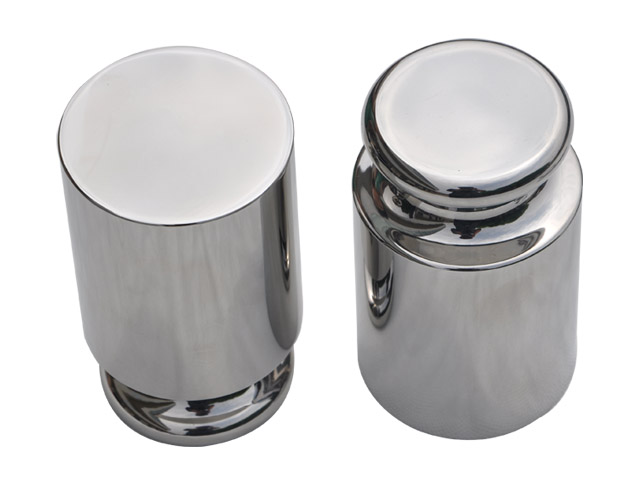
To grasp the significance of calibration weights, one must first understand the operational sensitivity of analytical balances. These devices are engineered to detect minuscule changes in mass, often measuring down to the tenth of a milligram or even finer increments, making them susceptible to a wide array of internal and external factors that can alter measurement accuracy. Over time, mechanical wear, fluctuations in ambient temperature and humidity, dust accumulation, and minor mechanical shifts can all cause an analytical balance to produce readings that deviate from true mass values. Calibration weights act as the fixed benchmark against which these deviations are measured and corrected; they are precisely manufactured objects with known, stable mass values, designed to provide a consistent reference point for balance calibration and routine performance checks. Unlike general-purpose weighing tools, analytical balances demand calibration weights of exceptional precision, as even the slightest discrepancy in the reference mass will translate directly into errors in every subsequent weighing operation, affecting everything from pharmaceutical formulation and chemical synthesis to material science testing and forensic analysis.
The physical and chemical properties of calibration weights are meticulously engineered to resist factors that could alter their mass, ensuring long-term stability and reliability. The most prevalent material used for high-precision calibration weights intended for analytical balances is non-magnetic stainless steel, chosen for its unique combination of durability, corrosion resistance, and density consistency. This type of stainless steel minimizes the risk of magnetic interference, a common issue that can disrupt the delicate weighing mechanism of analytical balances and introduce hidden measurement errors. Additionally, its resistance to oxidation and chemical corrosion prevents surface degradation that would otherwise add or remove tiny amounts of material, shifting the actual mass away from the nominal value. For ultra-fine analytical applications requiring the highest level of mass stability, specialized alloy compositions may be employed, offering even greater resistance to environmental stressors and dimensional changes. The surface finish of these weights is also carefully refined, typically polished to a smooth, non-porous texture to prevent the accumulation of dust, moisture, or chemical residues—substances that can add negligible but impactful mass over time and undermine calibration accuracy.
The design and construction of calibration weights for analytical balances are tailored to meet the stringent demands of micro-weighing and high-precision calibration. Weights are available in a range of nominal mass values, spanning from milligram-sized pieces for verifying low-load accuracy to larger gram-weight pieces for full-range calibration of the balance’s maximum capacity. Smaller milligram weights are often crafted as solid, compact pieces to maintain structural integrity and minimize surface area, while larger gram weights may feature a streamlined, robust design that resists physical damage without adding excess mass. Each weight is engineered to strict dimensional tolerances, ensuring uniform weight distribution and consistent contact with the balance pan, which is vital for obtaining stable, repeatable readings during calibration. Unlike standard commercial weights, those designed for analytical use are free of surface imperfections, sharp edges, or irregularities that could trap debris or affect the balance’s sensitive load cell. Furthermore, calibration weights are typically supplied in protective, fitted cases that hold each piece securely in place, preventing physical contact between weights that could cause scratching, abrasion, or mass loss, and shielding them from environmental contaminants when not in use.
Selecting the appropriate calibration weights for an analytical balance is a deliberate process that hinges on matching the weight’s precision class to the balance’s measurement capabilities, a step that directly impacts the effectiveness of calibration. A core guiding principle in this selection is that the tolerance of the calibration weight must be significantly narrower than the maximum allowable error of the balance at its various weighing points; as a general rule, the uncertainty of the calibration weight should be no more than one-third of the balance’s permissible error to ensure accurate correction. This means that high-precision analytical balances with fine readability require weights with tighter tolerances and higher inherent accuracy, while balances with slightly broader measurement ranges may utilize weights with appropriately matched precision levels. It is also essential to select a set of weights that covers critical points across the balance’s operating range, including low-load, mid-range, and near-maximum capacity, to verify linearity and consistent performance across all typical weighing scenarios. Relying solely on a single weight for calibration may overlook deviations in specific load ranges, leading to inaccurate readings during routine use. Laboratories must assess their typical weighing needs, the balance’s technical specifications, and the required level of measurement accuracy to curate a calibration weight set that aligns with their operational demands, avoiding both under-specification that compromises accuracy and over-specification that adds unnecessary complexity without tangible benefit.
Proper handling of calibration weights is equally as critical as their selection and material quality, as improper manipulation is one of the most common causes of mass drift and reduced calibration effectiveness. The golden rule of handling calibration weights for analytical balances is to avoid direct skin contact at all times. Human skin naturally carries oils, moisture, and tiny particulate matter, all of which can transfer to the weight’s surface, adding minute amounts of mass that accumulate over time and alter the reference value. Instead, dedicated non-metallic forceps or lint-free, powder-free gloves should be used to lift and place weights, ensuring no direct contact between the hands and the weight surface. Metal forceps should be avoided entirely, as they can scratch or dent the weight’s polished surface, leading to material loss or increased debris accumulation. When placing a weight on the balance pan, it should be set down gently and centered carefully to avoid jarring the balance’s internal components or creating uneven load distribution. After use, weights should be returned promptly to their designated slots in the protective case, never left exposed on lab benches or balance tops where they can collect dust, absorb moisture, or sustain accidental damage. Even small mishandling errors, such as dropping a weight or placing it on a contaminated surface, can compromise its mass stability and render it unfit for precise calibration, requiring thorough cleaning or reconditioning before reuse.
Routine cleaning and environmental management are key to preserving the mass stability and performance of calibration weights in analytical balance applications. Over time, even with careful handling, weights will accumulate minor residues from laboratory air, such as dust, chemical fumes, or microscopic moisture droplets, all of which can affect their nominal mass. Cleaning should be performed regularly but gently, using only lint-free, non-abrasive cloths and mild, non-corrosive cleaning agents suitable for the weight’s material; harsh chemicals or abrasive scrubbing should never be used, as they can damage the surface finish, corrode the metal, or remove small amounts of material. For light dust accumulation, a soft, dry brush or compressed clean air can be used to remove particles without direct contact. After cleaning, weights must be allowed to acclimate to the ambient temperature of the laboratory for a sufficient period before use, as temperature differences between the weight and the balance can create air currents or thermal expansion effects that disrupt weighing accuracy. The storage environment for calibration weights is equally vital; weights should be kept in a cool, dry, low-humidity area away from direct sunlight, chemical vapors, and sources of static electricity. Extreme temperatures or rapid temperature fluctuations can cause minor expansion or contraction of the weight material, temporarily altering its mass, while high humidity promotes corrosion and moisture absorption. A stable, controlled storage space helps maintain the weight’s physical and dimensional stability, ensuring it remains a reliable reference standard for extended periods.
Calibration frequency and performance verification are integral to maximizing the utility of calibration weights and ensuring ongoing analytical balance accuracy. There is no universal calibration schedule, as it varies based on factors such as the balance’s usage intensity, environmental conditions, and the criticality of the measurements being taken. For high-traffic laboratories conducting daily precision weighing, daily or pre-use calibration checks using reference weights are often necessary to catch drift early and maintain consistent accuracy. For less frequently used balances, weekly or monthly verification may suffice, though regular checks are still essential to prevent gradual, unnoticeable deviations. During each calibration or verification routine, technicians should record the balance’s readings against the nominal mass of the calibration weights, documenting any discrepancies and noting trends over time. Consistent, minor deviations may signal a need for balance adjustment, while sudden, significant shifts could indicate damage to the balance, contamination of the weight, or environmental changes that need addressing. It is also crucial to periodically cross-verify calibration weights against higher-grade reference standards to confirm their own mass stability, as even the most well-maintained weights can experience subtle mass changes over years of use. This layered approach to verification—using calibration weights to check the balance, and higher standards to check the weights—creates a robust quality control loop that safeguards measurement reliability.
Beyond routine calibration, calibration weights play a vital role in troubleshooting analytical balance issues and validating measurement consistency. When an analytical balance produces erratic readings, inconsistent results, or values that deviate from expected outcomes, calibration weights serve as the primary diagnostic tool to isolate the problem. By testing the balance with multiple weights across different mass ranges, technicians can determine whether the issue stems from balance malfunction, environmental interference, or user error. For example, consistent inaccuracies across all weight ranges may indicate a need for internal balance adjustment, while errors only at specific load points could signal a problem with the balance’s load cell or linearity. Calibration weights also enable laboratories to validate the reproducibility of measurements, ensuring that the balance delivers consistent results across multiple users, multiple weighing sessions, and varying daily conditions. In regulated laboratory environments, maintaining thorough records of calibration weight use, calibration dates, and performance checks is essential for demonstrating measurement traceability and reliability, even without formal certification documentation. These records provide a clear audit trail of quality assurance efforts, confirming that the analytical balance is operating within acceptable accuracy parameters and that calibration practices align with industry best practices.
Common challenges associated with calibration weights for analytical balances often stem from neglect, improper use, or environmental factors, but most can be mitigated with proactive care and adherence to established protocols. One prevalent issue is gradual mass loss or gain due to inadequate cleaning, corrosion, or physical damage, which can go undetected until significant calibration errors emerge. Regular inspection of weights for signs of wear, corrosion, scratching, or deformation can help identify these issues early, allowing for timely cleaning, reconditioning, or replacement. Another challenge is static electricity buildup, particularly in dry laboratory environments, which can cause lightweight milligram weights to cling to forceps or the balance pan, disrupting measurements. Using anti-static storage cases and ensuring proper laboratory humidity levels can reduce static buildup and minimize its impact. Over-reliance on a single calibration weight, rather than a comprehensive set, is also a common pitfall, as it fails to assess the balance’s performance across its full operating range. By addressing these challenges through consistent handling, regular maintenance, and thoughtful selection, laboratories can extend the service life of their calibration weights and maintain the highest level of accuracy in their analytical balance operations.
Investing time and resources into proper calibration weight management yields substantial long-term benefits for any laboratory relying on analytical balances. Accurate, reliable weighing measurements are the foundation of credible scientific research, precise manufacturing quality control, and compliant regulatory testing, and calibration weights are the cornerstone of that accuracy. Well-maintained, appropriately selected calibration weights reduce the risk of costly errors, such as wasted materials, failed experiments, or non-compliant product batches, and eliminate the need for frequent, unnecessary balance servicing or replacement. They also instill confidence in laboratory results, ensuring that data collected is trustworthy, reproducible, and fit for its intended purpose, whether that is advancing scientific knowledge, ensuring product safety, or meeting industry standards. In a field where precision is non-negotiable, calibration weights are not just accessories for analytical balances—they are essential quality assurance tools that bridge the gap between raw measurement and reliable data, making them an indispensable part of daily laboratory operations.
In summary, calibration weights are a vital, often underappreciated, component of effective analytical balance use, combining precision engineering, careful material selection, and diligent handling to sustain accurate weighing performance. From their role as reference standards to their impact on data integrity, every aspect of calibration weight management contributes to the overall reliability of laboratory measurements. By prioritizing proper selection, adhering to strict handling and cleaning protocols, maintaining consistent calibration schedules, and mitigating common environmental and operational risks, laboratories can harness the full potential of their analytical balances and ensure that every measurement is rooted in accuracy. As precision requirements continue to rise across scientific, industrial, and regulatory fields, the importance of high-quality calibration weights and meticulous maintenance practices will only grow, solidifying their place as a fundamental element of successful laboratory work.
