





Changzhou Veidt Weighing Co., Ltd. © 2022 ALL RIGHTS RESERVED Privacy Policy | Calibration Weight | Test Weights | Cast Iron Weights | Standard Weights | Laboratory Weights | XML | SITEMAP
NEWS LIST
calibration weight class m1
Thursday 12th March 2026 Back to list
In the vast and interconnected world of measurement and metrology, calibration weights stand as silent yet indispensable guardians of accuracy, ensuring that every reading from a weighing instrument is grounded in a consistent, trustworthy standard. Among the diverse range of weight classes designed to meet varying precision needs, Class M1 calibration weights occupy a unique and vital position, striking a harmonious balance between functional accuracy, practical durability, and widespread usability across countless industrial, commercial, and laboratory settings. Unlike ultra-high-precision weights reserved for specialized scientific research or critical national metrology labs, M1 weights are engineered for everyday reliability, catering to the routine calibration demands that keep global supply chains, manufacturing processes, and commercial transactions running smoothly. To understand the true significance of Class M1 calibration weights is to recognize the unsung role of mid-tier precision tools in upholding the integrity of mass measurement, a fundamental pillar of modern industry and trade that often goes unnoticed until accuracy falters.
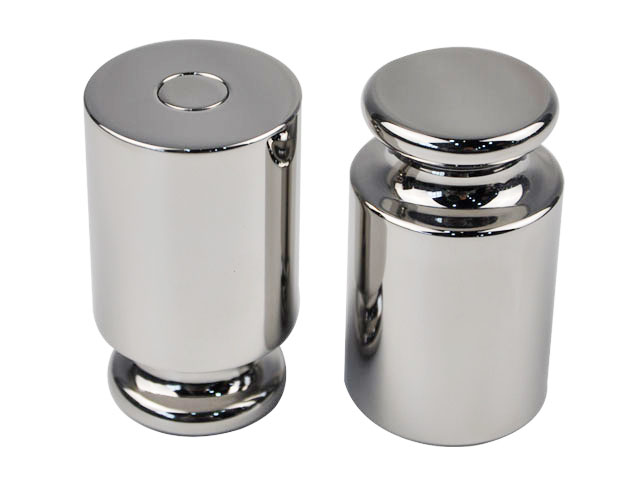
At its core, Class M1 represents a defined tier of metrological performance, characterized by specific tolerance limits that govern the acceptable deviation from a stated nominal mass value. These tolerance parameters are carefully calibrated to align with the needs of general weighing applications, where extreme precision is not required but consistent, repeatable results are non-negotiable. The permissible error range for M1 weights scales proportionally with their nominal mass, meaning smaller weights carry tighter error margins while larger weights maintain a controlled level of deviation relative to their size. This structured approach to tolerance ensures that M1 weights remain fit for purpose across a broad spectrum of load capacities, from small gram-level weights used for bench-top scales to heavy kilogram weights deployed for industrial platform scales and floor-mounted weighing systems. Unlike higher precision classes that demand stringent environmental controls and delicate handling, M1 weights are built to tolerate the minor fluctuations and operational stresses of real-world workspaces, making them a versatile choice for teams that need reliable calibration tools without the overhead of specialized care protocols.
The physical design and material composition of Class M1 calibration weights are tailored to enhance their longevity and performance in diverse operating conditions, reflecting a deep understanding of the practical challenges faced in daily calibration work. Common materials used for M1 weights include robust cast iron and corrosion-resistant stainless steel, each selected for distinct advantages that suit different environmental and operational needs. Cast iron M1 weights are prized for their exceptional density, cost-effectiveness, and ability to withstand heavy use in industrial environments, such as manufacturing floors, warehouses, and outdoor weighing stations; they are often finished with a protective coating to resist rust and abrasion, preserving their mass integrity even in moderately harsh conditions. Stainless steel M1 weights, on the other hand, offer superior resistance to moisture, chemical exposure, and staining, making them ideal for cleanroom environments, food processing facilities, laboratories, and indoor commercial settings where hygiene and corrosion resistance are paramount. Both material variants adhere to consistent dimensional standards, with classic cylindrical shapes, convenient handling features for larger weights, and precision-machined surfaces that minimize wear and maintain stable mass over time. Many M1 weights also feature integrated adjustment cavities, carefully sealed to preserve internal balancing materials, allowing for fine-tuning of mass values when necessary to maintain performance within specified tolerance ranges over years of use.
The versatility of Class M1 calibration weights is evident in their extensive range of applications, spanning nearly every sector that relies on accurate mass measurement. In commercial environments, M1 weights are routinely used to calibrate point-of-sale scales, retail weighing systems, and packaging machinery, ensuring that customers receive fair quantities of goods and businesses maintain compliance with fair trading practices. For small to mid-sized manufacturers, these weights play a critical role in quality control processes, calibrating production line scales used to measure raw materials, component parts, and finished products, which directly impacts product consistency, waste reduction, and production efficiency. In educational and research laboratories, M1 weights serve as reliable reference tools for teaching basic metrology principles, conducting routine experiments, and calibrating general-purpose analytical balances that do not require ultra-high precision. Heavy-duty M1 weights are also indispensable for calibrating larger industrial weighing equipment, including platform scales, crane scales, and bulk material weighers, supporting industries such as logistics, construction, agriculture, and mining where accurate mass measurement of heavy loads is essential for operational safety and cost management. Even in municipal and public sector operations, M1 weights find use in calibrating equipment for waste management, inventory tracking, and public utility services, underscoring their universal utility across both private and public domains.
Proper handling and maintenance are key to preserving the performance and lifespan of Class M1 calibration weights, as even small oversights can lead to gradual mass drift or premature wear that compromises calibration accuracy. One of the most fundamental practices is avoiding direct physical contact with bare hands, as natural oils, moisture, and debris on skin can accumulate on the weight surface, altering its mass over time; instead, users should wear clean, lint-free gloves or use specialized handling tools to lift and position weights. When not in use, M1 weights should be stored in a dedicated, clean, and dry storage case or cabinet, protected from dust, moisture, chemical fumes, and physical impact that could cause scratches, dents, or corrosion. Regular cleaning is also essential, using mild, non-abrasive cleaning agents and soft cloths to remove surface contaminants without damaging the protective finish or altering the weight’s mass. It is crucial to avoid dropping or mishandling M1 weights, as sudden impact can distort their shape, shift internal balancing materials, or create micro-abrasions that accelerate wear and affect measurement accuracy. Additionally, periodic performance checks are recommended to verify that weights remain within their specified tolerance ranges; while these checks are guided by operational needs and usage frequency, they help catch minor deviations early, preventing inaccurate calibrations that could lead to costly errors in production, trade, or testing.
When selecting Class M1 calibration weights for a specific application, several practical factors should be considered to ensure the right fit for operational needs, avoiding both underperformance and unnecessary overinvestment. First and foremost, users must assess the precision requirements of the weighing instruments being calibrated, matching the tolerance capabilities of M1 weights to the acceptable error limits of the target scales. For instruments that handle high-value materials or require tight measurement control, confirming that M1 weights meet the necessary precision thresholds is essential, while for general-purpose weighing, M1 weights typically offer more than sufficient accuracy. The nominal mass range of the weights is another critical consideration; it is advisable to select a comprehensive set of M1 weights that covers the full weighing range of the equipment, from small incremental weights for fine calibration to larger weights for full-load testing. Environmental conditions also play a role in material selection: stainless steel M1 weights are preferable for humid, corrosive, or hygienic environments, while cast iron weights are a practical choice for dry, industrial settings with heavy-duty usage. Finally, the frequency of calibration and expected lifespan should factor into the decision, as investing in well-constructed M1 weights that resist wear and maintain stability will deliver long-term value through reduced replacement needs and consistent performance.
Class M1 calibration weights also play a pivotal role in supporting metrological traceability, a core principle that links every mass measurement to a recognized global standard, ensuring consistency and comparability across different locations, industries, and measurement systems. While M1 weights are not classified as primary reference standards, they serve as a critical link between high-level national metrology standards and everyday weighing equipment, enabling laboratories, businesses, and industrial facilities to maintain traceable measurements without the need for direct access to ultra-high-precision reference weights. This intermediate role is invaluable for small and medium-sized enterprises, educational institutions, and local industrial operations that require traceable calibration but lack the resources or infrastructure to maintain higher precision weight classes. By using M1 weights that are themselves calibrated against higher-tier standards, organizations can uphold the integrity of their measurement processes, meet internal quality assurance goals, and satisfy external requirements for consistent, reliable data. In this way, M1 weights act as a bridge between elite metrology laboratories and the frontline operations that drive global commerce and production, democratizing access to accurate mass measurement for users across all levels of industry and research.
In comparison to other weight classes, Class M1 stands out for its exceptional practicality and adaptability, distinguishing itself from both higher-precision tiers and lower-grade alternatives. Higher precision weight classes demand rigorous environmental controls, specialized handling, and frequent recalibration, making them impractical and cost-prohibitive for routine, large-scale calibration tasks. Lower-grade weight classes, while more affordable, lack the consistent accuracy needed for reliable measurement, leading to unreliable readings, process inefficiencies, and potential compliance risks. M1 weights navigate this middle ground effectively, offering enough precision to meet the demands of most common applications while remaining robust enough to withstand regular use in varied settings. This balance has cemented M1 as one of the most widely adopted weight classes globally, a testament to its ability to meet the real-world needs of users who prioritize reliability, affordability, and ease of use without compromising on essential metrological performance. Whether in a small retail shop, a busy manufacturing plant, a teaching laboratory, or a regional logistics hub, M1 calibration weights deliver consistent, dependable results day in and day out, earning their status as a workhorse of modern mass calibration.
Looking ahead, the relevance of Class M1 calibration weights remains strong amid ongoing advancements in weighing technology and metrological practices. As digital weighing systems become more sophisticated and integrated into automated production lines, the need for consistent, accessible calibration tools like M1 weights only grows; even the most advanced digital scales rely on physical reference standards to verify their accuracy, and M1 weights provide a cost-effective, practical solution for ongoing calibration and performance verification. Additionally, as global standards for quality control and fair trade continue to evolve, the demand for reliable mid-tier calibration tools will persist, as businesses and organizations seek to maintain compliance and operational efficiency without incurring excessive costs. Innovations in material science and manufacturing techniques may further enhance the durability and performance of M1 weights, refining their tolerance consistency and environmental resistance, but their core purpose—delivering reliable, accessible calibration for everyday use—will remain unchanged.
Beyond their technical and operational value, Class M1 calibration weights embody a broader commitment to precision and accountability in modern society. Every time an M1 weight is used to calibrate a scale, it reinforces trust in commercial transactions, ensures product quality in manufacturing, supports accurate scientific inquiry, and promotes safety in industrial operations. These small but impactful contributions ripple outward, affecting everything from consumer confidence in retail purchases to the reliability of industrial supply chains, from the validity of educational research to the efficiency of global logistics networks. In a world that increasingly relies on data-driven decision-making, the accuracy of mass measurements enabled by tools like M1 calibration weights is not just a technical detail—it is a foundational element of fair, efficient, and responsible operations across all sectors.
In conclusion, Class M1 calibration weights are far more than just standardized metal masses; they are a cornerstone of reliable mass measurement, a practical solution to the universal need for consistent calibration, and a symbol of the quiet precision that underpins modern industry and trade. Their balanced design, versatile applications, and durable construction make them an essential tool for countless users, from small business owners to industrial engineers, educators to logistics managers. By bridging the gap between high-precision metrology and everyday practicality, M1 weights fulfill a critical role that few other weight classes can match, delivering steady, trustworthy performance that supports the smooth functioning of global systems. As long as accurate mass measurement remains a necessity, Class M1 calibration weights will continue to hold their place as an indispensable asset, proving that the most valuable tools are often those that combine functionality, reliability, and accessibility in equal measure.
