





Changzhou Veidt Weighing Co., Ltd. © 2022 ALL RIGHTS RESERVED Privacy Policy | Calibration Weight | Test Weights | Cast Iron Weights | Standard Weights | Laboratory Weights | XML | SITEMAP
NEWS LIST
calibration weight class e2
Thursday 12th March 2026 Back to list
In the intricate world of precision measurement, calibration weights stand as the unsung backbone of reliable mass determination, bridging the gap between theoretical mass standards and real-world weighing operations. Among the various accuracy classes defined for these critical tools, Class E2 calibration weights occupy a unique and vital position, balancing exceptional precision with practical usability for high-stakes measurement tasks. Unlike standard weights designed for routine industrial or commercial weighing, Class E2 weights are engineered to meet stringent performance criteria, making them indispensable for applications where even the tiniest deviation in mass can compromise results, alter experimental outcomes, or disrupt quality control processes. This deep dive into Class E2 calibration weights explores their core characteristics, material composition, functional design, practical applications, handling protocols, and long-term value in the global landscape of precision metrology, shedding light on why these weights are a cornerstone of accurate mass measurement across diverse professional fields.
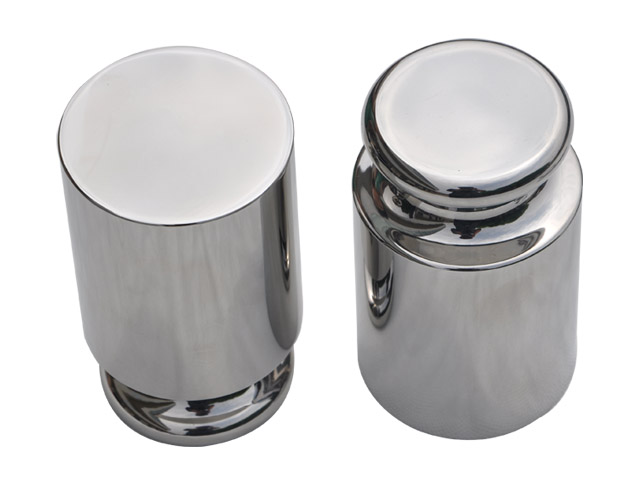
To understand the significance of Class E2 calibration weights, it is essential to first grasp their place within the hierarchy of precision weight classes. These weights fall into the upper echelon of precision mass standards, positioned just below the highest accuracy tier, yet far exceeding the performance capabilities of lower-grade weights used for general calibration work. What sets Class E2 weights apart is their exceptionally narrow tolerance range for mass deviation, a parameter that dictates their suitability for high-precision instrumentation. Every Class E2 weight is crafted to maintain mass values within extremely tight limits, with allowable errors that are minuscule even for smaller nominal masses, and only marginally larger for heavier specimens. This level of precision is not accidental; it is the result of rigorous manufacturing controls, meticulous material selection, and precise finishing processes that eliminate inconsistencies that could skew mass measurements. Unlike lower-class weights that may tolerate minor imperfections or surface irregularities, Class E2 weights are held to a standard of uniformity that ensures consistency across every unit, regardless of nominal mass, from milligram-scale weights used for micro-weighing to larger kilogram weights for bulk precision calibration.
Material selection is a foundational element of Class E2 calibration weight performance, as the physical and chemical properties of the material directly impact stability, durability, and resistance to external factors that could alter mass over time. The vast majority of Class E2 weights are constructed from high-grade non-magnetic stainless steel, a material chosen for its unique combination of desirable traits that align with the demands of precision metrology. This specific type of stainless steel offers excellent resistance to corrosion, oxidation, and tarnishing, preventing the formation of surface deposits or material degradation that could add or remove mass unexpectedly. It also boasts a consistent density, which is critical for minimizing errors caused by air buoyancy during weighing procedures, a factor that becomes increasingly important in high-precision work where even slight density variations can introduce measurable discrepancies. Additionally, the low magnetic susceptibility of this stainless steel ensures that the weights do not interact with magnetic fields present in laboratory or industrial environments, eliminating a common source of interference that can disrupt the balance of precision scales and analytical balances. The material is also robust enough to resist minor physical impacts and wear, though careful handling remains paramount, as even small scratches or dents can affect the surface integrity and, in turn, the precise mass of the weight.
The manufacturing process for Class E2 calibration weights is a multi-stage, highly controlled endeavor that leaves no room for error, with each step designed to refine the weight to its exact nominal mass within the specified tolerance. It begins with the selection of raw material blanks that meet strict purity and uniformity standards, free from internal voids, inclusions, or compositional variations that could compromise mass stability. These blanks are then subjected to precision machining using advanced equipment, which shapes the weight into its final form—typically cylindrical for larger masses with a convenient handling knob, or flat, compact shapes for smaller milligram weights—with extreme dimensional accuracy. Following machining, the weights undergo intensive surface finishing, often involving multiple rounds of polishing to achieve a smooth, non-porous surface that repels dust, moisture, and oils. This smooth finish is not merely aesthetic; it prevents the accumulation of contaminants that could alter the weight’s mass over time, a crucial detail for maintaining long-term precision. After shaping and polishing, each weight undergoes a rigorous calibration and adjustment process conducted in controlled laboratory environments, where temperature, humidity, and air pressure are stabilized to eliminate environmental variables. Skilled technicians use higher-precision reference standards to fine-tune the mass of each E2 weight, making minute adjustments to ensure it falls perfectly within the allowable tolerance range. Once calibrated, the weights undergo comprehensive testing to verify stability, repeatability, and compliance with performance benchmarks, ensuring that every unit leaving the production floor meets the strict criteria for Class E2 classification.
The functional design of Class E2 calibration weights is tailored to enhance usability while preserving precision, with thoughtful details that address the unique needs of professionals working in high-precision settings. Larger Class E2 weights often feature a centralized, ergonomic knob that allows for safe handling without direct contact with the main weighing surface, reducing the risk of oil transfer from skin contact or accidental damage. Smaller milligram and gram weights, which are more delicate, are often paired with specialized handling tools such as non-magnetic tweezers and lint-free gloves, which are essential for maintaining their integrity. Many Class E2 weights are also available in matched sets, housed in protective, dust-proof cases that organize weights by nominal mass and shield them from environmental hazards when not in use. These cases are designed to prevent contact between individual weights, avoiding scratches or abrasions that could affect mass, and are often lined with soft, non-abrasive material to further safeguard the polished surfaces. The marking of nominal mass on each weight is done with permanent, non-intrusive engraving, ensuring the identification remains clear without adding or removing material in a way that could disrupt the calibrated mass. Every design choice, from shape to packaging, prioritizes the preservation of precision and ease of correct use, recognizing that even small oversights in handling or storage can erode the accuracy of these high-precision tools.
Class E2 calibration weights find their purpose in a wide array of applications where precision is non-negotiable, spanning scientific research, industrial quality control, pharmaceutical development, materials testing, and metrological laboratories. One of their primary roles is the calibration and verification of high-precision weighing instruments, including analytical balances, semi-micro balances, and microbalances that measure mass with extraordinary sensitivity. These instruments are commonplace in research laboratories, where scientists rely on accurate mass measurements for chemical synthesis, sample preparation, material analysis, and experimental replication. In pharmaceutical manufacturing, where strict quality standards govern every stage of production, Class E2 weights are used to calibrate weighing equipment for active pharmaceutical ingredients, excipients, and dosage formulations, ensuring that each component is measured with the accuracy required to meet product specifications and regulatory expectations. In the field of metrology, Class E2 weights serve as secondary reference standards, used to calibrate lower-class weights and maintain the traceability of mass measurements across different facilities and industries. They are also essential in industries such as aerospace, electronics, and precious metals, where even minor variations in component mass can impact product performance, safety, or value. Whether in a university research lab exploring new materials, a pharmaceutical plant producing life-saving medications, or a calibration laboratory maintaining industry-wide measurement standards, Class E2 weights provide the reliable mass reference needed to uphold accuracy and consistency.
Proper handling and maintenance are critical to preserving the precision and service life of Class E2 calibration weights, as their high accuracy makes them susceptible to degradation from improper use, environmental exposure, or neglect. The golden rule of handling Class E2 weights is to avoid direct skin contact at all times, as natural oils, sweat, and skin particles can adhere to the polished surface, adding minute amounts of mass that accumulate over time and throw off calibration. Instead, users should always wear lint-free, powder-free gloves or use dedicated non-magnetic tweezers to lift and place the weights, taking care to move them slowly and deliberately to prevent collisions with balance pans or other weights. Before use, it is important to ensure that both the weight and the weighing instrument have reached thermal equilibrium with the surrounding environment, as temperature differences can cause slight expansion or contraction that affects mass readings temporarily. The working environment should be clean, low-humidity, and free from excessive dust, vibrations, or temperature fluctuations, all of which can interfere with both the weight and the precision balance. After use, any minor surface contaminants should be gently removed with a soft, lint-free cloth or a specialized cleaning swab, taking care not to scratch the polished surface, before returning the weight to its designated slot in the protective case. Regular inspection for signs of wear, corrosion, or damage is also recommended; even small blemishes can signal a potential loss of precision, warranting a re-calibration check.
Long-term care for Class E2 calibration weights extends beyond daily handling to include scheduled re-calibration and proper storage practices. While these weights are engineered for exceptional stability, no precision mass standard remains accurate indefinitely. Regular use, minor wear, and subtle environmental changes can gradually shift the mass of the weight outside its specified tolerance, making periodic re-calibration essential. The frequency of re-calibration depends on usage intensity and environmental conditions; weights used daily in busy laboratories may require more frequent checks than those used occasionally in controlled settings. Storage should always be in the original protective case, placed in a stable, dry cabinet away from direct sunlight, heat sources, and corrosive fumes. Avoid storing Class E2 weights near electronic equipment that generates magnetic fields, as prolonged exposure can impact the non-magnetic properties of the stainless steel over time. It is also advisable to keep the storage case closed when not in use to prevent dust accumulation, and to avoid stacking heavy objects on top of the case, which could damage the weights inside. By adhering to these maintenance protocols, users can extend the functional life of Class E2 weights and ensure that they continue to deliver reliable, precise mass measurements for years on end.
A common misconception surrounding Class E2 calibration weights is that they are overly specialized and only necessary for extreme precision scenarios, but this overlooks their broad value in maintaining measurement integrity across everyday high-precision operations. While it is true that they are not intended for rough, routine weighing tasks where lower-class weights suffice, their role as a bridge between top-tier reference standards and practical laboratory or industrial use makes them a cost-effective investment for any facility that prioritizes accurate measurements. Opting for lower-class weights in high-precision applications may seem economical in the short term, but the increased risk of measurement errors can lead to costly consequences, including wasted materials, flawed research data, failed quality inspections, and compromised product quality. Class E2 weights strike a balance between unparalleled precision and real-world usability, offering a level of accuracy that meets the demands of critical applications without the excessive specialization of the highest accuracy weight classes. This balance makes them a versatile and essential tool for professionals who need reliable mass calibration without compromising on performance.
In the broader context of global metrology and quality assurance, Class E2 calibration weights play a pivotal role in maintaining consistency and uniformity in mass measurements across borders, industries, and disciplines. As industries become more interconnected and global supply chains rely on standardized measurements, the need for reliable, high-precision calibration tools has never been greater. Class E2 weights ensure that weighing instruments in different laboratories, manufacturing plants, and testing facilities operate on the same consistent mass scale, enabling cross-facility collaboration, accurate data sharing, and compliance with strict quality benchmarks. They embody the core principle of metrology: that reliable measurements are the foundation of scientific progress, industrial innovation, and product safety. Without precise calibration tools like Class E2 weights, even the most advanced weighing instruments would be rendered unreliable, producing inconsistent results that hinder research, disrupt production, and erode trust in measurement data.
Looking ahead, the relevance of Class E2 calibration weights is set to endure as advancements in technology continue to push the boundaries of precision measurement. New developments in materials science may refine the composition of these weights further, enhancing their stability and resistance to environmental factors, while innovations in manufacturing may streamline production processes without compromising accuracy. However, the core purpose of Class E2 weights will remain unchanged: to provide a consistent, reliable mass reference for critical calibration tasks. As industries such as biotechnology, nanotechnology, and advanced manufacturing evolve and demand even greater measurement precision, the role of Class E2 weights as a trusted calibration standard will only grow. They represent a timeless commitment to accuracy in a world that increasingly depends on precise data, serving as a reminder that the most advanced technological systems rely on the fundamental reliability of well-crafted, high-precision tools.
In conclusion, Class E2 calibration weights are far more than just metal masses; they are precision-engineered instruments that underpin accuracy in countless high-stakes measurement applications. From their stringent material selection and meticulous manufacturing to their diverse practical uses and strict handling requirements, every aspect of these weights is designed to uphold the highest standards of mass measurement. They fill a critical niche in the hierarchy of precision weights, offering a unique blend of top-tier accuracy and practical functionality that makes them indispensable to researchers, quality control specialists, metrologists, and manufacturing professionals worldwide. By investing in proper handling, maintenance, and periodic re-calibration, users can harness the full potential of Class E2 calibration weights, ensuring that their weighing operations remain accurate, consistent, and reliable. In a world where precision drives progress, Class E2 calibration weights stand as a testament to the importance of meticulous craftsmanship and unwavering commitment to measurement excellence, continuing to support innovation and quality across every field that relies on accurate mass determination.
