





Changzhou Veidt Weighing Co., Ltd. © 2022 ALL RIGHTS RESERVED Privacy Policy | Calibration Weight | Test Weights | Cast Iron Weights | Standard Weights | Laboratory Weights | XML | SITEMAP
NEWS LIST
calibration weight class e1
Thursday 12th March 2026 Back to list
In the intricate and precise realm of metrology, calibration weights stand as the unsung cornerstones of accurate measurement, bridging the gap between theoretical mass standards and real-world weighing operations. Among the various accuracy classes of calibration weights, Class E1 weights occupy a unique and irreplaceable position, embodying the pinnacle of meticulous craftsmanship, strict dimensional control, and unwavering mass stability. These weights are not mere pieces of shaped metal; they are precision-engineered artifacts designed to uphold the integrity of mass measurement across the most demanding industrial, scientific, and laboratory environments, where even the tiniest deviation can cascade into significant errors in research outcomes, production quality, and regulatory compliance. Unlike standard weights intended for routine calibration tasks, Class E1 calibration weights are crafted to meet extraordinarily tight tolerance thresholds, with mass values that remain remarkably consistent over time, resisting the subtle shifts and degradations that can compromise less precise weighing standards.
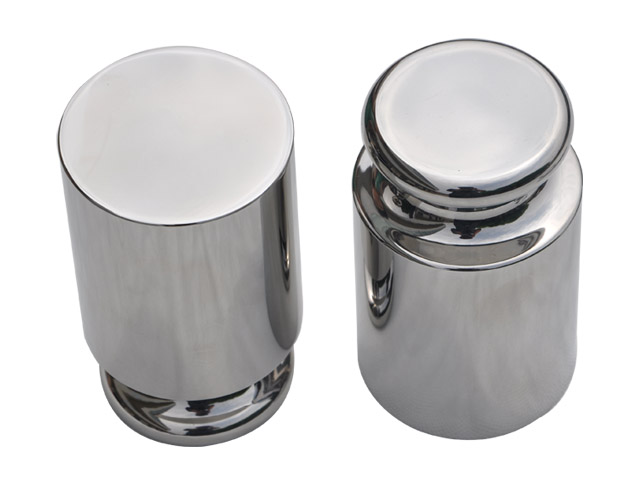
The fundamental purpose of Class E1 calibration weights revolves around providing a reliable, traceable reference for mass calibration, serving as a primary benchmark for verifying and calibrating other high-precision weighing equipment and lower-class reference weights. In settings where measurement sensitivity reaches microgram levels, such as advanced analytical laboratories, pharmaceutical research facilities, aerospace component manufacturing, and national metrology institutes, the reliability of every weighing reading hinges on the accuracy of the calibration weights used to validate the equipment. Class E1 weights are specifically engineered to cater to these ultra-precise applications, where the margin for error is infinitesimal, and consistency is non-negotiable. They act as a critical link in the chain of measurement traceability, ensuring that mass measurements taken in disparate locations and across different timeframes remain comparable, consistent, and trustworthy, forming the backbone of global standardization in mass metrology without reliance on external certification or branded validation.
The physical and material composition of Class E1 calibration weights is a masterclass in precision engineering, tailored to minimize external interference and maintain long-term mass stability. Crafted from high-grade, non-magnetic stainless steel alloys, these weights are formulated to resist corrosion, magnetic attraction, and surface wear—factors that can subtly alter mass over extended use. The material density is carefully controlled to fall within a narrow, specified range, ensuring uniformity across every weight in a set and eliminating discrepancies caused by material inconsistencies. Each Class E1 weight is manufactured as a single, monolithic piece, with no internal adjustments or modular components that could loosen, shift, or introduce mass variations over time. This solid, one-piece construction enhances structural integrity, preventing the accumulation of dust, moisture, or debris within internal cavities that could compromise measurement accuracy. The surface finish of these weights is equally meticulous: polished to a smooth, low-roughness texture, it resists the adhesion of contaminants and simplifies gentle cleaning, while also reducing the risk of surface abrasions that could alter mass. Even the geometric design is optimized for precision, with a compact, ergonomic shape that facilitates safe handling and minimizes contact with external surfaces during calibration procedures, further preserving the weight’s original mass value.
One of the defining characteristics of Class E1 calibration weights is their exceptionally narrow tolerance range, which sets them apart from all lower accuracy classes in metrological practice. Tolerance, in this context, refers to the maximum allowable deviation between the actual mass of the weight and its nominal mass value, and for Class E1 weights, this deviation is kept to an absolute minimum across all nominal weight increments, from milligram-scale weights to larger kilogram units. For smaller weights in the milligram and gram range, the permissible mass deviation is measured in fractions of a milligram, a level of precision that demands unrivaled attention to detail during the manufacturing and finishing processes. This stringent tolerance control is not arbitrary; it is a necessity for the environments where these weights are deployed. In pharmaceutical labs, for instance, where active pharmaceutical ingredients are measured in microgram quantities to ensure dosage accuracy and patient safety, a minor mass discrepancy in calibration weights could lead to flawed formulations and compromised product quality. In aerospace engineering, where every component’s mass must align with exact specifications to guarantee flight performance and safety, Class E1 weights provide the reliable reference needed to validate the precision of weighing systems used in component fabrication and assembly.
Proper handling and storage are integral to preserving the performance and longevity of Class E1 calibration weights, as their ultra-high precision makes them highly susceptible to environmental and human-induced damage. Unlike standard weights that can withstand casual handling, Class E1 weights require strict protocols to prevent mass alteration. Direct contact with bare hands is strictly avoided, as natural skin oils, sweat residues, and microscopic skin particles can adhere to the weight’s surface, adding negligible but impactful mass over time. Instead, dedicated handling tools such as lint-free, non-abrasive tweezers, specialized weight forks, or powder-free gloves are used to lift and position the weights, ensuring no direct skin contact occurs. When not in use, these weights are stored in custom-fitted, protective cases lined with soft, anti-static material, which shields them from dust, moisture, temperature fluctuations, and physical impact. The storage environment is equally critical: a controlled space with stable temperature, moderate humidity, and minimal air circulation prevents condensation, corrosion, and the accumulation of airborne contaminants. Additionally, Class E1 weights are placed on smooth, clean surfaces during use, often lined with filter paper or soft fabric, to avoid scratching or abrasion that could remove tiny particles from the weight’s surface and alter its mass. Regular, gentle cleaning is also part of maintenance, using non-abrasive solutions and lint-free cloths to remove surface contaminants without damaging the polished finish, followed by a sufficient stabilization period to allow the weight to acclimate to the ambient temperature of the calibration space before use.
The operational versatility of Class E1 calibration weights extends across a vast spectrum of industries and scientific disciplines, each relying on their unparalleled precision to uphold measurement integrity. In academic and industrial research laboratories, these weights are indispensable for calibrating high-precision analytical balances and microbalances, which are used to conduct experiments in chemistry, physics, materials science, and biology. Whether measuring trace elements in environmental samples, quantifying reagents in chemical synthesis, or determining the mass of nanoscale materials, the accuracy of these experiments is entirely dependent on the reliable reference provided by Class E1 weights. In the pharmaceutical and biotechnology sectors, where strict quality control standards govern every stage of production, these weights play a pivotal role in calibrating weighing equipment used for raw material inspection, dosage formulation, and final product testing, ensuring that every product meets strict quality benchmarks without room for error. The aerospace and defense industries also rely heavily on Class E1 weights, where precision mass measurement is critical for manufacturing lightweight, high-performance components, testing material durability, and maintaining the strict weight tolerances required for aerospace vehicles and defense equipment. Even in specialized fields such as gemology and precious metals trading, where small mass values carry significant value, Class E1 weights provide the trusted reference needed for accurate, fair, and consistent weighing.
Beyond direct calibration tasks, Class E1 calibration weights play a vital role in quality assurance processes and metrological validation across manufacturing and production facilities. In automated production lines, where high-speed weighing systems are used to monitor product weight, fill levels, and component integrity, regular calibration with Class E1 weights ensures that these systems operate with consistent accuracy, reducing waste, minimizing product recalls, and maintaining uniform product quality. For facilities conducting internal quality audits and process validation, these weights serve as a neutral, reliable benchmark to assess the performance of in-house weighing equipment, identifying drift, malfunctions, or inaccuracies before they impact production outcomes. They also facilitate cross-verification between different weighing devices within a facility, ensuring that measurements taken on different scales or balances are consistent and aligned, eliminating discrepancies that could disrupt workflow or compromise product standards. In this way, Class E1 weights are not just calibration tools but strategic assets that support operational efficiency, cost reduction, and sustained quality excellence in industrial operations.
Environmental factors exert a profound influence on the performance of Class E1 calibration weights, making environmental control a critical consideration in all metrological procedures involving these weights. Temperature fluctuations, in particular, can cause minor thermal expansion or contraction of the weight’s material, which, while imperceptible to the naked eye, can alter its mass enough to affect ultra-precise measurements. To mitigate this, calibration procedures using Class E1 weights are conducted in temperature-controlled environments, with the weights allowed to acclimate to the ambient temperature of the calibration space for an extended period before use, ensuring thermal equilibrium between the weight, the weighing instrument, and the surrounding air. Air density is another key environmental variable, as buoyancy effects can impact the apparent mass of the weight during calibration. While standard air density values are used as a reference in most routine calibrations, adjustments may be made in highly sensitive applications to account for deviations in ambient air density, ensuring that the measured mass values remain accurate and true to the weight’s actual mass. Humidity control is also essential, as excessive moisture can lead to surface corrosion or the accumulation of water droplets on the weight, while overly dry conditions can increase static electricity, potentially attracting airborne particles. By maintaining strict environmental controls, metrologists and technicians can preserve the inherent precision of Class E1 weights and ensure reliable, repeatable calibration results.
The lifecycle management of Class E1 calibration weights is a structured process designed to sustain their precision and reliability over years of use, balancing practicality with metrological rigor. Unlike lower-class weights that may have more flexible maintenance schedules, Class E1 weights require periodic performance checks to assess mass stability and detect any subtle changes that may have occurred due to handling, environmental exposure, or normal wear. These checks involve comparing the weight’s measured mass against a trusted reference standard, identifying any deviations that fall outside the acceptable tolerance range. While these weights are engineered for exceptional stability, regular monitoring ensures that any drift is detected early, allowing for proactive maintenance or replacement before inaccurate measurements occur. Due to their ultra-high precision, Class E1 weights are not typically adjusted or modified after manufacturing; instead, their performance is preserved through careful handling, proper storage, and controlled use. When a weight’s mass deviates beyond the allowable tolerance, it is retired from precision calibration use, as attempts to alter or adjust the mass would compromise the monolithic integrity and uniform material properties that define its precision. This disciplined approach to lifecycle management ensures that Class E1 weights consistently deliver the level of accuracy required for their intended applications, maintaining their status as a gold-standard reference in high-precision mass metrology.
In the broader landscape of metrology, Class E1 calibration weights represent a commitment to excellence in measurement science, embodying the dedication to precision that drives progress in research, industry, and commerce. They serve as a tangible reminder that accurate mass measurement is not just a technical requirement but a foundational element of reliable science, safe manufacturing, and fair trade. Without these meticulously crafted weights, the ultra-precise measurements that underpin breakthrough scientific discoveries, life-saving pharmaceutical developments, and cutting-edge technological innovations would be impossible to achieve with confidence. Their design, construction, and use reflect a deep understanding of metrological principles and a relentless pursuit of perfection, addressing the most stringent measurement challenges with unwavering reliability. As technology advances and industries demand even greater precision in their operations, the role of Class E1 calibration weights remains as critical as ever, adapting to evolving measurement needs while upholding the timeless standards of accuracy and stability that define quality metrology.
In conclusion, Class E1 calibration weights are far more than simple mass references; they are precision-engineered pillars of modern metrology, essential for maintaining the accuracy, consistency, and reliability of mass measurements across the most demanding sectors. From their carefully selected materials and monolithic construction to their strict tolerance controls and rigorous handling protocols, every aspect of these weights is optimized for uncompromising precision. Their presence in laboratories, manufacturing facilities, and research institutions ensures that measurement data is trustworthy, processes are consistent, and quality is upheld at the highest level. As the foundation of high-precision mass calibration, Class E1 weights continue to enable innovation, support quality assurance, and uphold the integrity of metrological practices worldwide, standing as a testament to the importance of precision in every facet of scientific and industrial progress. Their quiet, unassuming role belies their immense impact, making them indispensable tools for anyone who relies on accurate, repeatable, and reliable mass measurement in their work.
