





Changzhou Veidt Weighing Co., Ltd. © 2022 ALL RIGHTS RESERVED Privacy Policy | Calibration Weight | Test Weights | Cast Iron Weights | Standard Weights | Laboratory Weights | XML | SITEMAP
NEWS LIST
calibration weight cast iron
Thursday 12th March 2026 Back to list
In the vast and intricate world of industrial metrology and equipment calibration, cast iron calibration weights stand as unassuming yet indispensable tools that underpin the accuracy of weighing systems across countless sectors. These solid, robust masses are far more than simple metal blocks; they are the tangible reference points that ensure scales, balances, load cells, and various weighing apparatus deliver consistent, reliable measurements day in and day out. Crafted from high-grade cast iron, these weights strike a harmonious balance between durability, dimensional stability, and practicality, making them a staple in workshops, factories, logistics hubs, calibration labs, and educational institutions worldwide. Unlike more delicate precision weights made from stainless steel or other alloys, cast iron calibration weights are engineered to withstand the rigors of regular industrial use, thriving in environments where gentle handling cannot always be guaranteed, and where long-term performance takes precedence over ultra-fine surface finishes.
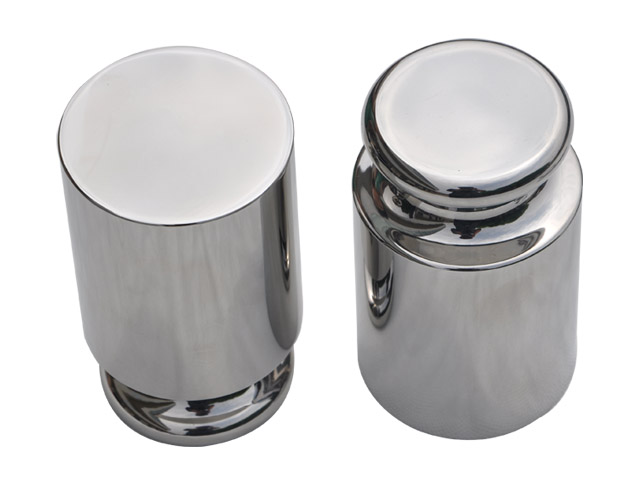
The foundation of a quality cast iron calibration weight lies in its material composition and structural integrity. Most commonly fabricated from gray cast iron, a material prized for its uniform density, excellent compressive strength, and resistance to deformation, these weights are designed to maintain their mass stability over extended periods. The internal microstructure of gray cast iron, with its evenly distributed graphite flakes, provides natural damping properties that minimize vibration during calibration procedures, a key advantage that enhances the precision of measurement readings. This unique material structure also grants the weights remarkable resistance to chipping, cracking, and warping, even when subjected to accidental bumps, drops, or heavy stacking in busy industrial settings. While some specialized variants may utilize ductile iron for enhanced tensile strength in heavy-duty applications, gray cast iron remains the dominant choice due to its optimal blend of performance, workability, and cost-efficiency, catering to the diverse needs of general industrial calibration and routine equipment testing.
The manufacturing process of cast iron calibration weights is a meticulous sequence of steps designed to uphold mass accuracy and structural consistency, with no room for compromise in quality control. It begins with the careful selection and melting of raw iron materials, where impurities are rigorously removed to ensure a homogeneous melt with a stable density profile. Molten iron is then poured into precision-engineered molds, crafted to produce weights of precise dimensions and uniform wall thickness, whether the final product is a compact cylindrical weight, a stackable rectangular block, a lock-style weight for easy handling, or a large-format slab for heavy-capacity scale calibration. Controlled cooling follows, a critical phase that prevents internal stress, porosity, and dimensional distortion, ensuring each weight maintains its intended shape and mass without irregularities. Once cooled and demolded, the weights undergo extensive finishing work: excess material is trimmed, rough edges are smoothed, and surfaces are treated to remove burrs, sand grains, and oxide layers. Many cast iron calibration weights feature a sealed adjustment cavity, a discreet internal chamber that allows technicians to fine-tune the mass during production to meet strict tolerance standards, ensuring the actual weight aligns perfectly with the nominal value without compromising the external structure or durability.
Surface treatment is another vital aspect of producing reliable cast iron calibration weights, addressing the inherent vulnerability of cast iron to corrosion and oxidation in diverse operating environments. A high-quality protective coating, typically a durable, corrosion-resistant paint or enamel, is applied to the entire surface of each weight, creating a barrier against moisture, dust, oils, and mild chemical exposure that could otherwise lead to rust formation and mass deviation. These coatings are not only functional but also practical, often finished in bold, visible hues that allow for quick identification of different weight denominations, reducing the risk of errors during calibration tasks. For use in particularly harsh or humid environments, some weights may receive additional surface treatments, such as a thin layer of protective oil or a specialized anti-rust plating, further bolstering their resistance to environmental damage. Proper surface finishing not only extends the service life of the weights but also preserves their metrological accuracy, ensuring that external factors do not alter the calibrated mass over time.
The versatility of cast iron calibration weights is reflected in their extensive range of sizes and configurations, tailored to meet the unique demands of various calibration and weighing tasks. Available in a comprehensive spectrum of nominal masses, from small fractional units ideal for calibrating compact bench scales and laboratory balances, to large, heavyweight blocks designed for verifying the accuracy of industrial floor scales, truck scales, rail scales, and heavy-duty load cells, there is a cast iron calibration weight suitable for nearly every application. Smaller weights are often designed with ergonomic features such as molded grips or integrated lifting holes, facilitating safe and easy handling by technicians, while larger, heavier weights are equipped with sturdy lifting lugs or slots to accommodate hoists, forklifts, or other material handling equipment, ensuring safe transport and placement without risking injury or damage. Stackable designs are particularly popular, allowing multiple weights to be combined to achieve a specific total mass for calibrating high-capacity weighing systems, maximizing flexibility and efficiency in calibration workflows.
The primary role of cast iron calibration weights is to serve as a traceable mass reference for verifying and adjusting the accuracy of weighing equipment, a function that is critical to maintaining operational efficiency, quality control, and regulatory compliance across industries. In manufacturing facilities, these weights are used daily to calibrate scales that measure raw materials, intermediate components, and finished products, ensuring consistent batch production, minimizing material waste, and upholding product quality standards. In logistics and distribution centers, accurate weighing is essential for freight billing, inventory management, and compliance with transportation weight regulations, and regular calibration with cast iron weights prevents costly billing errors, shipment delays, and regulatory penalties. Agricultural operations rely on calibrated scales for measuring grain, feed, and livestock yields, while construction and mining industries use these weights to verify heavy-duty weighing systems for aggregates, ores, and construction materials. Even in educational settings, cast iron calibration weights serve as practical teaching tools, helping students understand fundamental principles of mass, measurement, and metrology in physics and engineering coursework.
Beyond direct calibration tasks, cast iron weights also play a valuable role in equipment testing, load balancing, and performance validation across a range of mechanical and industrial applications. They are frequently used as counterweights in machinery, elevators, and material handling equipment, stabilizing operations and ensuring safe, balanced movement. In materials testing laboratories, these weights provide a controlled, consistent load for testing the strength, durability, and load-bearing capacity of components, structures, and materials, generating reliable test data that informs engineering and design decisions. Their robust construction and stable mass make them ideal for repeated use in such testing scenarios, where consistent performance is non-negotiable. Unlike more fragile calibration tools, cast iron weights can withstand the repetitive loading and unloading associated with these tasks without losing their dimensional stability or mass accuracy, making them a cost-effective long-term investment for businesses and institutions alike.
To preserve the accuracy and extend the service life of cast iron calibration weights, proper handling, storage, and routine maintenance are essential practices that should not be overlooked. Even the most durably constructed weights can suffer from accuracy drift or damage if mistreated, so technicians are advised to handle weights with clean, dry gloves or specialized tools to prevent the transfer of oils, sweat, or moisture from skin to the metal surface, which can accelerate corrosion. Weights should be placed gently on weighing surfaces or storage racks, avoiding dragging, sliding, or impact that could cause chipping, scratching, or internal structural damage. When not in use, cast iron calibration weights should be stored in a clean, dry, well-ventilated area, away from direct sunlight, extreme temperatures, humidity, and corrosive chemicals. Storing weights in dedicated cases or on padded racks helps prevent scratches, dust accumulation, and accidental damage, while also keeping different denominations organized for quick access.
Regular inspection and basic maintenance further safeguard the performance of cast iron calibration weights. Routine visual checks should be conducted to identify signs of corrosion, chipping, cracking, or coating damage; minor surface blemishes can often be addressed with gentle cleaning and reapplication of a protective coating, while significant damage may require professional re-calibration or replacement. Weights used frequently or in harsh environments should be inspected more frequently to catch potential issues early, before they impact measurement accuracy. Periodic re-calibration is also crucial, as even the most stable cast iron weights can experience minor mass shifts over time due to wear, environmental exposure, or repeated handling. Scheduling re-calibration at appropriate intervals ensures that the weights continue to meet required tolerance standards, maintaining the integrity of all weighing and calibration tasks they perform.
One of the most compelling attributes of cast iron calibration weights is their ability to deliver reliable performance without the excessive cost associated with high-precision alloy weights, making them accessible to businesses of all sizes and across diverse industries. They fill a vital niche in the metrology landscape, catering to applications where ultra-high precision is not required, but consistent, dependable measurement and robust performance are paramount. This balance of affordability and functionality has cemented their status as a workhorse in industrial calibration, a tool that quietly supports countless operations while flying under the radar of mainstream attention. While technological advancements continue to reshape the field of metrology, with digital calibration tools and automated systems gaining traction, the fundamental role of cast iron calibration weights remains unchanged; they provide a physical, tangible reference point that grounds digital weighing systems in real, measurable mass, a bridge between theoretical accuracy and practical application.
In an era where precision and efficiency are driving forces behind industrial success, the importance of reliable calibration tools cannot be overstated. Cast iron calibration weights embody the principles of durability, practicality, and consistency, offering a timeless solution to the universal need for accurate mass measurement. They are a testament to the value of well-engineered, purpose-built tools, proving that functionality and resilience often outshine flashy design or premium materials in real-world industrial settings. From small workshops calibrating bench scales to large manufacturing facilities verifying heavy-duty truck scales, cast iron calibration weights continue to play an integral role in ensuring measurement accuracy, supporting quality control, and maintaining operational reliability across the global industrial landscape. As industries evolve and metrological standards advance, these unassuming metal blocks will remain a cornerstone of calibration practices, adapting to new demands while retaining the core qualities that have made them indispensable for decades.
Looking ahead, the ongoing refinement of casting techniques, surface treatment technologies, and quality control processes will only enhance the performance and longevity of cast iron calibration weights, further solidifying their position in industrial metrology. Manufacturers continue to optimize designs for improved ergonomics, enhanced corrosion resistance, and tighter mass tolerances, ensuring that these weights remain relevant and effective in modern industrial environments. Ultimately, cast iron calibration weights are more than just components of a calibration kit; they are a symbol of reliability in a world that demands precision, a quiet constant that ensures every measurement, every batch, and every shipment is grounded in accurate, trustworthy data. Their enduring popularity and widespread use are a testament to their practical value, a reminder that the most essential tools are often those that perform their duties reliably, without fanfare, year after year.
