





Changzhou Veidt Weighing Co., Ltd. © 2022 ALL RIGHTS RESERVED Privacy Policy | Calibration Weight | Test Weights | Cast Iron Weights | Standard Weights | Laboratory Weights | XML | SITEMAP
NEWS LIST
calibration weight 5g
Saturday 14th March 2026 Back to list
In the intricate world of precision measurement, where even the tiniest deviation can disrupt entire processes, compromise data integrity, and lead to costly errors, small yet critical tools play a pivotal role in upholding accuracy across countless industries and applications. Among these essential tools, the 5g calibration weight stands out as a compact but powerful reference standard, serving as a cornerstone for verifying the reliability of weighing instruments that handle lightweight items with high precision. Far more than just a small metal object marked with a mass value, this calibration weight embodies the principles of metrological consistency, offering a fixed, traceable reference point that bridges the gap between theoretical measurement accuracy and real-world practical application. Its modest 5-gram mass belies its immense significance, as it caters to a vast array of scenarios where delicate weighing tasks demand unwavering precision, from scientific research laboratories to manufacturing quality control lines, from educational institutions teaching fundamental metrology to specialized workshops handling small-scale components. Unlike larger calibration weights designed for heavy-duty industrial scales, the 5g variant is tailored for instruments that measure minute masses, making it a staple in environments where precision at the micro-level is non-negotiable.
To fully grasp the importance of the 5g calibration weight, it is essential to understand the core purpose of calibration weights in general. Calibration is the process of comparing the readings of a measuring instrument against a known, stable reference standard to identify and correct any discrepancies, ensuring that the instrument delivers consistent and accurate results over time. Weighing scales and balances, regardless of their design or sophistication, are prone to drift in accuracy due to a multitude of factors: regular use, environmental changes such as temperature fluctuations and humidity variations, physical vibrations, minor mechanical wear, and even accidental impacts. Without regular calibration, these instruments can gradually lose their precision, leading to skewed measurements that can have far-reaching consequences. The 5g calibration weight serves as a reliable benchmark for this calibration process, specifically targeting instruments that operate within low mass ranges. Its fixed mass value provides a clear, unambiguous reference, allowing technicians, researchers, and operators to assess whether a scale or balance is reading correctly when handling lightweight samples, components, or materials. For instruments calibrated to measure fractions of a gram or small gram increments, this 5g reference is not just useful but indispensable, as it targets the precise weight range where these tools are most frequently used and where errors are most likely to impact outcomes.
The versatility of the 5g calibration weight is evident in its widespread adoption across diverse sectors, each with unique measurement demands that rely on its consistent performance. In scientific and research laboratories, where experimental data must be reproducible and accurate to support valid conclusions, analytical balances and precision scales are calibrated regularly using 5g weights. These instruments are used to measure chemical reagents for experiments, biological samples for testing, and rare materials for research, where even a 0.01-gram error can alter experimental results, invalidate data sets, and delay critical scientific breakthroughs. Researchers depend on the 5g calibration weight to confirm that their balances are functioning optimally, ensuring that every measurement taken during experiments is trustworthy and aligned with global metrological norms. In academic and educational settings, the 5g calibration weight plays a vital role in teaching students the fundamentals of measurement, metrology, and quality control. It serves as a tangible tool for demonstrating calibration principles, teaching learners how to verify scale accuracy, and instilling an understanding of why precision matters in scientific and technical fields. Students handling small lab equipment, conducting basic chemistry or physics experiments, or learning about measurement standards gain hands-on experience with the 5g weight, building a foundation of knowledge that translates to professional practice later in their careers.
Moving beyond laboratory and educational spaces, the 5g calibration weight finds critical application in manufacturing and quality control industries, where consistent product quality is paramount. Many manufacturing processes involve the production of small components, such as electronic parts, jewelry settings, pharmaceutical ingredients, and miniature mechanical parts, where precise weighing is essential to meet product specifications and maintain batch consistency. For example, in the production of small electronic devices, manufacturers must weigh tiny resistors, capacitors, and other micro-components to ensure they meet design requirements; a slight weight discrepancy can signal a defect in the component, affecting the functionality and durability of the final product. Similarly, in the jewelry industry, scales used to weigh precious metals and gemstones rely on 5g calibration weights to maintain accuracy, as even a small error in weight measurement can lead to significant discrepancies in material valuation and product crafting. In pharmaceutical and nutraceutical manufacturing, where precise dosing of active ingredients is critical for product safety and efficacy, the 5g calibration weight is used to calibrate scales that measure small quantities of raw materials, ensuring that each dosage adheres to strict formulation standards. This level of precision helps prevent under-dosing or over-dosing, safeguarding consumer well-being and upholding production quality protocols.
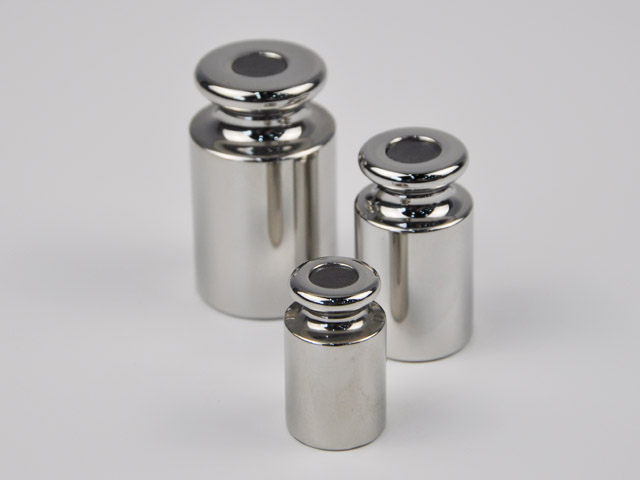
The design and material composition of the 5g calibration weight are carefully engineered to preserve its mass stability and resistance to external factors, further enhancing its reliability as a reference standard. Typically crafted from high-quality, non-magnetic, and corrosion-resistant materials, these weights are built to maintain their nominal mass value over extended periods, even when exposed to common environmental stressors. Materials such as polished stainless steel are frequently used, as they offer exceptional durability, resistance to rust and oxidation, and a smooth surface that minimizes the accumulation of dust, dirt, or residue—all of which could alter the weight’s mass and compromise calibration accuracy. The physical design of the 5g calibration weight is also optimized for practical use: it is compact, lightweight, and often features a uniform, symmetrical shape that allows for easy placement on weighing platforms without causing imbalance or damage to sensitive instrument sensors. Some variants are designed with a smooth, flat base or a cylindrical shape to ensure stable positioning, while others are sized to fit seamlessly into the calibration routines of various scale models, from pocket-sized portable scales to benchtop analytical balances. This thoughtful design ensures that the weight can be handled and used efficiently, reducing the risk of physical damage that could affect its mass integrity.
Proper handling and usage of the 5g calibration weight are equally critical to preserving its accuracy and extending its service life, as even minor mishandling can introduce mass variations that render the weight ineffective as a reference standard. One of the most important practices is avoiding direct skin contact with the weight, as human hands carry natural oils, moisture, and tiny particles that can adhere to the weight’s surface, adding minute amounts of mass that disrupt its nominal value. Instead, users are advised to handle the 5g weight using specialized tools such as plastic-tipped tweezers or soft, lint-free gloves, which prevent contamination and keep the weight’s surface clean. When placing the weight on a scale or balance, it should be positioned gently and centered on the weighing platform to avoid mechanical shock to the instrument’s sensors, which can cause temporary or permanent calibration drift. After use, the weight should be stored in a dedicated, protective case or container that shields it from dust, moisture, and physical contact with other objects; this storage solution also helps maintain a stable environment around the weight, preventing temperature-induced expansion or contraction that could alter its mass. Regular cleaning is another key aspect of care: a soft, dry cloth or a lint-free wipe lightly dampened with a mild, non-abrasive cleaning agent can be used to remove any surface debris, followed by thorough air-drying before storage. It is crucial to avoid harsh chemicals, abrasive scrubbers, or excessive force during cleaning, as these can damage the weight’s surface finish and compromise its mass stability.
Environmental conditions also play a significant role in the effective use of the 5g calibration weight, as external factors can impact both the weight itself and the performance of the weighing instruments being calibrated. Ideally, calibration procedures using the 5g weight should be carried out in a controlled environment with stable temperature, moderate humidity, and minimal vibration. Drastic temperature changes can cause the materials of the weight and the weighing instrument to expand or contract slightly, leading to temporary measurement errors; maintaining a consistent room temperature helps mitigate this issue. High humidity can promote moisture buildup on the weight’s surface or within the weighing instrument, while excessive dust can accumulate on both the weight and the scale’s sensors, both of which can skew calibration results. Additionally, performing calibration away from sources of vibration—such as heavy machinery, foot traffic, or ventilation systems—ensures that the scale or balance can settle properly and deliver stable readings during the calibration process. By conducting calibration in a controlled setting, users can maximize the accuracy of the process, ensuring that the 5g weight’s reference value translates to reliable instrument performance in real-world operating conditions.
In addition to its role in routine calibration, the 5g calibration weight serves as a valuable tool for troubleshooting weighing instrument issues. When a scale or balance begins to produce inconsistent or questionable readings, the 5g weight provides a quick and effective way to diagnose whether the problem stems from instrument calibration drift or other mechanical or electrical faults. By placing the 5g weight on the instrument and comparing the displayed reading to the known nominal value, users can immediately determine if calibration is needed. If the reading matches the 5g reference, the issue likely lies elsewhere, such as a damaged sensor, faulty wiring, or improper instrument setup; if the reading deviates significantly, a full calibration using the 5g weight (and other relevant reference weights) can resolve the problem. This diagnostic capability saves time and resources, allowing teams to address measurement issues promptly and minimize disruptions to daily operations. For small businesses, research labs, and workshops that rely on lightweight weighing instruments, this quick troubleshooting feature makes the 5g calibration weight a cost-effective and practical asset, eliminating the need for extensive diagnostic testing for common accuracy issues.
As measurement standards continue to evolve and industries increasingly prioritize precision and consistency, the demand for reliable reference tools like the 5g calibration weight remains steady. While technological advancements have led to more sophisticated weighing instruments, the fundamental need for a stable, known reference standard for calibration remains unchanged. The 5g calibration weight fills a unique niche in the metrological ecosystem, catering to the growing number of applications that require accurate lightweight measurement—from emerging tech industries producing micro-components to sustainable research labs testing small-scale material samples. Its compact size, targeted mass range, and durable design make it adaptable to evolving industry needs, ensuring that it remains a relevant and essential tool for years to come. Unlike specialized or bulky calibration equipment, the 5g weight is accessible and easy to integrate into regular maintenance routines, making it a staple for both seasoned metrology professionals and those new to precision measurement practices.
It is also important to recognize that the value of the 5g calibration weight extends beyond individual instruments or facilities; it contributes to broader metrological consistency across global supply chains, research collaborations, and quality assurance frameworks. When multiple entities—whether laboratories in different countries, manufacturing facilities in separate regions, or research teams working on joint projects—use reliable calibration weights like the 5g variant to calibrate their instruments, they ensure that their measurements are comparable and aligned with common standards. This consistency is vital for cross-border trade, shared scientific research, and industry-wide quality benchmarks, as it eliminates discrepancies caused by uncalibrated or poorly calibrated instruments. By upholding accurate measurement practices with the help of the 5g calibration weight, businesses and researchers contribute to a global ecosystem of precision, where data and products can be trusted, shared, and compared without fear of measurement-related errors.
In summary, the 5g calibration weight is a small but indispensable component of the precision measurement landscape, offering a stable, reliable reference standard that underpins accuracy across countless applications. Its role in calibrating lightweight weighing instruments, supporting scientific research, upholding manufacturing quality, and facilitating educational learning cannot be overstated. From the careful engineering of its materials and design to the strict handling and maintenance practices that preserve its accuracy, every aspect of the 5g calibration weight is geared toward one core goal: ensuring that weighing instruments deliver consistent, precise results. As industries continue to advance and the demand for meticulous measurement only grows, this compact tool will remain a cornerstone of metrological excellence, proving that even the smallest reference standards can have the most profound impact on accuracy, reliability, and quality in every field that relies on precise weight measurement. Whether in a busy lab, a bustling manufacturing plant, a quiet classroom, or a specialized workshop, the 5g calibration weight stands as a silent guardian of precision, working tirelessly to keep the world of measurement grounded in accuracy and consistency.
