





Changzhou Veidt Weighing Co., Ltd. © 2022 ALL RIGHTS RESERVED Privacy Policy | Calibration Weight | Test Weights | Cast Iron Weights | Standard Weights | Laboratory Weights | XML | SITEMAP
NEWS LIST
calibration weight 50g
Saturday 14th March 2026 Back to list
In the intricate web of modern measurement and quality control, precision is not merely a desirable trait but a foundational requirement that underpins countless industries, scientific endeavors, and daily operational processes. At the heart of maintaining this precision lies the calibration weight, a small yet mighty tool that serves as a reliable reference for verifying and adjusting weighing equipment across diverse settings. Among the various standard weights available, the 50g calibration weight stands out as a versatile and widely utilized option, striking a perfect balance between compact size and practical functionality. It may appear unassuming at first glance, with its smooth, solid form and fixed mass, but its impact on ensuring accurate, consistent, and trustworthy weighing results cannot be overstated. This unassuming piece of precision-engineered hardware plays a silent yet critical role in everything from laboratory research and pharmaceutical manufacturing to industrial production and educational settings, acting as a bridge between raw measurement data and reliable, actionable information.
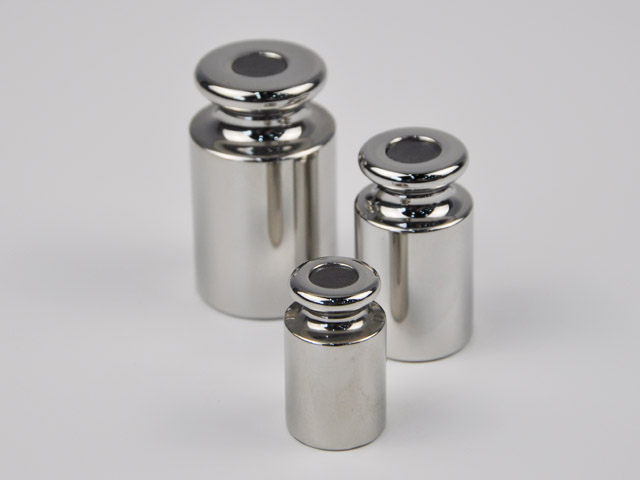
To understand the true value of the 50g calibration weight, it is essential to first grasp the core purpose of calibration weights in general. Weighing instruments, whether high-precision analytical balances, compact bench scales, or portable pocket scales, are prone to subtle deviations in accuracy over time. Factors such as regular use, mechanical wear and tear, fluctuations in ambient temperature, exposure to moisture or dust, and even minor physical impacts can alter the sensitivity and calibration of these devices, leading to skewed readings. Even the smallest discrepancies in weight measurement can snowball into significant issues, compromising the integrity of experiments, the quality of manufactured products, the reliability of trade transactions, and the validity of analytical results. Calibration weights, including the 50g variant, provide a fixed, known mass that acts as a benchmark, allowing operators to check the accuracy of weighing equipment, identify any deviations, and make necessary adjustments to restore precise functionality. Without these standardized reference weights, the entire framework of precision weighing would collapse, leaving industries and researchers reliant on unvalidated and potentially inaccurate data.
The 50g calibration weight earns its widespread adoption through its exceptional versatility, fitting seamlessly into a vast array of weighing scenarios that demand moderate precision and practicality. In scientific laboratories, where experiments hinge on the accurate measurement of chemicals, reagents, and samples, this weight is a staple tool for calibrating analytical and precision balances. Researchers working in fields such as chemistry, biology, materials science, and environmental testing rely on the 50g weight to verify that their balances are delivering consistent readings, ensuring that experimental formulations, sample analyses, and data recordings are free from avoidable measurement errors. Whether conducting routine qualitative tests or complex quantitative experiments, the ability to cross-check balance accuracy with a 50g calibration weight adds a layer of confidence to scientific work, preventing costly mistakes and ensuring that research findings are reproducible and credible. In educational institutions, from high school science classrooms to university laboratories, this weight serves as an invaluable teaching aid, helping students understand the principles of measurement, the importance of calibration, and the fundamentals of accurate weighing techniques. It allows learners to gain hands-on experience with precision instruments, fostering a deep appreciation for precision and attention to detail that is essential in scientific and technical fields.
Beyond the realm of science and education, the 50g calibration weight plays a pivotal role in industrial and manufacturing environments, where consistent product quality and process efficiency are paramount. In sectors such as food and beverage production, pharmaceuticals, cosmetics, and small parts manufacturing, precise weighing is a critical step in production workflows. Even minor variations in ingredient quantities, component weights, or product dosages can lead to flawed products, wasted materials, regulatory non-compliance, and damage to brand reputation. The 50g weight is frequently used to calibrate the compact scales and balances integrated into production lines, quality control stations, and packaging facilities, ensuring that every batch of products meets strict weight specifications. For small-scale manufacturing operations and artisanal production, where space is limited and portable weighing equipment is common, the compact size of the 50g calibration weight makes it exceptionally convenient for on-the-spot calibration checks. It allows operators to quickly verify equipment accuracy without disrupting production flow, maintaining smooth operations and minimizing the risk of defective products reaching the market. In logistics and small-scale trade, where accurate weighing of small parcels, components, and goods is essential for fair transactions, this weight also plays a role in calibrating portable scales, supporting transparent and reliable trade practices.
The design and construction of the 50g calibration weight are carefully engineered to uphold its mass stability and long-term reliability, key attributes that make it a trusted reference tool. Typically crafted from high-quality, dense materials that resist corrosion, wear, and environmental degradation, these weights are built to maintain their precise mass value even with regular use and exposure to varying conditions. The surface of the 50g weight is usually finished to be smooth and non-porous, preventing the accumulation of dust, dirt, or moisture that could alter its mass and compromise calibration accuracy. Its compact, ergonomic design ensures easy handling during calibration procedures, allowing users to place it gently on weighing pans without causing damage to sensitive equipment or introducing errors due to rough handling. Unlike larger, bulkier weights, the 50g variant is easy to store in protective cases, keeping it safe from scratches, impacts, and environmental contaminants when not in use. This durability and ease of storage contribute to its long service life, making it a cost-effective and sustainable tool for ongoing calibration needs.
Proper handling and maintenance practices are essential to preserve the accuracy and longevity of the 50g calibration weight, ensuring that it continues to serve as a reliable reference for years to come. One of the most critical practices is gentle handling: users should avoid dropping, bumping, or scratching the weight, as physical damage can alter its mass and render it ineffective for calibration. It is recommended to handle the weight with clean, dry hands or use soft-tipped tools to prevent the transfer of oils, dirt, or moisture from skin to the weight’s surface. Regular cleaning is also vital, though it must be done carefully to avoid damaging the weight. A soft, lint-free cloth lightly dampened with a mild, non-abrasive cleaning solution can be used to wipe away surface contaminants, followed by immediate drying with a clean cloth to prevent moisture buildup. The 50g weight should always be stored in a dedicated, protective case in a cool, dry, and stable environment, away from direct sunlight, extreme temperatures, humidity, and harsh chemicals. Additionally, periodic verification of the weight’s mass accuracy is recommended, as even the most well-made weights can experience subtle changes over extended periods. By adhering to these simple yet effective maintenance routines, users can ensure that their 50g calibration weight remains a precise and dependable tool, upholding the integrity of all weighing operations it supports.
The impact of the 50g calibration weight extends far beyond individual calibration tasks, touching on broader themes of consistency, reliability, and trust in measurement systems. In a world where data-driven decision-making is central to progress and efficiency, accurate weight measurement is a cornerstone of countless processes. Whether it is ensuring that pharmaceutical dosages are safe and effective, that food products contain the correct blend of ingredients, that scientific experiments yield valid results, or that trade transactions are fair and equitable, the 50g calibration weight plays a quiet yet indispensable role. It eliminates guesswork from weighing operations, reduces the risk of human error and equipment drift, and creates a standardized benchmark that unifies measurement practices across different settings and industries. This standardization is crucial for fostering collaboration, enabling the comparison of data between different laboratories and facilities, and ensuring compliance with internal quality standards and industry best practices. Without the humble 50g calibration weight, maintaining this level of uniformity and precision would be a daunting and unreliable task, highlighting its status as an unsung hero in the world of measurement.
In high-sensitivity applications where even minute weight deviations matter, the 50g calibration weight proves its worth by providing a stable reference point that enhances the overall precision of weighing systems. Analytical balances used in cutting-edge research and quality control labs often require regular calibration with mid-range weights like the 50g variant to fine-tune their sensitivity and accuracy across their weighing range. These balances are designed to detect extremely small mass changes, and using a well-maintained 50g calibration weight ensures that the balance’s readings are consistent at both lower and mid-range weight values. This is particularly important in research involving rare or expensive materials, where accurate measurement is essential to avoid waste and ensure experimental validity. In quality control laboratories, the 50g weight is used to conduct routine checks on weighing equipment, helping to catch minor calibration drifts early before they escalate into significant errors that could affect entire production batches. This proactive approach to calibration, supported by the 50g weight, helps organizations maintain high quality standards, reduce waste, and optimize operational efficiency.
Another notable advantage of the 50g calibration weight is its accessibility and adaptability, making it suitable for both professional and casual users alike. Professional metrologists, laboratory technicians, and quality control specialists rely on it for daily precision work, while small business owners, hobbyists, and students also benefit from its practicality. For hobbyists involved in jewelry making, model building, or crafting, where precise measurement of small materials is key, the 50g weight provides an affordable and easy way to calibrate small scales, ensuring their projects are crafted with accuracy. In fieldwork and on-site testing scenarios, where portable weighing equipment is used, the lightweight and compact nature of the 50g calibration weight makes it easy to transport, allowing for on-location calibration checks without the need for bulky equipment. This adaptability means that the 50g weight is not confined to controlled laboratory or factory environments but can support accurate weighing in a wide range of settings, from remote field sites to small home workshops.
As technology continues to advance and weighing equipment becomes increasingly sophisticated, the role of the 50g calibration weight remains unchanged and irreplaceable. Modern digital scales and high-precision balances may feature advanced sensors, automated calibration functions, and digital displays, but they still require a physical, fixed-mass reference to validate their accuracy. Even the most technologically advanced weighing instruments cannot self-calibrate without a reliable external benchmark, and the 50g calibration weight fills this gap perfectly. It serves as a tangible link between digital measurement systems and the physical world of mass, ensuring that technological advancements do not compromise the accuracy and reliability of weighing results. This symbiotic relationship between traditional calibration tools like the 50g weight and modern weighing technology highlights the timeless importance of standardized reference masses in the face of technological progress.
In conclusion, the 50g calibration weight is far more than just a small, solid object with a fixed mass; it is a cornerstone of precision weighing, a guardian of measurement accuracy, and a vital tool that supports excellence across science, industry, education, and trade. Its compact size, versatile functionality, durable construction, and reliable performance make it an indispensable asset in any setting where accurate weight measurement is required. From groundbreaking scientific research and stringent industrial quality control to hands-on educational learning and everyday small-scale weighing tasks, the 50g calibration weight operates quietly in the background, ensuring that every measurement is consistent, reliable, and trustworthy. By providing a standardized reference for calibration, it helps to minimize errors, reduce waste, uphold quality standards, and foster trust in measurement systems worldwide. As we continue to rely on precise data and accurate measurements to drive progress and innovation, the 50g calibration weight will remain an essential and timeless tool, proving that even the smallest tools can have the most profound impact on the quality and integrity of our work.
