





Changzhou Veidt Weighing Co., Ltd. © 2022 ALL RIGHTS RESERVED Privacy Policy | Calibration Weight | Test Weights | Cast Iron Weights | Standard Weights | Laboratory Weights | XML | SITEMAP
NEWS LIST
calibration weight 2g
Saturday 14th March 2026 Back to list
In the vast and intricate world of precision measurement, where even the tiniest deviation can lead to significant errors in results, small yet critical tools play a foundational role that often goes unnoticed by the general public. Among these essential instruments, the 2g calibration weight stands out as a quiet yet powerful cornerstone, bridging the gap between theoretical accuracy and practical application across countless industries and professional settings. Far more than just a small metal mass, this unassuming device serves as a reliable reference point for calibrating a wide range of weighing equipment, ensuring that measurements remain consistent, trustworthy, and aligned with established metrological standards. Whether in a bustling laboratory, a busy manufacturing floor, a meticulous pharmaceutical facility, or a specialized craft workshop, the 2g calibration weight fulfills a purpose that is integral to maintaining the integrity of quantitative data, making it a staple in any environment where precision is non-negotiable.
To fully grasp the significance of the 2g calibration weight, it is first necessary to understand the core function of calibration weights in general. Calibration weights are precisely manufactured masses with known, stable values, designed to verify and adjust the accuracy of weighing instruments such as analytical balances, digital scales, precision load cells, and micro weighing devices. Over time, even the most advanced weighing equipment can experience slight shifts in performance due to a variety of factors—regular wear and tear, changes in environmental conditions like temperature and humidity, mechanical vibrations, or minor damage to internal components. Without regular calibration using reference weights like the 2g model, these instruments will gradually lose their accuracy, producing readings that are skewed and unreliable. This is where the 2g calibration weight proves its worth: it provides a fixed, consistent benchmark that allows technicians and operators to identify discrepancies, make necessary adjustments, and restore the weighing device to its optimal working condition. For equipment designed to measure small masses with high sensitivity, the 2g weight is particularly valuable, as it targets the lower end of measurement ranges where precision is most challenging to maintain.
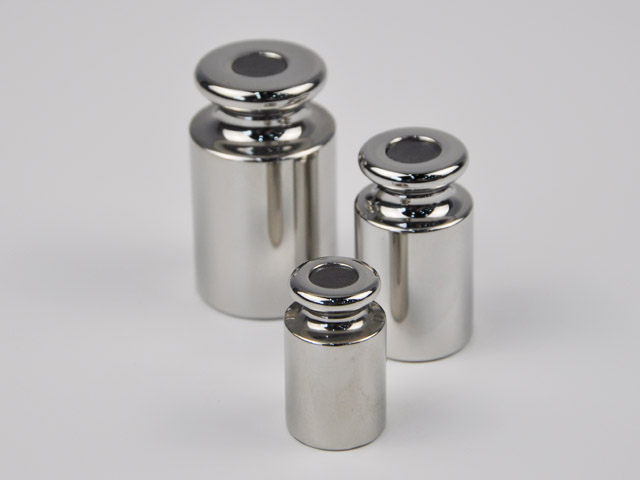
The physical design and material composition of the 2g calibration weight are carefully engineered to uphold its stability and accuracy over extended periods of use. Most high-quality 2g calibration weights are crafted from corrosion-resistant metals such as stainless steel, chosen for its exceptional durability, resistance to rust and oxidation, and consistent density properties. Unlike softer or more reactive materials, stainless steel ensures that the weight’s mass remains unchanged even when exposed to moisture, minor chemical exposure, or fluctuating temperatures—common hazards in many workspaces. The typical 2g calibration weight features a compact, cylindrical shape with smooth, polished surfaces, a design that minimizes the accumulation of dust, dirt, or debris, which could alter its mass and compromise calibration results. Some models also include a small, secure handling feature to prevent direct contact with bare hands, as natural oils and moisture from skin can leave residues that affect the weight’s precision over time. This thoughtful construction not only extends the lifespan of the 2g calibration weight but also ensures that it retains its metrological integrity, delivering consistent performance through countless calibration cycles.
One of the most compelling attributes of the 2g calibration weight is its versatility across diverse professional fields, each with unique measurement demands and standards. In scientific research laboratories, for instance, analytical balances are used to measure minute quantities of chemicals, reagents, and samples for experiments, testing, and data analysis. A slight error in weighing these substances can skew experimental results, invalidate research findings, or lead to incorrect conclusions about chemical reactions and material properties. The 2g calibration weight is routinely used to calibrate these sensitive balances, ensuring that measurements down to the milligram level are accurate, which is critical for advancing scientific knowledge and developing new technologies. In academic and educational settings, the 2g calibration weight also serves as a practical teaching tool, helping students understand the principles of metrology, the importance of calibration, and the fundamentals of precise measurement—lessons that form the basis of scientific literacy and technical proficiency.
The pharmaceutical and healthcare industries rely heavily on the 2g calibration weight to uphold strict quality and safety standards, where accurate dosing is a matter of public health. In pharmaceutical manufacturing, even a small variation in the weight of active ingredients, excipients, or finished dosage forms can render medications ineffective or potentially harmful. Every batch of pharmaceutical products must undergo rigorous quality control checks, and weighing equipment used in these processes must be calibrated regularly to ensure compliance with industry guidelines. The 2g calibration weight is ideal for calibrating the micro-scales and precision balances used to measure small batches of potent ingredients, where precision is paramount to ensuring consistent dosage strength and product uniformity. Similarly, in compounding pharmacies and medical testing facilities, accurate weighing of medications, samples, and diagnostic materials is essential for patient care, and the 2g calibration weight plays a vital role in maintaining the reliability of these critical measurements.
Manufacturing and industrial operations also depend on the 2g calibration weight to sustain production efficiency and product quality. In industries ranging from electronics and aerospace to food processing and jewelry making, precise weighing of raw materials, components, and finished goods is essential for maintaining product consistency, meeting production specifications, and minimizing waste. For example, in electronics manufacturing, small components such as microchips, resistors, and connectors require precise weighing to ensure proper assembly and functionality; a 2g calibration weight ensures that the scales used to measure these parts are accurate, preventing defects and reducing costly rework. In jewelry making, where precious metals and gemstones are measured in small quantities, the 2g calibration weight guarantees that scales provide accurate readings, supporting fair trade and high-quality craftsmanship. In food and beverage production, portion control and ingredient measurement are key to consistent flavor, texture, and shelf life, and calibrated scales—verified with 2g weights—help manufacturers meet product standards and consumer expectations.
Beyond industrial and scientific applications, the 2g calibration weight is also valuable in specialized commercial and craft settings where precision measurement is a daily requirement. Small-scale artisans, watchmakers, and hobbyists working with delicate materials rely on accurate scales to bring their creations to life, and the 2g calibration weight ensures that their equipment remains calibrated for detailed work. In commercial weighing operations, such as specialty retail stores handling small, high-value items, regular calibration with 2g weights builds trust with customers by ensuring transparent and accurate transactions. Even in quality control laboratories for consumer goods, the 2g calibration weight is used to test the accuracy of packaging scales, ensuring that products are labeled correctly and meet regulatory requirements for net weight. This wide-ranging utility underscores how the 2g calibration weight is not limited to a single industry but is a universal tool for upholding measurement accuracy in every sector that values reliability and precision.
Proper handling and maintenance of the 2g calibration weight are essential to preserve its accuracy and extend its usable life, as even minor mishandling can compromise its metrological performance. Users should always handle the 2g calibration weight with clean, dry tools or protective gloves to avoid transferring oils, dust, or moisture to its surface, which can add minute amounts of mass and affect calibration results. It should be stored in a dedicated, protective case when not in use, away from direct sunlight, extreme temperatures, and corrosive substances that could damage its surface or alter its mass. Regular cleaning with a soft, lint-free cloth is recommended to remove any accumulated debris, but harsh chemicals or abrasive materials should never be used, as they can scratch or corrode the weight. Additionally, the 2g calibration weight should be inspected periodically for signs of damage, such as dents, scratches, or discoloration, as physical imperfections can impact its mass and accuracy. By following these simple care practices, users can ensure that the 2g calibration weight remains a reliable reference tool for years, delivering consistent performance with every calibration use.
It is also important to recognize the role of the 2g calibration weight in supporting metrological traceability, a fundamental principle in precision measurement that links local measurements to national and international standards. Traceability ensures that all weighing measurements are consistent across different locations, laboratories, and industries, creating a unified global framework for quantitative data. While individual users may not interact directly with high-level metrological institutions, the 2g calibration weight serves as a tangible link in this traceability chain, as its mass is calibrated to align with standardized reference values. This means that measurements taken with equipment calibrated using a 2g weight are not only accurate for local use but also comparable to measurements made anywhere else in the world, fostering collaboration, trade, and consistency across borders. In an era where global supply chains, cross-border research, and international commerce are commonplace, this traceability facilitated by small calibration weights like the 2g model is more important than ever.
Despite its small size and unassuming appearance, the 2g calibration weight plays an outsized role in maintaining the reliability of modern measurement systems, touching nearly every aspect of daily life that relies on accurate quantitative data. From life-saving medications and cutting-edge scientific research to high-quality manufactured goods and trusted commercial transactions, the impact of this tiny tool is far-reaching and profound. It serves as a reminder that precision in measurement is not achieved by chance, but through the careful use of reliable reference tools and consistent calibration practices. The 2g calibration weight may be overlooked in favor of larger, more complex equipment, but its absence would quickly disrupt workflows, compromise data integrity, and lead to costly errors across countless industries.
As technology continues to advance and the demand for higher precision in measurement grows, the relevance of the 2g calibration weight remains unchanged. New generations of weighing equipment may feature digital interfaces, automated calibration functions, and enhanced sensitivity, but they still require a stable, accurate reference mass to verify their performance—and the 2g calibration weight fits this need perfectly. It is a timeless tool that adapts to evolving technological landscapes, proving that fundamental metrological principles endure even as equipment and processes advance. Whether used in a state-of-the-art research lab, a traditional workshop, or a modern manufacturing plant, the 2g calibration weight continues to deliver unwavering accuracy, making it an irreplaceable asset in the world of precision measurement.
In conclusion, the 2g calibration weight is far more than a simple metal mass; it is a foundational element of precision measurement, a guardian of data integrity, and a catalyst for consistency across industries. Its compact design, durable construction, versatile applications, and role in upholding metrological standards make it an essential tool for anyone who relies on accurate weighing. By providing a reliable reference point for calibration, it ensures that scientific experiments are valid, pharmaceutical products are safe, manufactured goods are consistent, and commercial transactions are fair. The quiet reliability of the 2g calibration weight underscores the importance of small tools in maintaining the precision that underpins modern society, and its value will continue to endure as the demand for accurate, trustworthy measurement remains a constant in every professional field.
