





Changzhou Veidt Weighing Co., Ltd. © 2022 ALL RIGHTS RESERVED Privacy Policy | Calibration Weight | Test Weights | Cast Iron Weights | Standard Weights | Laboratory Weights | XML | SITEMAP
NEWS LIST
calibration weight 20g
Saturday 14th March 2026 Back to list
In the intricate web of modern measurement and quality control, precision weighing stands as a cornerstone of reliability, consistency, and accuracy across countless fields, from scientific research and industrial manufacturing to daily commercial transactions and laboratory testing. At the heart of maintaining this precision lies the calibration weight, a small yet mighty tool that serves as the reference standard for verifying and adjusting weighing equipment. Among the diverse range of calibration weights available, the 20g calibration weight occupies a unique and vital position, offering a balanced combination of compact size, practical versatility, and consistent performance that makes it a staple in nearly every setting where accurate weight measurement is non-negotiable. Far more than just a small metal object, this unassuming weight is a silent guardian of measurement integrity, ensuring that every reading captured by scales and balances is trustworthy, repeatable, and aligned with universal mass standards. Without such reference weights, even the most advanced weighing instruments would lose their credibility, leading to flawed data, compromised product quality, financial discrepancies, and potential safety risks in critical operations.
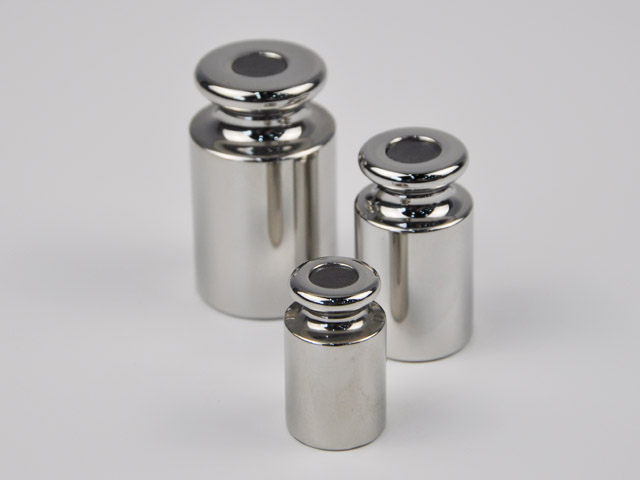
To fully grasp the significance of the 20g calibration weight, it is essential to understand the fundamental purpose of calibration weights in general. Calibration is the process of comparing the readings of a measuring instrument—such as a digital scale, analytical balance, or precision counter—against a known, stable reference value to identify and correct any deviations. Over time, weighing equipment can drift from its original accuracy due to a variety of factors: regular wear and tear from daily use, exposure to environmental conditions like temperature fluctuations, humidity, and dust, accidental impacts or mishandling, and even the gradual buildup of minor residues on the weighing pan. A 20g calibration weight provides that fixed, unchanging reference point, allowing operators to reset their equipment, eliminate measurement errors, and restore peak performance. What makes the 20g variant so widely adopted is its optimal weight value; it is light enough for use with small, high-precision balances that measure in milligrams and grams, yet substantial enough to calibrate mid-range scales used in routine quality checks, material sampling, and portion control. This middle-ground versatility means it is not confined to a single industry or application, but instead integrates seamlessly into workflows across scientific, industrial, commercial, and educational spheres.
The physical composition of a 20g calibration weight is engineered to prioritize stability, durability, and resistance to external elements, traits that are critical to preserving its mass accuracy over extended periods. Most high-quality 20g calibration weights are crafted from dense, non-corrosive metals that maintain a consistent density and weight, even when exposed to the rigors of daily use. Common materials include polished stainless steel alloys, which offer excellent resistance to rust, oxidation, and chemical damage, making them suitable for use in laboratory environments with mild chemicals, humid storage spaces, and industrial settings with moderate dust and debris. Some variants feature a smooth, matte finish to minimize the accumulation of fingerprints, dust, and static electricity, which can add tiny, imperceptible amounts of mass and skew calibration results. Unlike disposable or low-quality weights, a well-constructed 20g calibration weight is designed to withstand repeated handling and regular calibration cycles without significant mass loss or distortion. Its compact, often cylindrical or rectangular shape is ergonomic for easy handling, with a solid build that prevents bending or warping—common issues that can alter the weight’s accuracy and render it useless as a reference standard. Every detail of its design, from the material selection to the finishing touches, is focused on one core goal: retaining a precise, unwavering 20g mass that operators can rely on time and time again.
One of the most prominent domains where the 20g calibration weight proves indispensable is scientific and laboratory research. In laboratories, whether academic, pharmaceutical, or chemical, the accuracy of weight measurements can make or break experimental results, product formulations, and analytical testing. Researchers working in chemistry, for instance, rely on precise weighing to measure reagents, catalysts, and samples for experiments; even a minuscule error in mass can alter chemical reactions, produce inconsistent data, and lead to false conclusions. A 20g calibration weight is frequently used to calibrate analytical balances and precision scales that measure to the nearest milligram or microgram, ensuring that these sensitive instruments deliver consistent readings for delicate experiments, sample preparation, and purity analysis. In pharmaceutical labs, where strict standards govern the formulation of medications and dietary supplements, precise weighing is critical to ensuring dosage accuracy and product safety. The 20g weight serves as a reliable reference for calibrating the scales used to weigh active pharmaceutical ingredients, excipients, and finished products, helping to maintain batch consistency and adhere to strict quality protocols. Similarly, in material science and biological research, where small sample sizes are the norm, this calibration weight ensures that weighing instruments remain calibrated to support accurate data collection and reproducible experiments, laying the groundwork for credible scientific discoveries and advancements.
Beyond the controlled environment of the laboratory, the 20g calibration weight plays a pivotal role in industrial manufacturing and quality control processes. Modern manufacturing thrives on consistency, and even minor variations in component weight or raw material quantity can compromise product performance, durability, and compliance with industry standards. In industries producing small electronic components, jewelry, precision machinery parts, and cosmetic products, for example, precise weighing is essential for ensuring that each item meets specified specifications. Manufacturers use 20g calibration weights to regularly calibrate the scales and counters integrated into production lines, preventing defects, reducing waste, and maintaining uniform product quality across large production batches. In food and beverage manufacturing, accurate weighing is vital for portion control, recipe consistency, and compliance with labeling requirements; a 20g calibration weight helps calibrate checkweighers and portioning scales, ensuring that packaged goods meet declared weight standards and avoiding discrepancies that could erode consumer trust. Additionally, in metalworking and plastics manufacturing, where raw material costs directly impact profitability, precise weighing helps optimize material usage, minimize excess waste, and streamline production costs. The 20g weight’s portability also makes it ideal for on-site calibration in manufacturing facilities, allowing maintenance teams to quickly verify scale accuracy without disrupting production workflows, keeping operations running smoothly and efficiently.
The practical applications of the 20g calibration weight extend into commercial and retail settings as well, where fair and accurate weighing is essential for ethical business practices and customer satisfaction. In retail environments such as specialty food stores, jewelry shops, and bulk commodity markets, scales used to weigh products for sale must be regularly calibrated to ensure that customers receive the exact quantity they pay for, and that businesses do not incur losses due to inaccurate readings. A 20g calibration weight is a convenient and cost-effective tool for small business owners and retail staff to perform routine scale checks, ensuring compliance with fair trade practices and building long-term customer confidence. For example, a jewelry retailer weighing precious metals and gemstones relies on calibrated scales to determine product value, and even a small error in weight can lead to significant financial losses for both the retailer and the customer. Similarly, in bulk food stores where items are sold by weight, regular calibration with a 20g weight ensures that portion scales remain accurate, preventing overcharging or undercharging and fostering transparent customer relationships. In postal and shipping services, where shipping costs are calculated based on package weight, calibrated scales are crucial for fair pricing; the 20g calibration weight helps maintain the accuracy of small parcel scales, ensuring that both businesses and customers are charged correctly for shipping services, avoiding disputes and promoting operational fairness.
Educational institutions also benefit greatly from the accessibility and utility of the 20g calibration weight, making it a staple in science classrooms and training labs. For students learning the principles of measurement, mass, and precision, hands-on experience with calibration weights is invaluable for understanding the importance of accurate data collection and instrument calibration. Middle school, high school, and college science classes use 20g calibration weights to teach students how to calibrate simple scales and balances, perform basic weighing experiments, and identify sources of measurement error. This practical learning experience helps students develop critical thinking skills and a strong foundation in scientific methodology, preparing them for future studies in STEM fields and professional roles that require precision measurement. In vocational training programs focused on laboratory technology, manufacturing, and quality control, the 20g calibration weight is used to train aspiring technicians on proper calibration techniques, equipment maintenance, and quality assurance practices. By working with this standard reference weight, students gain real-world skills that translate directly to professional settings, ensuring that the next generation of technicians and scientists understands the critical role of calibration in maintaining measurement accuracy and reliability.
While the 20g calibration weight is designed for durability, proper handling and maintenance are essential to preserve its accuracy and extend its service life. Even the highest-quality calibration weight can lose its precision if mishandled, exposed to harsh conditions, or neglected. One of the most important practices is to handle the weight with clean, dry hands or specialized tweezers to avoid transferring oils, dirt, or moisture onto its surface, as these contaminants can add subtle mass and affect calibration results. It is recommended to store the 20g weight in a protective case or a clean, dry, temperature-stable environment when not in use, shielding it from dust, humidity, extreme temperatures, and physical damage. Avoid placing the weight on rough surfaces, dropping it, or subjecting it to impact, as this can cause dents, scratches, or internal structural changes that alter its mass. Regular cleaning is also beneficial, using a soft, lint-free cloth to gently wipe away any surface debris; harsh chemicals or abrasive cleaners should be avoided, as they can damage the weight’s finish and corrode the metal. Additionally, it is wise to periodically verify the weight’s accuracy against higher-tier reference standards, especially in professional settings where measurement precision is critical, to ensure that it has not deviated from its 20g mass over time. By following these simple care practices, users can ensure that their 20g calibration weight remains a reliable reference tool for years, delivering consistent performance and upholding the integrity of their weighing processes.
In a world that increasingly relies on data-driven decision-making, the role of precise measurement cannot be overstated, and the 20g calibration weight stands as a small but essential pillar of this measurement ecosystem. It is easy to overlook the importance of such a compact tool, especially when surrounded by advanced technology and automated systems, but its impact is far-reaching. Every time a scientist records an accurate experimental measurement, a manufacturer produces a defect-free product, a retailer completes a fair transaction, or a student learns the value of precision, a calibration weight—often the 20g variant—has played a part in ensuring that accuracy. It bridges the gap between theoretical mass standards and real-world application, turning abstract measurement principles into tangible, reliable results. Unlike specialized or oversized calibration weights that are limited to niche uses, the 20g weight’s versatility makes it a universal tool, adaptable to the unique needs of laboratories, factories, stores, and classrooms alike. It embodies the idea that precision is not achieved by chance, but by intentional, consistent reference and verification—a philosophy that underpins every reliable industry and scientific endeavor.
Looking ahead, as technology continues to evolve and the demand for higher precision grows across all sectors, the relevance of the 20g calibration weight remains unchanged. Even as weighing equipment becomes more advanced, with digital interfaces, automated calibration features, and enhanced sensitivity, it still requires a tangible, stable reference standard to validate its performance. The 20g calibration weight meets this need perfectly, offering a cost-effective, practical, and dependable solution for routine calibration and quality checks. It serves as a reminder that precision starts with a reliable reference, and that even the smallest tools can have the greatest impact on maintaining accuracy, consistency, and trust in measurement. Whether used in a cutting-edge research lab, a busy manufacturing plant, a local retail shop, or a classroom full of curious students, the 20g calibration weight continues to prove its worth as an indispensable asset, quietly upholding the standards of quality and precision that define modern progress. Its enduring popularity and widespread use are a testament to its practical value, solidifying its place as a foundational tool in the world of precision weighing for years to come.
In conclusion, the 20g calibration weight is far more than a simple reference object; it is a symbol of reliability, a guardian of accuracy, and a vital component of efficient, ethical, and high-quality operations across diverse fields. Its compact design, durable construction, and versatile application make it a staple in any setting where precise weighing is required, supporting everything from groundbreaking scientific research to everyday commercial transactions. By providing a consistent, trusted reference for calibrating weighing equipment, it ensures that measurements are accurate, data is credible, and processes are optimized for success. Proper care and handling only enhance its value, allowing it to serve as a reliable tool for extended periods. In an era where precision and consistency are paramount, the 20g calibration weight remains an essential, irreplaceable tool, quietly enabling excellence in every task that depends on accurate weight measurement. It stands as a testament to the fact that the most critical elements of precision are often the most unassuming, and that attention to small details is the key to achieving great results in any field.
