





Changzhou Veidt Weighing Co., Ltd. © 2022 ALL RIGHTS RESERVED Privacy Policy | Calibration Weight | Test Weights | Cast Iron Weights | Standard Weights | Laboratory Weights | XML | SITEMAP
NEWS LIST
calibration weight 1g
Saturday 14th March 2026 Back to list
In the intricate world of precision measurement, where even the tiniest deviation can alter outcomes, the 1g calibration weight stands as a quiet yet unshakable cornerstone. Far from being a mere small metal object, it serves as a fundamental reference point that bridges theoretical mass standards and real-world weighing applications, ensuring consistency, accuracy, and reliability across countless industries and scientific pursuits. This unassuming piece of precisely crafted material plays a vital role in upholding the integrity of measurements, from laboratory research to industrial production, from delicate craftsmanship to routine quality control, making it an essential tool for anyone who values exactness in quantitative analysis.
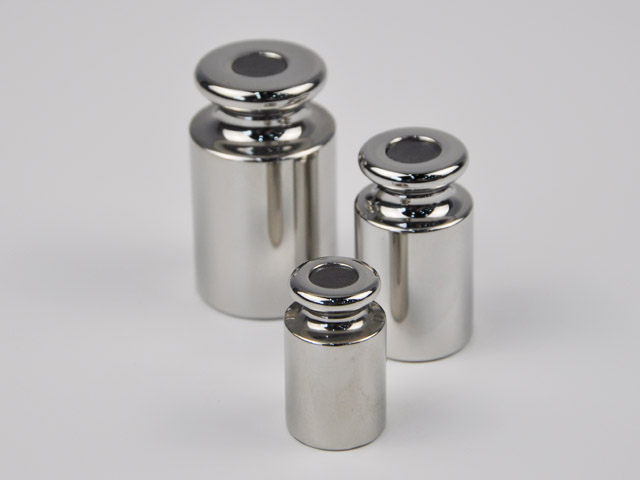
To understand the significance of the 1g calibration weight, one must first grasp the core purpose of calibration weights in general. Calibration weights are standardized masses designed to verify and adjust the accuracy of weighing instruments, such as analytical balances, precision scales, and microbalances. These instruments rely on internal mechanisms to measure mass, but over time, factors like regular use, environmental changes, mechanical wear, and electrical fluctuations can cause their readings to drift. Without a reliable reference to correct these drifts, even the most advanced weighing equipment will produce inconsistent, inaccurate results, leading to flawed data, flawed products, and costly errors. The 1g calibration weight, in particular, addresses the need for precision at the smaller end of the mass spectrum, where measurements are often the most sensitive and prone to error.
Crafted with meticulous attention to detail, a high-quality 1g calibration weight is engineered to maintain a stable mass value under varying conditions, resisting changes that could compromise its accuracy. Manufacturers use durable, corrosion-resistant materials that minimize the impact of external elements, ensuring the weight retains its specified mass for extended periods. The production process involves rigorous shaping, polishing, and balancing to eliminate imperfections, with every dimension and surface carefully controlled to avoid deviations. Unlike ordinary metal pieces, the 1g calibration weight is not just formed to match a numerical value; it is crafted to embody that value consistently, acting as a trustworthy benchmark that measuring devices can rely on for calibration and verification checks.
One of the most prominent areas where the 1g calibration weight proves invaluable is scientific research and laboratory work. In analytical chemistry, for instance, researchers often measure minute quantities of reagents, samples, and compounds for experiments, tests, and analyses. A single milligram difference in these small samples can skew experimental results, alter chemical reactions, or lead to incorrect conclusions about substance properties. Analytical balances used in these labs require frequent calibration to maintain their precision, and the 1g calibration weight is a primary tool for this task. It allows technicians to calibrate the balance at a critical low-mass point, ensuring that the instrument can accurately measure not only 1g increments but also smaller subdivisions, such as milligrams and micrograms. Whether conducting pharmaceutical research, environmental testing, material science studies, or academic experiments, laboratories depend on the 1g calibration weight to validate their weighing equipment, safeguarding the credibility of scientific data and the reproducibility of results.
Beyond the laboratory, the 1g calibration weight plays a pivotal role in industries where precise weighing directly impacts product quality and safety. In the pharmaceutical industry, for example, the production of medications demands exact measurements of active ingredients and excipients. Even a slight overage or underage of a key component can render a drug ineffective, cause adverse side effects, or fail to meet regulatory standards for potency. Manufacturers use precision scales to weigh these ingredients, and regular calibration with 1g weights ensures that these scales operate within acceptable tolerance levels. Similarly, in the jewelry industry, where gemstones, precious metals, and finished pieces are valued based on their exact mass, the 1g calibration weight is essential for verifying the accuracy of jewelry scales. Jewelers rely on this small reference weight to ensure they are pricing, selling, and crafting items with precise weight measurements, maintaining fairness in trade and upholding their reputation for quality.
The food and beverage industry also benefits greatly from the reliability of the 1g calibration weight. In commercial kitchens, bakeries, and food manufacturing plants, precise ingredient measurements are critical for consistent flavor, texture, and portion control. A bakery producing pastries, for example, needs accurate scales to measure small amounts of leavening agents, flavorings, or additives; even a small error in these measurements can ruin a batch of products. Food manufacturers must adhere to strict portioning standards to meet labeling requirements and consumer expectations, and calibrated scales are non-negotiable for achieving this. The 1g calibration weight allows food service professionals and manufacturers to calibrate their smaller precision scales regularly, ensuring that every ingredient is measured correctly, reducing waste, and maintaining product uniformity. In this way, the humble 1g weight contributes to the consistency and quality of the food products people consume daily.
In the realm of manufacturing and engineering, the 1g calibration weight supports quality control processes across diverse sectors. From electronics manufacturing, where tiny components are weighed to ensure proper assembly, to automotive part production, where small fasteners and fittings require precise mass verification, accurate weighing is integral to creating reliable products. Manufacturing facilities use a range of weighing equipment, from bench scales to high-precision inspection tools, and the 1g calibration weight is a versatile tool for calibrating these devices across different production stages. By confirming that scales are accurate, manufacturers can catch defects early, reduce defective products, and maintain strict quality standards, ultimately enhancing operational efficiency and customer satisfaction. Even in small-scale workshops and craft industries, where artisans create detailed, precision-focused goods, the 1g calibration weight helps ensure that their work meets exacting specifications, elevating the quality of handcrafted items.
Proper handling and care of the 1g calibration weight are essential to preserving its accuracy and extending its usable life, as even minor mishandling can introduce mass changes that affect its performance. One key practice is avoiding direct contact with bare hands; skin oils, moisture, and dirt can transfer to the weight’s surface, adding microscopic mass that alters its true value over time. Instead, users should handle the 1g weight with clean, lint-free gloves or specialized tweezers, minimizing contact and preventing contamination. When placing the weight on a weighing pan, it should be set down gently and centered properly, avoiding dragging or sliding that can cause scratches, static buildup, or surface damage. Static electricity, in particular, can interfere with sensitive balance readings, so taking steps to prevent static buildup—such as using anti-static tools or allowing the weight to acclimate to the operating environment—is crucial for accurate calibration.
Environmental acclimation is another important aspect of using the 1g calibration weight effectively. Like all metal objects, the weight can expand or contract slightly with temperature changes, which may impact its mass and dimensions. Before use, the 1g weight should be allowed to reach the same temperature as the weighing instrument and the surrounding workspace, typically room temperature, to eliminate thermal expansion or contraction effects. This acclimation period ensures that the weight’s mass remains stable during calibration, preventing false readings due to temperature discrepancies. Additionally, storing the 1g calibration weight in a clean, dry, and stable environment is vital; it should be kept in a protective case or individual compartment to shield it from dust, moisture, physical damage, and contact with other objects that could cause scratches or corrosion. Regular gentle cleaning with a soft, lint-free cloth to remove dust or debris, without the use of harsh chemicals, also helps maintain the weight’s integrity and accuracy.
The 1g calibration weight also plays a role in maintaining global measurement consistency, even as mass standards have evolved over time. Historically, mass measurements were tied to physical artifacts, but modern metrology has shifted to universal, unchanging physical constants to define mass units. Despite this shift, practical calibration weights like the 1g variant remain essential for translating these theoretical standards into usable, real-world references. They serve as the tangible link between abstract scientific definitions and everyday measurement needs, ensuring that weighing instruments worldwide operate on a consistent, unified scale. This consistency is vital for international trade, cross-border scientific collaboration, and global supply chains, where uniform measurements prevent disputes, ensure product compatibility, and facilitate seamless transactions across different regions and industries.
It is also important to recognize that the 1g calibration weight is not just a standalone tool but part of a broader system of measurement quality assurance. While larger calibration weights handle heavier mass ranges, the 1g weight fills a critical niche for low-mass measurements, which are often the most challenging to perform accurately. Many precision scales and balances are designed to measure small masses with high resolution, and calibrating these devices with a reliable 1g weight ensures that their entire measuring range is accurate, not just the upper limits. For instruments that focus on small-scale weighing, such as microbalances and portable precision scales, the 1g calibration weight is often the primary reference used for both initial calibration and routine performance checks, making it indispensable for maintaining the functionality of these specialized tools.
In educational settings, the 1g calibration weight serves as a valuable teaching tool, helping students understand the principles of measurement, accuracy, and calibration. Science classrooms and training facilities use these weights to demonstrate how weighing instruments work, how to correct measurement errors, and why precise calibration is essential. Students learn to handle the 1g weight properly, perform basic calibration procedures, and observe the impact of inaccurate measurements on experimental results. This hands-on experience fosters a deeper appreciation for precision in science and industry, preparing the next generation of researchers, technicians, and professionals to prioritize accuracy in their work. The simplicity and accessibility of the 1g calibration weight make it an ideal introduction to the world of metrology, laying the foundation for more advanced measurement practices.
As technology continues to advance and measurement demands grow more stringent, the relevance of the 1g calibration weight remains unchanged. Newer weighing instruments may feature enhanced digital interfaces, automated calibration functions, and improved sensitivity, but they still require a physical, traceable reference mass to validate their performance. The 1g calibration weight meets this need perfectly, offering a cost-effective, reliable, and easy-to-use solution for maintaining measurement accuracy. Unlike complex electronic components or specialized software, the 1g weight is a durable, low-maintenance tool that does not rely on power or programming, making it a dependable choice in both high-tech laboratories and field settings where equipment may be limited.
In conclusion, the 1g calibration weight is far more than a small, insignificant object in the world of measurement. It is a vital instrument that upholds accuracy, consistency, and reliability across scientific, industrial, commercial, and educational domains. Its precise craftsmanship, stable mass, and versatile applications make it indispensable for calibrating sensitive weighing equipment, ensuring product quality, validating scientific data, and facilitating fair trade. Proper care and handling of the 1g calibration weight preserve its functionality, allowing it to serve as a trusted reference for years to come. In a world that increasingly relies on exact measurements for progress and innovation, the quiet importance of the 1g calibration weight cannot be overstated—it is a small but mighty pillar of precision that supports countless aspects of modern life, driving excellence in every field that values accuracy and attention to detail.
Whether in a busy research lab, a bustling manufacturing plant, a specialized jewelry workshop, or a classroom teaching fundamental scientific principles, the 1g calibration weight performs its duty without fanfare, yet its impact is profound. It reminds us that precision is built on small, reliable foundations, and that even the tiniest reference point can have a far-reaching influence on the quality and integrity of the work we do. As measurement needs continue to evolve, the 1g calibration weight will remain a steadfast essential, adapting to new applications and continuing to uphold the standards of accuracy that define reliable, trustworthy measurement practices worldwide.
