





Changzhou Veidt Weighing Co., Ltd. © 2022 ALL RIGHTS RESERVED Privacy Policy | Calibration Weight | Test Weights | Cast Iron Weights | Standard Weights | Laboratory Weights | XML | SITEMAP
NEWS LIST
calibration weight 10g
Saturday 14th March 2026 Back to list
In the intricate web of modern measurement and quality control, precision is not merely a desirable trait but a foundational necessity that underpins countless industries, scientific endeavors, and daily operational processes. Every weighing instrument, whether used in a bustling laboratory, a busy manufacturing plant, a specialized jewelry workshop, or a commercial kitchen, relies on a consistent and reliable reference point to deliver accurate results. Among the array of calibration tools available, the 10g calibration weight stands out as a compact yet profoundly impactful component that bridges the gap between raw measurement and trustworthy data. Despite its modest mass, this small weight carries immense significance in upholding the integrity of weighing systems, ensuring that readings remain consistent, reliable, and aligned with universal measurement principles. It serves as a silent guardian of accuracy, a tool that often works behind the scenes but is critical to avoiding errors that could ripple through entire workflows, compromise product quality, or skew scientific findings.
To fully grasp the importance of the 10g calibration weight, one must first understand the core purpose of calibration in the realm of weighing. Calibration is the process of verifying and adjusting a measuring instrument to ensure its outputs match a known, standardized reference. Over time, even the most well-crafted weighing scales and balances can drift in accuracy due to a multitude of factors: regular wear and tear from daily use, exposure to varying environmental conditions such as temperature fluctuations, humidity changes, or dust accumulation, minor physical impacts, and even the gradual degradation of internal components. Without regular calibration, these instruments begin to produce readings that deviate from the true value, creating a cascade of potential issues. In scientific research, a slight miscalculation can render experiments invalid, wasting valuable time, resources, and effort. In manufacturing, inaccurate weighing can lead to flawed product formulations, inconsistent batch sizes, and non-compliance with internal quality benchmarks. In commercial settings, it can result in unfair transactions, customer dissatisfaction, and lost trust. The 10g calibration weight acts as a stable, fixed reference to counteract this drift, providing a clear benchmark for technicians and users to reset their scales and restore precision.
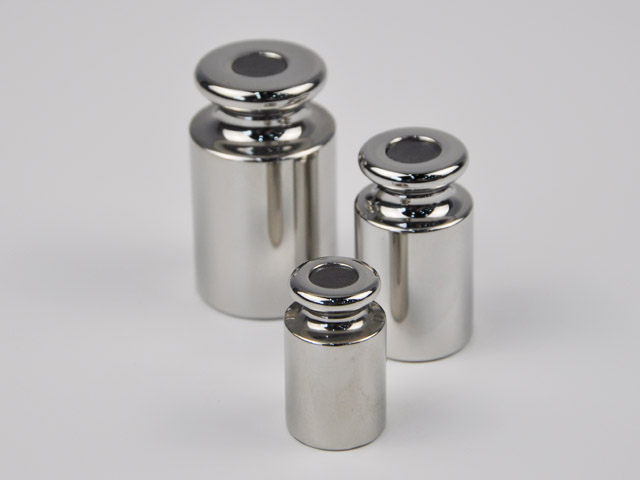
The design and construction of the 10g calibration weight are carefully engineered to prioritize stability, durability, and resistance to external factors that could alter its mass. Crafted from high-quality materials selected for their density, corrosion resistance, and ability to maintain a consistent weight over extended periods, these weights are built to withstand the rigors of regular handling and varied working environments. Common materials include robust stainless steel alloys and chrome-plated steel, both chosen for their ability to resist rust, oxidation, and surface damage that could compromise their mass integrity. The manufacturing process involves meticulous shaping, polishing, and precision finishing to ensure the weight meets strict tolerance standards, with every detail refined to eliminate irregularities that might affect its performance. The compact, often cylindrical or disc-shaped form factor is not just a matter of practicality for storage and handling; it also minimizes the surface area exposed to environmental contaminants, further preserving its accuracy. Clear, permanent markings denote the 10g mass, ensuring quick and easy identification even in fast-paced workspaces, reducing the risk of using the wrong calibration tool and introducing avoidable errors.
One of the most notable strengths of the 10g calibration weight is its exceptional versatility across a vast spectrum of applications, making it a staple tool in diverse professional and even semi-professional settings. In scientific and research laboratories, it is a fundamental piece of equipment for calibrating analytical balances and precision scales used in chemical analysis, pharmaceutical testing, materials science, and biological research. Researchers working with small sample volumes or delicate substances depend on the 10g weight to validate their weighing equipment, ensuring that measurements of reagents, samples, and compounds are precise enough to support valid conclusions and repeatable experiments. In the manufacturing sector, particularly in industries where small, precise quantities of materials are critical—such as electronics manufacturing, cosmetics production, and food processing—the 10g calibration weight plays a vital role in quality control. It helps maintain consistency in ingredient ratios, component weights, and product packaging, ensuring that every finished product meets established specifications and performs as intended. For jewelry makers and gemologists, who deal with extremely small and valuable items, this weight is indispensable for calibrating precision jewelry scales, guaranteeing accurate assessments of gemstones, precious metals, and finished pieces.
Beyond professional industrial and scientific use, the 10g calibration weight also holds value in specialized commercial and educational environments. In culinary settings where precision is key, such as artisanal bakeries, specialty coffee shops, or gourmet food production facilities, calibrating digital kitchen scales with this weight ensures that recipes are followed with exactitude, leading to consistent flavor, texture, and portion sizes. This level of precision is especially crucial for businesses that rely on repeatable, high-quality products to build customer loyalty. In educational institutions, from high school science classrooms to university laboratories, the 10g calibration weight serves as a practical teaching tool, helping students understand the principles of measurement, accuracy, and calibration. It allows learners to gain hands-on experience with proper weighing techniques, fostering a foundational understanding of metrology that is essential for future scientific and technical pursuits. Even in small-scale workshops and hobbyist settings, where precision crafting or DIY projects require accurate material measurements, this compact weight proves to be a reliable and cost-effective solution for maintaining measurement integrity.
Proper handling and maintenance of the 10g calibration weight are equally important to preserve its accuracy and extend its usable life, as even minor oversights can lead to mass changes and compromised calibration results. One of the primary rules of handling is to avoid direct skin contact with the weight’s surface; oils, sweat, and dirt from human hands can accumulate over time, adding minute amounts of mass that throw off its precision. Instead, users are advised to handle the weight with clean, dry tweezers, specialized gloves, or a soft, lint-free cloth, ensuring that no foreign substances adhere to its surface. When not in use, the weight should be stored in a dedicated, protective case—often lined with soft foam to prevent scratches and cushion against impacts—kept in a cool, dry, and stable environment away from direct sunlight, moisture, and harsh chemicals. Regular cleaning is also essential, but it must be done gently: a soft, dry cloth or a mild, non-abrasive cleaning solution can be used to wipe away dust or residue, followed by thorough drying to prevent any moisture-related damage. Avoiding rough handling, dropping, or scraping the weight against hard surfaces is critical, as physical damage can alter its shape and mass, rendering it ineffective for calibration purposes.
The impact of the 10g calibration weight extends far beyond individual instruments or workstations; it contributes to the broader ecosystem of standardized measurement that keeps global industries, trade, and research aligned. In a world where cross-border commerce, collaborative scientific research, and unified quality standards are commonplace, consistent and accurate weighing is non-negotiable. A single 10g calibration weight, when used correctly, ensures that a scale in one region delivers the same readings as a scale in another, eliminating discrepancies that could hinder trade, disrupt supply chains, or create barriers to scientific collaboration. It supports transparency and fairness in commercial transactions, where accurate weighing protects both buyers and sellers from unfair practices. In regulatory and compliance-focused industries, such as pharmaceuticals and food production, reliable calibration with tools like the 10g weight helps businesses meet operational standards and deliver safe, consistent products to consumers. This small but mighty tool is a testament to the idea that precision in the smallest details drives reliability and trust in the largest systems.
It is also important to recognize that the 10g calibration weight is not a one-size-fits-all solution, but rather a specialized tool tailored to specific weighing needs. Different types of scales and balances require calibration weights of varying masses, and the 10g weight is ideally suited for instruments that measure small to moderate loads with high precision. It complements larger calibration weights in comprehensive sets, forming a complete toolkit for calibrating scales across a range of weight capacities. For instruments that focus on gram-level measurements, the 10g weight is particularly relevant, as it targets the middle range of small-mass weighing, addressing drift that larger or smaller weights might not catch effectively. This specificity makes it a targeted and efficient solution, allowing users to perform quick, routine calibrations without the need for overly complex or bulky equipment, streamlining maintenance workflows and reducing downtime in busy operations.
In an era where technological advancements continue to reshape measurement tools and processes, the humble 10g calibration weight remains a timeless and irreplaceable asset. Modern digital scales and high-tech balances may feature advanced sensors, automated functions, and digital displays, but they still rely on physical reference standards like the 10g weight to validate their accuracy. Technology can enhance the ease and speed of calibration, but it cannot replace the need for a stable, tangible mass reference. This enduring relevance speaks to the weight’s fundamental value: it is a simple, reliable, and effective solution to a universal challenge in measurement. Unlike fleeting technological trends, the core principle of using a fixed mass to calibrate weighing instruments has stood the test of time, and the 10g calibration weight embodies this principle in a practical, accessible form.
Looking ahead, the demand for precise, reliable measurement tools like the 10g calibration weight will only continue to grow as industries evolve, research becomes more specialized, and consumer expectations for quality and consistency rise. As manufacturing processes become more automated, scientific research delves into increasingly microscopic scales, and commercial operations prioritize efficiency and accuracy, the need for consistent calibration will become even more critical. The 10g calibration weight will remain a cornerstone of these efforts, adapting to new working environments and technological advancements while retaining its core purpose: to uphold accuracy in weighing. It serves as a reminder that even in a world driven by innovation and complexity, the most essential tools are often those that perform a single, vital task with unwavering reliability.
In conclusion, the 10g calibration weight is far more than a small piece of precision-machined metal; it is a vital pillar of accurate measurement, quality assurance, and operational integrity across countless fields. Its compact size belies its immense impact, as it safeguards against measurement errors, supports consistent results, and fosters trust in every process that relies on precise weighing. From cutting-edge scientific laboratories to local craft workshops, from large-scale manufacturing facilities to educational classrooms, this unassuming tool plays an integral role in ensuring that measurements are true, reliable, and consistent. By providing a stable, standardized reference point, it empowers users to maintain the performance of their weighing instruments, avoid costly mistakes, and uphold the highest standards of quality and precision. In every industry where accuracy matters, the 10g calibration weight proves that even the smallest components can make the biggest difference, solidifying its place as an indispensable tool in the world of metrology and precision engineering.
