





Changzhou Veidt Weighing Co., Ltd. © 2022 ALL RIGHTS RESERVED Privacy Policy | Calibration Weight | Test Weights | Cast Iron Weights | Standard Weights | Laboratory Weights | XML | SITEMAP
NEWS LIST
Balance Calibration Weights
Saturday 10th July 2021 Back to list
Balance calibration weights are indispensable high-precision measuring tools in laboratories, industrial production, and quality management, used to calibrate and verify the accuracy of various scales, scales, and other weighing equipment. These weights are manufactured according to strict international standards and can provide known and accurate mass values, ensuring that the weighing system maintains optimal performance throughout the entire range.
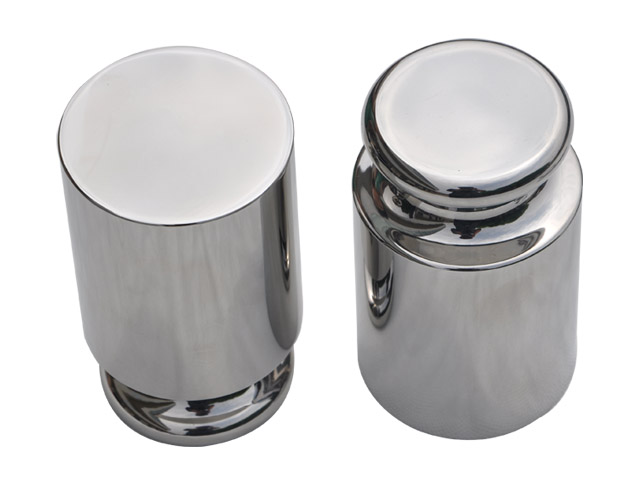
Modern balance calibration weights have evolved from simple metal blocks to highly engineered precision instruments, with carefully designed manufacturing materials, surface treatments, and storage methods to minimize the impact of environmental factors on quality stability.
Accuracy level classification
E-grade: highest precision weight, used for calibrating microbalances with precision ranging from 0.001mg to 0.1mg
F-grade: High precision weight, suitable for analytical balances with precision ranging from 0.1mg to 1mg
M-grade: Medium precision weight, used for precision balances with an accuracy of 1mg to 10mg
M1-M3 grade: Industrial grade weights used for routine inspection and scale calibration in production processes
Material Type
Stainless steel weights: the most commonly used type, with excellent corrosion resistance and stability
Brass chrome plated weights: economical choice, surface coating can prevent oxidation
Platinum iridium alloy weight: used as the national benchmark weight for the highest standard
Non magnetic stainless steel weights: designed specifically for high-precision electronic scales to avoid magnetic field interference
Modern high-precision weights use special surface treatment techniques:
Mirror polishing reduces adsorption effect
Passivation treatment enhances anti-corrosion ability
Special coating reduces surface energy and minimizes dust adhesion
Shape and structural design
Cylindrical: the most common shape, convenient for operation and storage
Polygon: Specially designed to prevent rolling and improve safety
Designed with a handle: equipped with high-quality weights to avoid direct contact
Combination structure: adjustable internal mass distribution for precise calibration
Application fields of balance calibration weights
Laboratory applications
Daily calibration and performance verification of analytical scales
Measurement System Analysis (MSA) in Quality Control Laboratory
Transmission of quality standards for scientific research institutions
industrial applications
Regular calibration of production equipment in the pharmaceutical industry
Calibration of online weighing system for food processing enterprises
Verification of trade settlement scales in precious metal trading
Legal metrology
Mandatory testing by market regulatory authorities
Type approval testing of commercial scales
Maintenance of Quality Standard Transmission Chain in Metrology Institute
Correct usage method
Use specialized tweezers or gloves for operation, avoid direct hand contact
Handle with care to prevent collisions and falls
Before calibration, the weight should be balanced with the temperature of the balance
Perform multiple measurements according to the verification regulations and take the average value
Key points of maintenance and upkeep
Stored in a dedicated box, controlled temperature and humidity environment
Regularly clean the surface using specialized cleaning agents and tools
Avoid contact with corrosive gases and liquids
Establish usage records and track the history of each weight
Calibration cycle recommendation
E/F grade weights: It is recommended to calibrate them once a year
M-grade weights: Calibration cycle of 1-2 years
When used frequently or in harsh environments, the cycle should be shortened
Calibration should be carried out immediately after abnormal or falling impacts occur
With the continuous improvement of measurement technology requirements, balance calibration weights, as the core tool of quality standards, will continue to improve in accuracy and reliability, providing solid guarantees for precise measurement in various industries. Choosing and using appropriate calibration weights is not only related to the accuracy of measurement results, but also the foundation for the effective operation of the quality management system.
