





Changzhou Veidt Weighing Co., Ltd. © 2022 ALL RIGHTS RESERVED Privacy Policy | Calibration Weight | Test Weights | Cast Iron Weights | Standard Weights | Laboratory Weights | XML | SITEMAP
NEWS LIST
astm weights
Friday 02nd January 2026 Back to list
In the realm of precision measurement, where accuracy can dictate the success of scientific experiments, industrial production, and quality control processes, standardized weights play an indispensable role. Among these, ASTM weights stand out as a cornerstone of consistent and reliable measurement across various sectors. Designed to meet rigorous standards for precision, durability, and performance, ASTM weights are not merely tools of measurement but enablers of trust in data and results.
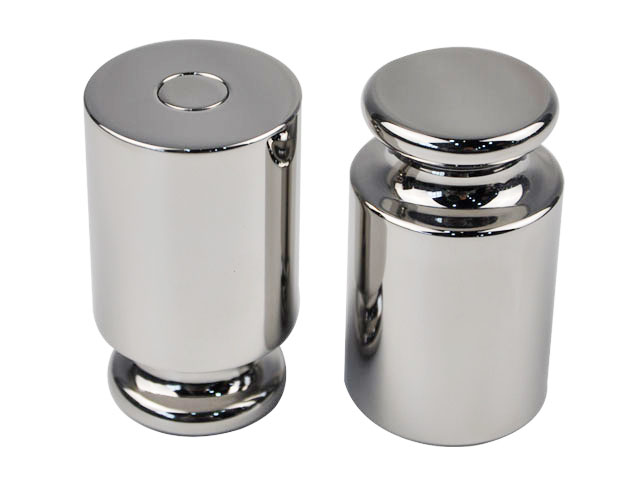
To understand the value of ASTM weights, it is first essential to clarify what defines them. Unlike generic weights, which may vary widely in accuracy and construction, ASTM weights are manufactured in accordance with specific standards that govern their design, tolerance, and performance. These standards are developed to ensure uniformity, so that a weight labeled with a certain mass will consistently deliver the same measurement regardless of where it is used or who manufactures it. This standardization is particularly vital in fields where even the smallest deviation can lead to significant consequences, such as in pharmaceutical manufacturing, aerospace engineering, or chemical analysis.
One of the key attributes of ASTM weights is their strict tolerance levels. Tolerance refers to the maximum allowable deviation from the nominal mass of a weight. For example, a 1-kilogram ASTM weight may have a tolerance of only a few milligrams, meaning its actual mass will not deviate more than that amount from exactly 1 kilogram. This level of precision is achieved through meticulous manufacturing processes, including precise machining, grinding, and polishing of the weight material. The tolerance classes of ASTM weights are typically categorized to suit different applications—from general laboratory use to high-precision calibration of other measuring instruments. Lower tolerance classes (indicating greater precision) are reserved for applications where extreme accuracy is required, while higher tolerance classes are suitable for routine measurements where a slightly wider margin of error is acceptable.
The applications of ASTM weights are diverse and span multiple industries, each relying on their precision to ensure quality and consistency. In the scientific research community, for instance, ASTM weights are used in laboratories to calibrate balances and scales that are critical for experiments involving chemical reactions, material testing, or biological samples. A biologist measuring the mass of cell cultures, for example, depends on a calibrated balance—using ASTM weights—to ensure that the data collected is accurate and reproducible. Similarly, in physics experiments involving force or density measurements, precise weights are essential to validate hypotheses and ensure that results can be replicated by other researchers.
The industrial sector is another major user of ASTM weights, particularly in manufacturing and quality control. In industries such as automotive manufacturing, where components must meet exact specifications to ensure safety and performance, ASTM weights are used to calibrate the scales and measuring equipment that check the mass of parts like engine components, bolts, or brake pads. If a part is too heavy or too light, it could compromise the functionality of the final product, leading to potential failures or safety hazards. By using ASTM weights to calibrate these measuring tools, manufacturers can ensure that every part meets the required standards, reducing waste and improving product reliability.
Pharmaceutical and medical device manufacturing is yet another field where ASTM weights play a critical role. The production of medications requires precise measurement of active ingredients to ensure that each dose is effective and safe for patients. A slight error in the mass of an active ingredient could result in a dose that is too strong (posing health risks) or too weak (rendering the medication ineffective). ASTM weights are used to calibrate the scales and dispensers used in pharmaceutical labs and production facilities, ensuring that the measurements of ingredients are accurate to within strict limits. Similarly, in the production of medical devices such as implants or diagnostic equipment, precise mass measurements are essential to ensure that the devices function as intended.
Material selection is a crucial factor in the performance and durability of ASTM weights. The choice of material depends on several considerations, including the required precision, environmental conditions, and resistance to corrosion or wear. Common materials used for ASTM weights include stainless steel, brass, and aluminum, each with its own set of advantages and limitations. Stainless steel is a popular choice due to its high corrosion resistance, durability, and stability. It is particularly suitable for use in harsh environments, such as laboratories with chemical fumes or industrial settings with high humidity. Brass, on the other hand, is valued for its density and machinability, making it ideal for manufacturing weights with precise dimensions. However, brass is more prone to corrosion than stainless steel, so it is often used in controlled environments where exposure to moisture or chemicals is minimal. Aluminum is lightweight and corrosion-resistant, but it has a lower density, which means that aluminum weights of a given mass are larger in size than those made from stainless steel or brass. This makes aluminum weights suitable for applications where portability is a priority, but high precision is still required.
In addition to the base material, the surface finish of ASTM weights is also an important consideration. A smooth, polished surface helps to prevent the accumulation of dust, dirt, or moisture, which can affect the mass of the weight. It also reduces the risk of corrosion and wear, ensuring that the weight maintains its precision over time. Some ASTM weights are coated with a protective layer, such as chrome or nickel, to further enhance their corrosion resistance and durability. The surface finish is carefully controlled during the manufacturing process to meet the strict standards set for ASTM weights.
Proper maintenance and handling of ASTM weights are essential to ensure their long-term performance and accuracy. Even the most precisely manufactured weight can lose its accuracy if not handled correctly. One of the key principles of handling ASTM weights is to avoid direct contact with the hands, as the oils and moisture from the skin can transfer to the weight, altering its mass. Instead, weights should be handled using tweezers, gloves, or weight handling tools to minimize contact. It is also important to store ASTM weights in a clean, dry environment, away from sources of moisture, heat, or chemicals. Storing weights in a dedicated case or container helps to protect them from physical damage and contamination. Regular cleaning of ASTM weights is also necessary to remove any dust, dirt, or debris that may have accumulated on the surface. Cleaning should be done using a soft, lint-free cloth and a mild cleaning agent that is compatible with the material of the weight. Harsh chemicals or abrasive materials should be avoided, as they can damage the surface finish and affect the accuracy of the weight.
Calibration is another critical aspect of maintaining the accuracy of ASTM weights. Over time, due to wear and tear, environmental factors, or physical damage, the mass of a weight may deviate from its nominal value. Calibration involves comparing the weight to a reference standard of known accuracy to determine any deviation and, if necessary, adjusting the weight to restore its accuracy. The frequency of calibration depends on several factors, including the frequency of use, the environment in which the weight is used, and the required level of precision. For weights used in high-precision applications, calibration may be required annually or even more frequently, while weights used in routine applications may require calibration less often. It is important to keep detailed records of calibration results to track the performance of the weight over time and ensure that it remains within the required tolerance limits.
The impact of ASTM weights extends beyond individual applications to broader areas such as trade and commerce. In many countries, the use of standardized weights is required by law for commercial transactions to ensure fairness between buyers and sellers. For example, in grocery stores, scales used to weigh produce, meat, or other goods must be calibrated using standardized weights to ensure that customers are charged accurately for the products they purchase. ASTM weights, with their high level of precision and standardization, are often used as the reference standards for these calibrations, ensuring that commercial measurements are consistent and reliable. This not only protects consumers but also helps to maintain trust in the marketplace.
Another area where ASTM weights have a significant impact is in the field of metrology—the science of measurement. Metrologists rely on precise weights to develop and maintain measurement standards, which are used to calibrate measuring instruments across various industries. These standards are essential for ensuring that measurements are consistent on a global scale, enabling international trade, scientific collaboration, and technological advancement. For example, in the aerospace industry, where components are manufactured in multiple countries and assembled into complex systems, consistent measurement standards—supported by ASTM weights—are critical to ensure that parts from different manufacturers fit together correctly and perform as intended.
Advancements in technology have also influenced the design and manufacturing of ASTM weights. Modern manufacturing techniques, such as computer numerical control (CNC) machining and laser cutting, have enabled greater precision in the production of weights, allowing for tighter tolerance levels and more consistent performance. Additionally, the use of advanced materials and coatings has improved the durability and corrosion resistance of ASTM weights, making them suitable for use in a wider range of environments. Technological advancements have also made calibration processes more efficient and accurate, with the development of automated calibration systems that can quickly and precisely measure the mass of weights and compare them to reference standards.
Despite the advancements in technology, the fundamental role of ASTM weights remains unchanged: to provide a reliable and consistent reference for precision measurement. As industries continue to demand higher levels of accuracy and consistency, the importance of ASTM weights is only expected to grow. In emerging fields such as nanotechnology, where measurements are conducted at the atomic and molecular level, the need for ultra-precise weights will become even more critical. ASTM weights will continue to evolve to meet these changing needs, with ongoing improvements in material science, manufacturing processes, and calibration techniques.
In conclusion, ASTM weights are a vital component of modern measurement systems, providing the precision and standardization that are essential across scientific, industrial, and commercial applications. Their strict tolerance levels, carefully selected materials, and rigorous manufacturing processes ensure that they deliver consistent and reliable measurements, enabling trust in data and results. Proper handling, maintenance, and calibration are essential to preserve their accuracy over time, ensuring that they continue to meet the needs of various industries. As technology advances and new fields of measurement emerge, ASTM weights will remain a cornerstone of precision, supporting innovation, quality control, and global consistency in measurement. Whether in a laboratory, a manufacturing plant, or a commercial setting, ASTM weights play a quiet but crucial role in ensuring that the measurements that shape our world are accurate, reliable, and consistent.
