





Changzhou Veidt Weighing Co., Ltd. © 2022 ALL RIGHTS RESERVED Privacy Policy | Calibration Weight | Test Weights | Cast Iron Weights | Standard Weights | Laboratory Weights | XML | SITEMAP
NEWS LIST
astm class 1 weights
Friday 02nd January 2026 Back to list
In the realm of precision measurement, the role of standard weights cannot be overstated. They serve as the foundational reference points for calibrating instruments, ensuring accuracy in a wide range of industrial, scientific, and research activities. Among the various classifications of standard weights, ASTM Class 1 weights stand out for their exceptional precision and reliability, making them indispensable in scenarios where even the smallest measurement deviations can have significant consequences.
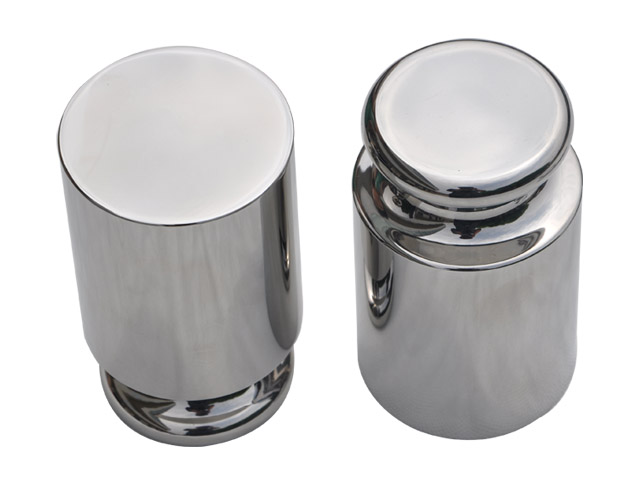
To begin with, it is crucial to clarify what distinguishes ASTM Class 1 weights from other weight classes. ASTM, which sets forth consensus standards for a wide array of materials, products, systems, and services, has established rigorous specifications for weight classes based on factors such as tolerance, stability, and surface finish. ASTM Class 1 weights are categorized as high-precision reference weights, designed primarily for use in calibration laboratories and other environments where the highest level of measurement accuracy is required. Unlike lower classes, which may be suitable for routine industrial applications or general weighing tasks, Class 1 weights are engineered to minimize errors and maintain their mass stability over extended periods.
One of the most defining features of ASTM Class 1 weights is their tight tolerance limits. Tolerance refers to the maximum allowable deviation from the nominal mass of a weight. For ASTM Class 1 weights, these tolerances are extremely narrow, varying depending on the mass of the weight itself. For example, a 1-gram ASTM Class 1 weight typically has a tolerance of just a few micrograms, while a 1-kilogram weight may have a tolerance in the milligram range. This level of precision ensures that when used to calibrate other weighing instruments, such as analytical balances or precision scales, the resulting measurements are highly accurate and trustworthy. In contrast, lower weight classes have wider tolerances, which make them unsuitable for applications that demand the highest degree of precision.
Another key characteristic of ASTM Class 1 weights is their mass stability. Mass stability refers to the ability of a weight to retain its nominal mass over time, even when exposed to various environmental conditions. This is particularly important for reference weights, as any change in mass would compromise their ability to provide accurate calibration. ASTM Class 1 weights are manufactured using materials and processes that minimize mass loss or gain, ensuring long-term stability. This stability is not only a result of the materials used but also of the careful handling and storage practices that are typically required for these weights, which will be discussed in more detail later in this article.
The materials used in the production of ASTM Class 1 weights are carefully selected to meet the stringent requirements of precision and stability. The most common materials include stainless steel, brass, and sometimes platinum-iridium alloys for extremely high-precision applications. Stainless steel is a popular choice due to its excellent corrosion resistance, high density, and good mechanical stability. It is also relatively easy to machine to the precise dimensions required for Class 1 weights. Brass, on the other hand, has a higher density than stainless steel, which can be advantageous for producing smaller weights with higher mass, but it is more prone to corrosion and may require additional plating or coating to protect against environmental factors. Platinum-iridium alloys, while more expensive, offer exceptional stability and resistance to corrosion, making them ideal for primary reference weights used in national metrology laboratories.
The manufacturing process of ASTM Class 1 weights is a highly specialized and meticulous procedure, involving several stages to ensure the final product meets the required specifications. The process typically begins with the selection and preparation of the raw material. The material is first inspected for purity and consistency, as any impurities could affect the density and stability of the final weight. Next, the material is machined to a rough shape, using precision cutting tools to remove excess material and approach the desired dimensions. This is followed by a series of fine machining operations, where the weight is gradually refined to its exact nominal mass, with constant measurements taken to ensure that the tolerance limits are not exceeded.
After machining, the weight undergoes a surface treatment process to improve its corrosion resistance and surface finish. For stainless steel weights, this may involve passivation, a chemical process that creates a thin, protective oxide layer on the surface. For brass weights, plating with nickel or chrome may be used to prevent corrosion. The surface finish of ASTM Class 1 weights is also critical, as any irregularities could trap dust or moisture, leading to changes in mass. The surface is typically polished to a high gloss, ensuring a smooth and uniform finish that minimizes contamination.
Once the manufacturing process is complete, each ASTM Class 1 weight undergoes a rigorous testing and verification process to confirm that it meets the ASTM specifications. This testing involves measuring the mass of the weight using a highly precise balance, comparing it to a known reference weight. The weight is also inspected for surface defects, dimensional accuracy, and mass stability. Any weight that does not meet the required standards is rejected or reworked, ensuring that only high-quality weights reach the market.
The applications of ASTM Class 1 weights are diverse, spanning across multiple sectors where precision measurement is critical. One of the primary applications is in calibration laboratories, where these weights are used to calibrate a wide range of weighing instruments, including analytical balances, precision scales, and dynamometers. Calibration is essential to ensure that these instruments provide accurate and reliable measurements, which is crucial in industries such as pharmaceuticals, food and beverage, and electronics, where product quality and safety depend on precise measurements.
In the pharmaceutical industry, for example, ASTM Class 1 weights are used to calibrate balances that are used to measure active pharmaceutical ingredients (APIs) and other components. The accuracy of these measurements is critical to ensure that the final pharmaceutical products have the correct dosage, which directly impacts patient safety. Similarly, in the food and beverage industry, these weights are used to calibrate scales that measure ingredients, ensuring that products meet the required quality standards and nutritional labeling requirements.
Another important application of ASTM Class 1 weights is in scientific research. In fields such as physics, chemistry, and materials science, precise measurements are essential for conducting experiments and advancing scientific knowledge. These weights are used to calibrate instruments used in research laboratories, ensuring that the data collected from experiments is accurate and reproducible. For example, in materials science research, weights may be used to calibrate instruments that measure the density or strength of materials, providing reliable data for the development of new materials and technologies.
ASTM Class 1 weights are also used in the aerospace and defense industries, where precision is critical for the design and manufacturing of aircraft, spacecraft, and defense equipment. These weights are used to calibrate instruments that measure components used in these industries, ensuring that they meet the strict performance and safety requirements. For example, in the manufacturing of aircraft engines, weights may be used to calibrate balances that measure the mass of engine components, ensuring that the engine operates efficiently and safely.
In addition to these industrial and scientific applications, ASTM Class 1 weights are also used in legal metrology. Legal metrology refers to the area of metrology that deals with measurements subject to legal requirements, such as trade, health, and safety. In many countries, weighing instruments used in trade, such as those in grocery stores or hardware stores, must be calibrated regularly using standard weights that meet specific accuracy requirements. While lower weight classes may be used for routine trade applications, ASTM Class 1 weights are used as reference standards for calibrating the weights used in these routine calibrations, ensuring the traceability of measurements to national or international standards.
To ensure that ASTM Class 1 weights maintain their accuracy and stability over time, proper handling and maintenance practices are essential. One of the most important aspects of maintenance is proper storage. These weights should be stored in a clean, dry environment, away from sources of moisture, dust, and extreme temperatures. Temperature and humidity fluctuations can cause changes in the mass of the weight, either through thermal expansion or contraction or through the absorption of moisture. Therefore, storage areas should be maintained at a constant temperature and humidity, ideally between 20°C and 25°C and 40% to 60% relative humidity.
Proper handling is also critical to prevent damage to the weights and maintain their accuracy. ASTM Class 1 weights should always be handled with clean, dry gloves to avoid transferring oils, dirt, or moisture from the hands to the weight. Oils and dirt can accumulate on the surface of the weight, leading to an increase in mass, while moisture can cause corrosion, especially for brass weights. Weights should never be dropped or撞击ed, as this can cause permanent damage to the surface or change the mass of the weight. Instead, they should be placed carefully on a clean, flat surface when not in use.
Regular cleaning is another important maintenance practice for ASTM Class 1 weights. The weights should be cleaned periodically to remove any dust, dirt, or oil that may have accumulated on the surface. Cleaning should be done using a soft, lint-free cloth and a mild cleaning solution, such as isopropyl alcohol. The cloth should be dampened, not soaked, to avoid leaving excess moisture on the weight. After cleaning, the weight should be dried thoroughly with a clean, dry cloth before being returned to storage. Abrasive cleaning materials or harsh chemicals should never be used, as they can scratch the surface of the weight and compromise its accuracy.
In addition to proper storage, handling, and cleaning, ASTM Class 1 weights should also be recalibrated periodically to ensure that they still meet the required tolerance limits. Over time, even with proper maintenance, the mass of a weight may change due to wear and tear, environmental factors, or other factors. Recalibration involves measuring the mass of the weight using a highly precise reference balance and comparing it to the nominal mass. If the weight is found to be outside the tolerance limits, it may need to be adjusted, reworked, or replaced. The frequency of recalibration depends on the frequency of use, the environmental conditions, and the specific requirements of the application. In general, weights used in high-precision applications should be recalibrated more frequently than those used in less demanding applications.
When selecting ASTM Class 1 weights, there are several factors that professionals should consider to ensure that they are suitable for their specific application. One of the most important factors is the mass range. ASTM Class 1 weights are available in a wide range of masses, from a few milligrams to several kilograms. The user should select the appropriate mass range based on the instruments they need to calibrate and the measurements they need to perform. Another factor to consider is the material of the weight. As discussed earlier, stainless steel, brass, and platinum-iridium alloys are the most common materials, each with its own advantages and disadvantages. The user should select the material based on the environmental conditions of the application and the level of corrosion resistance required.
The surface finish and tolerance of the weight are also important factors to consider. The surface finish should be smooth and uniform to minimize contamination, while the tolerance should be appropriate for the level of precision required in the application. Additionally, the user should consider the traceability of the weight. Traceability refers to the ability to link the measurement of the weight to a national or international reference standard. While the article does not focus on certification, it is important to ensure that the weight has been tested and verified to meet the ASTM specifications, which provides a level of confidence in its accuracy.
In conclusion, ASTM Class 1 weights are essential tools in the field of precision measurement, offering exceptional accuracy and stability for a wide range of applications. Their tight tolerance limits, high-quality materials, and meticulous manufacturing processes make them ideal for use in calibration laboratories, scientific research, pharmaceuticals, aerospace, and legal metrology. By following proper handling, storage, and maintenance practices, professionals can ensure that these weights maintain their accuracy over time, preserving the integrity of their measurement systems. When selecting ASTM Class 1 weights, careful consideration of factors such as mass range, material, surface finish, and tolerance is essential to ensure that they meet the specific requirements of the application. As technology continues to advance and the demand for precision measurement grows, the role of ASTM Class 1 weights will remain critical in ensuring the reliability and accuracy of measurements across various sectors.
