





Changzhou Veidt Weighing Co., Ltd. © 2022 ALL RIGHTS RESERVED Privacy Policy | Calibration Weight | Test Weights | Cast Iron Weights | Standard Weights | Laboratory Weights | XML | SITEMAP
NEWS LIST
astm class 1 weight sets
Friday 02nd January 2026 Back to list
In the realm of precision measurement, the reliability of results hinges on the accuracy of reference standards. Among these critical tools, ASTM Class 1 weight sets stand out as essential components for ensuring precision in a wide range of industrial, laboratory, and calibration-related activities. Unlike everyday weights that serve general purposes, these weight sets are engineered to meet rigorous standards for mass accuracy, stability, and consistency, making them indispensable for tasks where even the smallest deviation can lead to significant consequences.
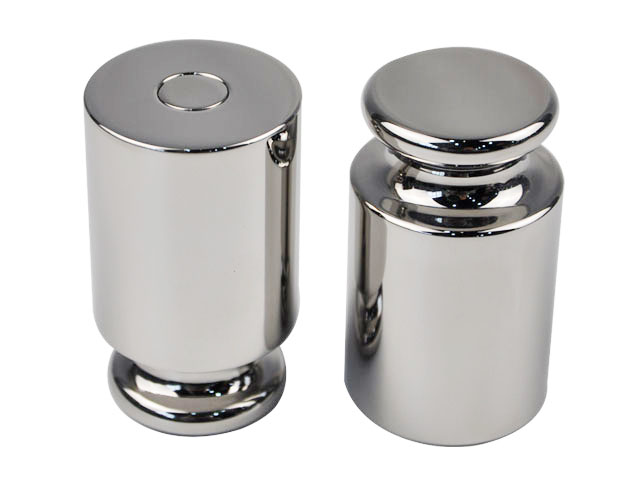
To fully appreciate the value of ASTM Class 1 weight sets, it is first necessary to clarify what distinguishes them from other weight classes. ASTM, or the American Society for Testing and Materials, has established a comprehensive classification system for weights based on their tolerance levels, material specifications, and intended use cases. Within this system, Class 1 occupies a position of high precision, designed for applications that demand exceptional accuracy without the extreme tolerances required for primary calibration standards. Unlike lower classes (such as Class 2 or Class 3), which are suitable for general laboratory work or industrial testing with moderate precision needs, ASTM Class 1 weights are manufactured to minimize mass variation, ensuring that their actual mass closely aligns with their nominal value.
The key defining feature of ASTM Class 1 weight sets is their tight tolerance range. Tolerances refer to the maximum allowable deviation from the nominal mass of a weight. For example, a 100-gram ASTM Class 1 weight typically has a tolerance of just a few milligrams, whereas a Class 2 weight of the same nominal mass may have a tolerance several times larger. This narrow tolerance range is achieved through meticulous manufacturing processes, including precision machining, rigorous quality control checks, and careful material selection. The materials used for ASTM Class 1 weights are chosen for their stability, corrosion resistance, and low magnetic susceptibility—properties that are critical for maintaining mass accuracy over time. Common materials include stainless steel, brass, and in some cases, non-magnetic alloys, each selected based on the specific environmental conditions and application requirements.
Another important aspect of ASTM Class 1 weight sets is their construction design. These weights are often crafted with a solid, one-piece structure to minimize mass loss or gain due to wear, deformation, or contamination. Many feature a knurled or smooth surface finish to facilitate easy handling without compromising precision. Additionally, some weights are designed with a small cavity (sealed after adjustment) that allows for fine-tuning of mass during manufacturing. This adjustment process ensures that each weight meets the exact tolerance requirements before being included in a set. ASTM Class 1 weight sets are typically available in a range of nominal masses, from milligram levels up to several kilograms, allowing users to select the appropriate combination for their specific measurement tasks.
The applications of ASTM Class 1 weight sets span across numerous industries and disciplines, each leveraging their precision to ensure the accuracy of critical processes. One of the most prominent applications is in calibration laboratories, where these weights are used to calibrate other precision instruments such as balances and scales. Balances and scales are essential tools in countless settings, from pharmaceutical laboratories to manufacturing facilities, and their accuracy directly impacts the quality of products and the validity of test results. By using ASTM Class 1 weights to calibrate these instruments, technicians can ensure that measurements are consistent and reliable, reducing the risk of errors that could lead to product defects, failed tests, or non-compliance with industry standards.
In the pharmaceutical and biotechnology industries, ASTM Class 1 weight sets play a vital role in ensuring the purity and dosage accuracy of medications and biological products. During the manufacturing process, precise measurement of raw materials is critical to achieving the desired chemical composition and therapeutic effect. A slight deviation in the mass of an active ingredient can result in a medication that is either ineffective or potentially harmful to patients. ASTM Class 1 weights are used to calibrate the balances used in raw material weighing, formulation, and quality control testing, ensuring that each batch of product meets the required specifications. Similarly, in the food and beverage industry, these weights are used to calibrate scales used for ingredient measurement, portion control, and packaging, helping to maintain product consistency and comply with labeling regulations.
The aerospace and automotive industries also rely heavily on ASTM Class 1 weight sets for precision measurement tasks. In aerospace manufacturing, components such as engine parts, avionics, and structural elements must meet extremely tight tolerances to ensure safety and performance. ASTM Class 1 weights are used to calibrate the measuring instruments used to inspect these components, ensuring that they meet the design specifications. In the automotive industry, these weights are used in the calibration of tools and equipment used for engine testing, emissions monitoring, and quality control. For example, during engine performance testing, precise measurement of fuel consumption and exhaust emissions requires calibrated instruments, which in turn depend on the accuracy of ASTM Class 1 weights.
Research and development laboratories across various scientific disciplines also utilize ASTM Class 1 weight sets. In chemistry, physics, and materials science research, precise mass measurement is fundamental to conducting experiments and analyzing results. Whether measuring reactants for a chemical reaction, determining the density of a material, or studying the properties of a new compound, researchers rely on calibrated balances that are verified using ASTM Class 1 weights. This ensures that the data collected is accurate and reproducible, which is essential for advancing scientific knowledge and developing new technologies.
To maximize the performance and lifespan of ASTM Class 1 weight sets, proper handling and maintenance practices are essential. These weights are highly sensitive to environmental factors and physical damage, which can compromise their mass accuracy. One of the most important handling practices is to use clean, dry forceps or gloves when handling the weights. Fingerprints, oils, and moisture from the skin can add mass to the weights, leading to inaccurate measurements. Additionally, dropping or scratching a weight can cause permanent damage, altering its mass and rendering it unusable for precision applications.
Storage conditions also play a critical role in maintaining the integrity of ASTM Class 1 weight sets. Weights should be stored in a clean, dry, and stable environment, away from extreme temperatures, humidity, and corrosive substances. Many weight sets come with a dedicated storage case, which provides protection from physical damage and environmental contaminants. It is important to ensure that the storage case is kept closed when not in use to prevent dust and moisture from accumulating on the weights. Additionally, weights should be stored in a way that prevents them from touching each other, as this can cause scratches or wear over time.
Regular cleaning is another essential maintenance practice for ASTM Class 1 weight sets. Weights should be cleaned periodically to remove any dust, dirt, or residue that may have accumulated on their surface. The cleaning process should be gentle to avoid damaging the weight’s surface or altering its mass. Typically, a soft, lint-free cloth or a brush can be used to remove loose debris. For more stubborn contaminants, a mild cleaning solution (such as alcohol or a specialized weight cleaning solution) can be used, followed by thorough drying to remove any moisture. It is important to avoid using abrasive cleaners or harsh chemicals, as these can scratch the surface or corrode the material of the weights.
In addition to proper handling and maintenance, regular verification of the mass accuracy of ASTM Class 1 weight sets is necessary. Over time, factors such as wear, environmental exposure, and handling can cause small changes in the mass of the weights. Verification involves comparing the weight’s actual mass to its nominal value using a more precise reference standard. The frequency of verification depends on the frequency of use, the environmental conditions, and the criticality of the applications for which the weights are used. For high-frequency, critical applications, verification may be required monthly or quarterly, while for less frequent use, annual verification may be sufficient. If a weight is found to be outside its tolerance range, it should be removed from service and either reconditioned or replaced.
The selection of the appropriate ASTM Class 1 weight set for a specific application requires careful consideration of several factors. First, the nominal mass range of the weight set must match the measurement requirements of the task. For example, a laboratory conducting microscale chemistry experiments will require a weight set with milligram-level weights, while a manufacturing facility calibrating large industrial scales will need kilogram-level weights. Second, the material of the weights should be compatible with the environmental conditions of the application. For example, in a corrosive environment (such as a chemical laboratory), stainless steel or non-magnetic alloys may be preferred over brass, which is more susceptible to corrosion. Third, the tolerance requirements of the application must be taken into account. While ASTM Class 1 weights are precise, some applications may require even tighter tolerances (such as ASTM Class 00 or Class 0), in which case a higher-class weight set would be necessary.
It is also important to consider the design features of the weight set when making a selection. For example, weights with a knurled surface may be easier to handle with forceps, while smooth-surface weights may be less prone to collecting dust. Additionally, some weight sets include accessories such as forceps, storage cases, or calibration certificates (though the latter are excluded as per requirements), which can enhance the usability and protection of the weights. When selecting a weight set, it is advisable to choose one that is designed for the specific application to ensure optimal performance and longevity.
The role of ASTM Class 1 weight sets in ensuring measurement accuracy cannot be overstated. In a world where precision is critical to the quality, safety, and reliability of products and processes, these weight sets serve as the foundation for consistent and accurate measurements. Whether in a calibration laboratory, a pharmaceutical manufacturing facility, an aerospace workshop, or a scientific research lab, ASTM Class 1 weights play a vital role in upholding the integrity of measurement systems. By adhering to best practices for handling, maintenance, and verification, users can ensure that these precision tools continue to deliver reliable performance for years to come.
Looking to the future, the demand for high-precision measurement tools such as ASTM Class 1 weight sets is likely to grow as industries continue to advance and impose stricter quality and safety standards. Technological advancements in manufacturing processes may also lead to improvements in the precision, stability, and durability of these weights, making them even more effective for critical applications. Additionally, as the global economy becomes more interconnected, the need for consistent and standardized measurement practices will increase, further highlighting the importance of reliable reference standards like ASTM Class 1 weight sets.
In conclusion, ASTM Class 1 weight sets are essential tools for precision measurement across a wide range of industries and applications. Their tight tolerance ranges, high-quality materials, and meticulous construction make them ideal for tasks where accuracy is paramount. By understanding their core characteristics, applications, and best practices for use and maintenance, professionals can leverage these weight sets to ensure the reliability of their measurement processes, uphold quality standards, and drive innovation in their respective fields. As technology continues to evolve and industries demand greater precision, ASTM Class 1 weight sets will remain a cornerstone of accurate and consistent measurement, playing a critical role in shaping the future of manufacturing, research, and quality control.
