





Changzhou Veidt Weighing Co., Ltd. © 2022 ALL RIGHTS RESERVED Privacy Policy | Calibration Weight | Test Weights | Cast Iron Weights | Standard Weights | Laboratory Weights | XML | SITEMAP
NEWS LIST
astm calibration weights
Friday 02nd January 2026 Back to list
In the realm of precision measurement, the reliability of results hinges on the accuracy of the tools used. Among these critical tools, calibration weights stand out as foundational components that ensure the integrity of weighing processes across diverse industries. ASTM calibration weights, defined by rigorous standards focused on material quality, dimensional precision, and performance consistency, play an indispensable role in maintaining measurement uniformity and trust in analytical outcomes.
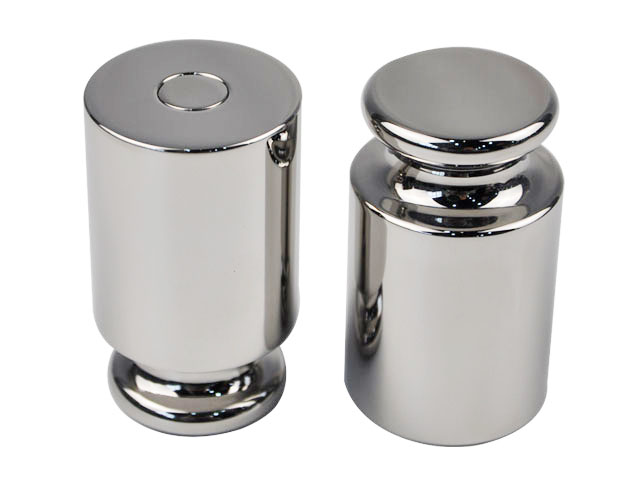
To understand the value of ASTM calibration weights, it is first essential to grasp the purpose of calibration itself. Calibration is the process of comparing a measuring instrument’s output to a known, traceable standard to identify and correct any deviations. For weighing equipment—such as balances, scales, and load cells—calibration weights serve as this traceable standard. ASTM, as a framework for these weights, establishes specifications that govern their design, material composition, and performance, ensuring that they meet the stringent requirements of precision measurement. Unlike generic weights, which may lack consistent quality control, ASTM calibration weights are engineered to maintain their mass stability over time, making them reliable references for calibrating a wide range of weighing devices.
One of the key defining features of ASTM calibration weights is their material selection. The choice of material directly impacts the weight’s stability, durability, and resistance to environmental factors. Common materials used in ASTM calibration weights include stainless steel, brass, and aluminum, each selected for specific applications based on their physical properties. Stainless steel, for instance, is favored for its corrosion resistance and high density, making it suitable for use in harsh or humid environments such as laboratories, pharmaceutical facilities, and food processing plants. Brass, known for its excellent machinability and stability, is often used for medium-precision applications, while aluminum, being lightweight and cost-effective, is ideal for larger weights used in industrial settings where portability is a consideration. ASTM standards dictate the purity and composition of these materials to ensure that the weights do not undergo significant mass changes due to oxidation, wear, or chemical reactions, thus preserving their accuracy over extended periods.
Dimensional precision is another cornerstone of ASTM calibration weights. The shape and size of a calibration weight are not arbitrary; they are designed to minimize air resistance, facilitate easy handling, and ensure consistent placement on weighing platforms. ASTM standards specify tolerances for dimensions such as diameter, height, and surface finish, ensuring that each weight adheres to a uniform design. For example, cylindrical weights are commonly used for precision balances due to their compact size and minimal air displacement, while rectangular weights are preferred for larger scales where stability on the platform is critical. The surface finish of ASTM calibration weights is also tightly controlled—smooth, polished surfaces reduce the accumulation of dust and debris, which can alter the weight’s mass and compromise calibration accuracy. Additionally, many ASTM weights feature specialized designs, such as knobs or loops, to enable safe and precise handling without transferring oils or contaminants from the user’s hands to the weight.
The applications of ASTM calibration weights span virtually every industry where accurate weighing is essential. In the pharmaceutical sector, for instance, precise measurement of active ingredients is critical to ensuring the efficacy and safety of medications. ASTM calibration weights are used to calibrate the balances that measure these ingredients, ensuring that each dosage meets exact specifications. Similarly, in the food and beverage industry, calibration weights play a vital role in quality control—from measuring raw materials to verifying the accuracy of packaging scales, ensuring that consumers receive products that match the stated weight. In industrial manufacturing, ASTM calibration weights are used to calibrate load cells and industrial scales, which are essential for monitoring production processes, ensuring product consistency, and complying with industry regulations related to weight and measurement.
Laboratory settings, whether in academic institutions, research facilities, or private laboratories, rely heavily on ASTM calibration weights for a wide range of analytical applications. From chemical analysis to materials science, precise weighing is a fundamental step in experiments and tests. For example, in analytical chemistry, the accuracy of titrations, gravimetric analysis, and chromatography depends on the calibration of the balances used to measure samples and reagents. ASTM calibration weights provide the traceable standard needed to ensure that these balances are accurate, enabling researchers to trust the validity of their results. In environmental testing, calibration weights are used to calibrate scales that measure soil samples, water samples, and air particulates, ensuring that data related to pollution levels and environmental quality is reliable.
The selection of the appropriate ASTM calibration weight is a critical process that depends on several factors, including the intended application, the precision requirements of the weighing equipment, and the environmental conditions in which the weight will be used. One of the primary considerations is the weight’s tolerance class, which indicates the maximum allowable deviation from the nominal mass. ASTM standards define various tolerance classes, ranging from high-precision classes for laboratory balances to lower-precision classes for industrial scales. For example, a high-precision ASTM weight with a tolerance class of 1 might be used to calibrate a microbalance capable of measuring to the nearest microgram, while a lower-precision weight with a tolerance class of 4 could be used for a floor scale in a warehouse.
Another important factor in selecting ASTM calibration weights is the nominal mass, which must match the range of the weighing equipment being calibrated. Calibrating a balance with a maximum capacity of 100 grams using weights that only go up to 50 grams would be insufficient, as it would not test the balance’s accuracy across its entire range. Conversely, using weights that are too large for the balance could damage the equipment. It is also essential to consider the material compatibility of the weight with the environment. For example, in a corrosive environment such as a chemical laboratory, a stainless steel ASTM weight would be preferable to a brass weight, which is more susceptible to corrosion. Additionally, the handling requirements of the weight should be considered—weights used in cleanrooms, for instance, may need to be non-particulating and easy to sanitize.
Proper maintenance and handling of ASTM calibration weights are essential to preserving their accuracy and extending their lifespan. Even the highest-quality weights can lose their precision if not cared for properly. One of the most important maintenance practices is regular cleaning. Dust, dirt, and oils from handling can accumulate on the surface of the weight, adding to its mass and causing calibration errors. ASTM calibration weights should be cleaned using non-abrasive materials, such as lint-free cloths and mild cleaning solutions, to avoid scratching the surface. It is also important to handle the weights with care—using tweezers, gloves, or specialized handling tools to prevent direct contact with the skin, which can transfer oils and moisture.
Storage conditions also play a crucial role in maintaining the integrity of ASTM calibration weights. Weights should be stored in a clean, dry environment with a stable temperature and humidity. Extreme temperatures can cause thermal expansion or contraction of the material, altering the weight’s mass, while high humidity can lead to corrosion. Many ASTM weights are supplied with protective cases or storage containers that help shield them from environmental factors. It is also recommended to store weights in a way that prevents them from coming into contact with other objects, which can cause scratches or dents. Additionally, ASTM calibration weights should be re-calibrated at regular intervals to ensure that they still meet the required tolerance specifications. The frequency of re-calibration depends on the usage intensity, environmental conditions, and the criticality of the applications for which the weights are used—high-frequency use in harsh environments may require more frequent re-calibration, while occasional use in a controlled environment may allow for longer intervals.
The field of calibration weights, including ASTM standards, is constantly evolving to keep pace with advancements in measurement technology and changing industry needs. One of the key trends in recent years is the increasing demand for traceability. Traceability refers to the ability to link a measurement to a national or international standard, ensuring that the results are comparable across different laboratories and industries. ASTM calibration weights are now more frequently required to be traceable to global standards, such as those set by the International Bureau of Weights and Measures (BIPM), to facilitate international trade and collaboration.
Another emerging trend is the development of more durable and stable materials for ASTM calibration weights. Researchers and manufacturers are exploring new alloys and coatings that offer enhanced corrosion resistance, better mass stability, and longer lifespans. For example, titanium alloys are being considered for use in weights due to their high strength-to-weight ratio and excellent corrosion resistance, while specialized coatings are being developed to protect weights from chemical attack in harsh environments. Additionally, advancements in manufacturing technology, such as precision machining and 3D printing, are enabling the production of ASTM calibration weights with even tighter tolerances and more complex designs, further improving their performance.
The growing focus on sustainability is also influencing the development and use of ASTM calibration weights. Manufacturers are increasingly using recycled materials in the production of weights, reducing their environmental impact. Additionally, the design of weights is being optimized to minimize material usage while maintaining performance, further reducing resource consumption. In some industries, there is also a shift towards reusable calibration weights, rather than disposable ones, to reduce waste.
Despite their small size and seemingly simple design, ASTM calibration weights are indispensable tools that underpin the reliability of precision measurement across countless industries. From their carefully selected materials and precise dimensions to their wide-ranging applications and the need for proper maintenance, every aspect of ASTM calibration weights is geared towards ensuring accuracy and consistency. As measurement technology continues to advance and industry requirements become more stringent, the role of ASTM calibration weights will only grow in importance. By adhering to ASTM standards and following best practices for selection, handling, and maintenance, organizations can ensure that their weighing processes are accurate, reliable, and compliant, ultimately safeguarding the quality of their products and the validity of their analytical results.
In conclusion, ASTM calibration weights are more than just simple masses—they are the backbone of a global measurement system that relies on trust, consistency, and accuracy. Whether in a pharmaceutical laboratory, a food processing plant, an industrial manufacturing facility, or an academic research center, these weights play a quiet yet critical role in ensuring that the measurements we depend on are correct. As we look to the future, the continued evolution of ASTM standards and the materials and technologies used in calibration weights will ensure that they remain at the forefront of precision measurement, supporting innovation and quality across all sectors of industry and science.
