





Changzhou Veidt Weighing Co., Ltd. © 2022 ALL RIGHTS RESERVED Privacy Policy | Calibration Weight | Test Weights | Cast Iron Weights | Standard Weights | Laboratory Weights | XML | SITEMAP
NEWS LIST
analytical balance weights
Friday 02nd January 2026 Back to list
In the realm of precision measurement, analytical balance weights stand as unsung heroes, underpinning the accuracy and reliability of countless scientific, industrial, and research processes. From the meticulous work of a chemistry lab technician quantifying reactants to the quality control checks in pharmaceutical manufacturing, these small yet critical tools ensure that measurements are not merely numbers but trustworthy data that drives decision-making. Despite their seemingly simple design, analytical balance weights are the product of rigorous engineering, careful material selection, and adherence to strict precision standards.
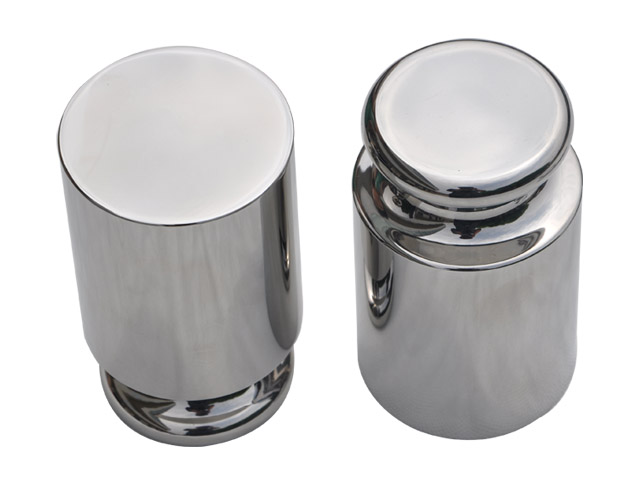
At the core of analytical balance weights lies the principle of comparative measurement. Analytical balances, by nature, measure the mass of an object by comparing it to a known mass—this known mass is precisely what analytical balance weights provide. Unlike ordinary weights, which may suffice for general-purpose weighing, analytical balance weights are engineered to deliver exceptional precision, often with tolerances measured in micrograms. This level of accuracy is essential because even the smallest deviation in weight can lead to significant errors in experimental results or product quality. For instance, in a forensic toxicology lab, a slight inaccuracy in weighing a sample could alter the concentration of a detected substance, potentially affecting the outcome of a legal case. Thus, the primary function of analytical balance weights is to serve as a reference standard that enables the analytical balance to produce consistent and accurate measurements.
The material composition of analytical balance weights is a critical factor that directly impacts their precision and durability. The ideal material for these weights must possess several key characteristics: high density, low susceptibility to corrosion, minimal volume change under varying environmental conditions, and excellent stability over time. Historically, brass was a common material for weights due to its durability and relative affordability. However, brass is prone to oxidation, which can alter its mass over time, making it less suitable for high-precision applications. Today, the most widely used materials for analytical balance weights include stainless steel, aluminum, and various alloys specifically formulated for precision weighing.
Stainless steel, particularly types with high chromium and nickel content, is favored for its exceptional corrosion resistance and mechanical stability. It can withstand the rigors of regular use and exposure to common lab chemicals without significant mass loss or gain. Aluminum weights, on the other hand, are lighter in weight and often used for larger mass ranges where portability is a consideration, though they require careful handling to avoid scratches and deformation. Specialized alloys, such as those containing platinum or iridium, are used for ultra-high-precision weights, such as those employed in national metrology laboratories to define standard units of mass. These precious metal alloys offer unparalleled stability and resistance to environmental factors, making them ideal for maintaining the highest levels of measurement accuracy.
Another crucial aspect of analytical balance weights is their design and construction. The shape and surface finish of the weights are not arbitrary but are carefully engineered to minimize errors. Most analytical balance weights feature a compact, symmetrical design to reduce air resistance, which can affect measurements in highly sensitive balances. The surface of the weights is typically polished to a high sheen, not only for aesthetic purposes but also to prevent the accumulation of dust, dirt, and moisture—all of which can add to the weight and introduce inaccuracies. Additionally, many weights are equipped with a small handle or a slot for easy handling with tweezers, reducing the risk of contamination from fingerprints. Oils and salts from human skin can adhere to the surface of the weights, altering their mass, so the ability to handle them without direct contact is essential for maintaining their precision.
Calibration is perhaps the most vital process associated with analytical balance weights, as it ensures that the weights themselves maintain their specified mass accuracy. Calibration involves comparing the weight to a reference standard of known accuracy, typically a higher-grade weight that has been certified by a recognized metrology authority. The frequency of calibration depends on several factors, including the level of precision required, the frequency of use, the environmental conditions in which the weights are stored and used, and the nature of the applications they are involved in. In high-precision environments, such as research labs or pharmaceutical manufacturing facilities, weights may need to be calibrated monthly or quarterly. In less demanding settings, annual calibration may be sufficient.
The calibration process itself requires strict adherence to controlled conditions. Temperature, humidity, and air pressure can all affect the mass of the weights and the performance of the analytical balance. For example, changes in temperature can cause thermal expansion or contraction of the weight material, leading to temporary or permanent changes in mass. Therefore, calibration should be performed in a temperature-controlled environment, typically between 20°C and 25°C, with stable humidity levels. During calibration, any deviation from the specified mass is recorded, and if the deviation exceeds the acceptable tolerance, the weight may need to be adjusted, repaired, or replaced. Regular calibration not only ensures the accuracy of the weights but also provides a documented trail of their performance, which is essential for compliance with quality assurance standards in many industries.
Analytical balance weights find applications across a wide range of industries and fields, each with its own unique requirements for precision and reliability. In the field of chemistry, they are used to weigh reagents for chemical reactions, ensuring that the correct stoichiometric ratios are maintained. This is critical for the success of experiments, as even a small imbalance in reactant quantities can lead to incomplete reactions, incorrect product yields, or the formation of unwanted byproducts. In biochemistry and molecular biology labs, analytical balance weights are used to prepare buffers, culture media, and DNA samples, where precise concentrations are essential for the validity of experiments.
The pharmaceutical industry relies heavily on analytical balance weights for quality control and formulation development. Pharmaceutical products must meet strict dosage requirements, and any variation in the amount of active ingredient can have serious implications for patient safety. Analytical balance weights are used to weigh raw materials during the manufacturing process, as well as to test the final product to ensure that it meets the specified dosage. In addition, they are used in stability testing, where the degradation of pharmaceutical products over time is monitored, requiring accurate measurements at regular intervals.
In environmental science, analytical balance weights play a key role in the analysis of environmental samples, such as soil, water, and air. For example, when measuring the concentration of pollutants in a water sample, precise weighing of the sample and any reagents used in the analysis is essential to obtain accurate results. These results are used to assess environmental quality, identify pollution sources, and develop strategies for environmental protection. In forensic science, analytical balance weights are used in the analysis of evidence, such as drugs, fibers, and trace elements, where the accuracy of measurements can be critical to solving crimes.
The food and beverage industry also uses analytical balance weights for quality control and compliance with food safety standards. For example, in the production of processed foods, weights are used to ensure that ingredients are added in the correct proportions, and that the final product meets the specified weight requirements. In addition, they are used to test for contaminants, such as heavy metals, in food products, ensuring that they are safe for consumption. Beyond these industries, analytical balance weights are also used in academic research, materials science, and even in the jewelry industry, where precise weighing of precious metals and gemstones is essential.
Proper handling and storage of analytical balance weights are essential to maintaining their precision and extending their lifespan. As mentioned earlier, direct contact with the weights should be avoided, and tweezers or gloves should be used when handling them. This prevents contamination from fingerprints, oils, and other substances. Weights should be stored in a clean, dry, and temperature-controlled environment, away from direct sunlight, moisture, and corrosive chemicals. Many weights come with a dedicated storage case, which helps to protect them from physical damage and contamination. It is also important to avoid dropping or bumping the weights, as physical damage can alter their mass and precision.
In recent years, the field of analytical balance weights has seen several notable trends and advancements. One of the key trends is the increasing demand for traceability in measurement. Traceability refers to the ability to link a measurement to a national or international standard, ensuring that the measurement is accurate and comparable across different labs and industries. This has led to the development of more sophisticated calibration methods and the use of higher-grade reference standards. In addition, advancements in material science have led to the development of new alloys and coatings that offer even greater stability and corrosion resistance, further improving the performance of analytical balance weights.
Another trend is the integration of technology into the design and use of analytical balance weights. While traditional weights are still widely used, there has been a growing interest in electronic weights and smart weighing systems. Electronic weights incorporate sensors and digital displays, allowing for more precise and efficient measurements. Smart weighing systems, on the other hand, can connect to computers or mobile devices, enabling data logging, remote monitoring, and automatic calibration reminders. These technological advancements not only improve the accuracy and efficiency of weighing processes but also simplify compliance with quality assurance standards by providing detailed records of measurements and calibrations.
The future of analytical balance weights is likely to be shaped by ongoing advancements in precision engineering, material science, and technology. As industries continue to demand higher levels of accuracy and reliability, the development of new materials and designs that offer even greater stability and precision will remain a priority. In addition, the growing focus on sustainability and environmental responsibility may lead to the development of more eco-friendly materials for analytical balance weights, reducing their environmental impact without compromising performance.
In conclusion, analytical balance weights are essential tools that play a critical role in ensuring the accuracy and reliability of precision measurement across a wide range of industries and fields. From their carefully selected materials and engineered designs to their regular calibration and proper handling, every aspect of these weights is geared towards maintaining the highest levels of precision. As technology continues to advance and industries evolve, analytical balance weights will continue to adapt, remaining a cornerstone of precision measurement for years to come. Understanding the importance of these small yet powerful tools is essential for anyone involved in processes that rely on accurate measurements, as they are the foundation upon which trustworthy data and successful outcomes are built.
