





Changzhou Veidt Weighing Co., Ltd. © 2022 ALL RIGHTS RESERVED Privacy Policy | Calibration Weight | Test Weights | Cast Iron Weights | Standard Weights | Laboratory Weights | XML | SITEMAP
NEWS LIST
Slotted Calibration Weights
Saturday 26th September 2026 Back to list
Slotted calibration weights are indispensable precision measuring tools widely adopted in laboratory testing, industrial calibration, scientific research and educational experimentation fields. Differing from solid integral calibration weights, their distinctive slotted structural design sets them apart with exceptional flexibility and operability, enabling users to quickly assemble, disassemble and combine weight units according to actual testing and calibration needs. These weights are engineered to provide accurate, known mass values, serving as the core reference standard for verifying the precision of weighing equipment, force measuring devices and mechanical testing instruments. Crafted from high-density, stable materials, they maintain long-term mass consistency and resist external environmental interference. Their unique structural advantages make them suitable for static weighing calibration and dynamic force testing scenarios, filling the functional gap of traditional calibration weights in flexible load combination. As a basic guarantee for measurement accuracy, they underpin the reliability and repeatability of various experimental data and industrial detection results.
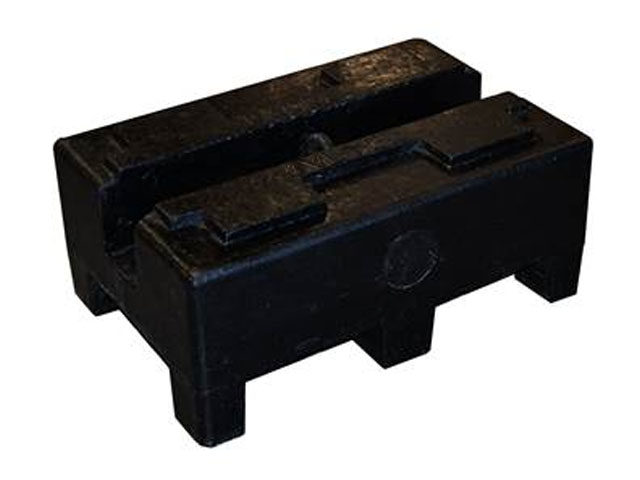
The unique slotted structural design is the core competitive advantage of slotted calibration weights and the key reason for their wide application in diverse scenarios. The open slot design on the weight body allows the weights to be directly mounted on specialized hangers, support rods and experimental brackets without additional fixing accessories, greatly simplifying the equipment assembly process during calibration and testing. Users can freely stack and combine multiple slotted weights of different specifications to form graded load values, realizing stepless adjustment of test load within a certain range. This flexible combination mode is incomparable to single solid weights, which can only provide fixed mass values. Meanwhile, the slot structure is optimized in size and radian through precision processing, ensuring tight fitting between weights and supporting parts, avoiding lateral sliding or position deviation during loading and testing. This structural stability effectively eliminates measurement errors caused by weight displacement, ensuring each load application is accurate and uniform. Whether for short-term experimental testing or long-term equipment calibration, this humanized design greatly improves operational efficiency and test accuracy.
Material selection directly determines the service performance, measurement stability and service life of slotted calibration weights, and high-quality materials are the foundation of their precision characteristics. Premium slotted calibration weights are mostly made of high-density stainless steel or high-grade cast iron materials with stable physical properties. Stainless steel materials feature excellent corrosion resistance, oxidation resistance and surface wear resistance, enabling the weights to maintain complete surface finish and stable mass values for a long time in humid, dusty and slightly corrosive laboratory and industrial environments. Cast iron materials, with high density and good pressure resistance, are often used to manufacture medium and large-specification slotted weights, which can bear long-term static load and repeated stacking without deformation. All raw materials undergo strict screening and homogenization treatment to ensure uniform internal density of each weight, avoiding local mass deviation caused by material defects. In addition, the surface of the weights is treated with fine polishing and anti-oxidation coating, which not only prevents dust adhesion and surface rust, but also facilitates daily cleaning and maintenance, further ensuring the long-term stability of measurement performance.
Slotted calibration weights have extremely prominent application value in laboratory scientific research and teaching experiments, becoming essential basic experimental accessories. In physics experiments, they are widely used in pulley system tests, mechanical motion verification, tensile force detection and elastic modulus measurement experiments. By combining different quantities of slotted weights, researchers and teachers can apply accurate graded tension and pressure loads to experimental samples, intuitively verifying the basic laws of mechanics and collecting standardized experimental data. In chemical and biological laboratories, these weights assist in calibrating analytical balances and precision weighing instruments, ensuring accurate measurement of raw materials, samples and reagents, which is crucial for improving the accuracy and repeatability of experimental results. In university and vocational school teaching scenarios, the simple structure and flexible operation of slotted weights help students intuitively understand the basic concepts of mass, force and load, realizing the organic combination of theoretical knowledge and practical operation, and laying a solid foundation for cultivating students’ scientific experimental ability.
The industrial manufacturing and quality control fields rely heavily on slotted calibration weights to ensure the consistency and accuracy of production measurement links. In industrial production, various weighing and force measuring equipment need regular calibration and error detection to avoid measurement deviation affecting product quality and production precision. Slotted calibration weights can be used to calibrate various platform scales, suspension scales, load cells and dynamometers on production lines, timely correcting instrument errors caused by long-term operation, mechanical wear and environmental changes. In material performance testing workshops, these weights are used to conduct tensile, compression and fatigue tests on metal, plastic, textile and other materials. By applying precise and controllable loads, technicians can accurately detect the mechanical strength, toughness and durability of materials, providing reliable data support for product formula optimization and process improvement. In packaging and batching production links, calibrated weighing equipment ensures accurate proportioning of raw materials and consistent product specifications, effectively reducing production errors and improving overall product qualification rate.
Dynamic calibration and mechanical performance testing are high-precision application scenarios that give full play to the advantages of slotted calibration weights. Different from static weighing calibration, dynamic testing requires frequent load adjustment and continuous load application, which puts forward higher requirements on the flexibility and stability of calibration tools. The combinable feature of slotted weights enables testers to quickly adjust the total load according to test progress and sample changes, realizing step-by-step loading and gradual pressure holding, which is very suitable for dynamic detection of equipment operating status and material fatigue performance. In the calibration of mechanical transmission equipment and hydraulic devices, these weights can simulate actual working load conditions, detect the load bearing capacity and operation stability of equipment, and judge whether the equipment meets the actual production and use standards. Moreover, the uniform stress structure of slotted weights ensures that the load is evenly transmitted during dynamic testing, avoiding local stress concentration and test data distortion, greatly improving the authenticity and credibility of dynamic test results.
Daily maintenance and standardized use are key to maintaining the long-term precision and service life of slotted calibration weights. Although these weights are made of high-stability materials, improper use and storage will still cause mass deviation and structural damage. In the use process, collision, drop and severe friction should be avoided, as violent impact may cause local deformation of the weight body and change the standard mass value. It is necessary to keep the weight surface clean and dry at all times, timely wiping off surface dust, stains and moisture to prevent chemical corrosion and surface oxidation. After each use, the weights should be placed in a dry, dust-proof and constant-temperature storage environment, avoiding long-term exposure to high temperature, low temperature and humid corrosive environments. In addition, regular manual inspection and precision verification are required to check for surface scratches, deformation and slot wear. Standardized maintenance can effectively delay the aging speed of the weights, maintain their measurement accuracy for a long time, and ensure stable and reliable performance in long-term calibration and testing work.
With the continuous upgrading of precision testing and industrial manufacturing technology, the performance optimization and application scope of slotted calibration weights are also constantly expanding. Modern production and testing scenarios put forward higher requirements for the precision, stability and applicability of calibration tools, which promotes the continuous innovation of slotted weight production technology and structural design. At present, optimized slotted calibration weights have achieved more precise size processing and mass control, with smaller unit mass errors and higher overall stability. Some improved products adopt more ergonomic structural design, optimizing the slot position and weight body radian, making stacking and disassembly more labor-saving and convenient. In addition, customized slotted weights with special specifications are gradually applied to special testing fields such as high-precision instrument detection and special material performance testing. As a basic precision measuring tool, slotted calibration weights will continue to play an irreplaceable role in promoting the standardized development of experimental research and industrial measurement.
