





Changzhou Veidt Weighing Co., Ltd. © 2022 ALL RIGHTS RESERVED Privacy Policy | Calibration Weight | Test Weights | Cast Iron Weights | Standard Weights | Laboratory Weights | XML | SITEMAP
NEWS LIST
Precision Calibration Weights
Saturday 26th September 2026 Back to list
Precision calibration weights are essential reference mass tools designed to verify, adjust, and maintain the accuracy of various weighing instruments, ranging from sensitive laboratory balances to industrial weighing scales. Crafted with extreme dimensional and mass precision, these standardized weights serve as a reliable benchmark for mass measurement, eliminating systematic errors and ensuring consistent, trustworthy weighing results across diverse operational scenarios. In all fields that rely on accurate mass data, including scientific research, pharmaceutical production, electronic manufacturing, and industrial processing, the stability and precision of calibration weights directly determine the credibility of final measurement outcomes. Even high-grade weighing equipment will gradually produce measurement deviations due to mechanical wear, environmental fluctuations, and electronic component aging over time, making regular calibration with professional precision weights an indispensable part of daily equipment maintenance and quality control workflows.
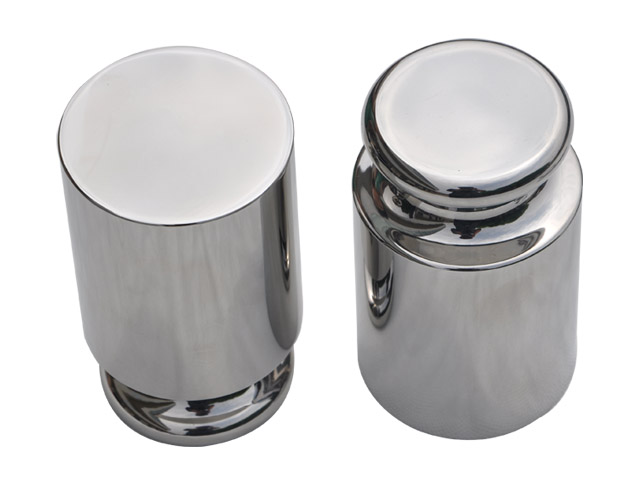
The core value of precision calibration weights lies in their ability to provide stable, repeatable mass references for weighing instrument calibration. Unlike ordinary counterweights used for simple balancing, precision calibration weights undergo rigorous manufacturing processes and fine polishing to minimize surface defects, dimensional errors, and mass discrepancies. Each weight is meticulously processed to ensure its actual mass remains highly consistent with its nominal value, with extremely narrow tolerance ranges that meet high-precision measurement requirements. During calibration operations, users place these standard weights on the weighing platform of instruments, compare the instrument’s displayed readings with the known standard mass, and identify subtle deviations in equipment performance. This comparison process allows technicians to fine-tune instrument parameters, correct measurement biases, and restore the weighing equipment to its optimal accurate state, laying a solid foundation for subsequent precise measurement work.
Material selection is a critical factor that determines the performance and service life of precision calibration weights. High-quality precision weights are mostly made of high-density, low-corrosion, and thermally stable metal materials, which can effectively resist the impact of external environmental changes on mass accuracy. Materials with low thermal expansion coefficients prevent mass and dimensional changes caused by temperature fluctuations, while excellent oxidation and corrosion resistance avoid mass loss or deviation due to long-term exposure to air, moisture, or trace chemical substances. In addition, the surface of precision calibration weights is usually treated with special polishing and protective coating processes, which reduce surface roughness, prevent dust adhesion and wear, and further enhance the stability of long-term use. Reasonable material configuration enables these weights to maintain consistent precision in complex working environments, whether in constant-temperature laboratories or variable industrial workshops.
Environmental adaptability is another key characteristic of qualified precision calibration weights, as measurement accuracy is easily affected by external environmental factors. Humidity, temperature, air buoyancy, and dust accumulation can all interfere with the mass reference effect of calibration weights. Premium precision weights are designed to minimize such environmental interference through sophisticated production and surface treatment technologies. For instance, their smooth, dense surfaces prevent moisture absorption and dust attachment, avoiding subtle mass changes caused by surface contamination. Meanwhile, the stable physical properties of high-grade materials ensure that the mass of the weights will not fluctuate significantly within a conventional temperature range. This excellent environmental adaptability enables the weights to deliver stable calibration results in different working scenarios, ensuring that weighing instruments maintain accurate measurement performance in both laboratory precision experiments and on-site industrial detection.
Precision calibration weights cover a complete range of specifications to adapt to the diverse measurement ranges and precision requirements of different weighing instruments. From ultra-small gram-level weights for calibrating micro-precision analytical balances to large kilogram-level weights for industrial platform scales, the complete specification system supports full-range calibration detection of various weighing equipment. In actual use, matching weights of appropriate specifications according to the measuring range and precision grade of the instrument is crucial to ensure calibration effectiveness. Using multi-group combined weights can realize multi-point calibration of the instrument’s full measuring range, effectively detecting linear errors and local measurement deviations that are easily overlooked in single-point calibration. This comprehensive calibration method ensures that the weighing instrument maintains high accuracy at every measurement node, avoiding inaccurate data caused by partial performance attenuation of the equipment.
Standardized operation and scientific maintenance are essential to maintain the long-term precision of calibration weights. Although precision calibration weights have stable physical properties, improper use and storage can still cause precision attenuation. During operation, direct hand contact should be avoided, as sweat, oil stains, and fine impurities on the skin will adhere to the weight surface, causing subtle mass changes and affecting calibration accuracy. Professional clamping tools are usually adopted to take and place weights to ensure clean and intact surfaces. After each use, the weights need to be cleaned and placed in a dry, dust-proof, and shockproof storage environment to prevent collision wear, corrosion, and dust accumulation. Regular manual inspection and precision verification of the weights can timely detect minor mass deviations or surface damage, ensuring that the weights always meet high-precision reference standards in repeated use.
The application scenarios of precision calibration weights penetrate almost all industries that require accurate mass measurement. In scientific research laboratories, they are used to calibrate analytical balances and precision measuring instruments, providing accurate mass data support for chemical analysis, material testing, and physical property experiments. In the pharmaceutical and biological industry, precise weighing of raw materials and finished products relies on calibrated accurate instruments, ensuring the uniformity and safety of drug components. In electronic precision manufacturing, the tiny components such as chips and resistors require ultra-precise mass detection, and calibration weights guarantee the accuracy of supporting weighing equipment, thus ensuring the qualification rate of electronic products. In industrial manufacturing fields such as mechanical parts and automotive components, calibration weights ensure the dimensional and mass accuracy of precision parts, improving the overall assembly precision and service performance of equipment.
With the continuous upgrading of precision manufacturing and detection technology, the performance requirements for precision calibration weights are constantly improving, driving the continuous optimization of product design and production technology. Modern precision calibration weights are evolving toward higher precision, better stability, stronger environmental adaptability, and more convenient use. Advanced processing and surface treatment technologies further reduce tolerance errors and enhance the anti-interference ability of products in complex environments. At the same time, the lightweight and humanized design of partial products improves the convenience of carrying and on-site calibration operation. As the basic guarantee of precision measurement technology, precision calibration weights will continue to play an irreplaceable core role in promoting the standardized development of various industries and improving the overall level of industrial precision manufacturing and scientific detection.
