





Changzhou Veidt Weighing Co., Ltd. © 2022 ALL RIGHTS RESERVED Privacy Policy | Calibration Weight | Test Weights | Cast Iron Weights | Standard Weights | Laboratory Weights | XML | SITEMAP
NEWS LIST
5kg calibration weight
Monday 29th December 2025 Back to list
In the realm of precision measurement, where accuracy can dictate the success of experiments, the reliability of industrial processes, or the fairness of commercial transactions, calibration weights stand as unsung heroes. Among the various specifications available, the 5kg calibration weight holds a unique position—it is neither too light to be useful in industrial settings nor too heavy for routine laboratory or commercial applications.
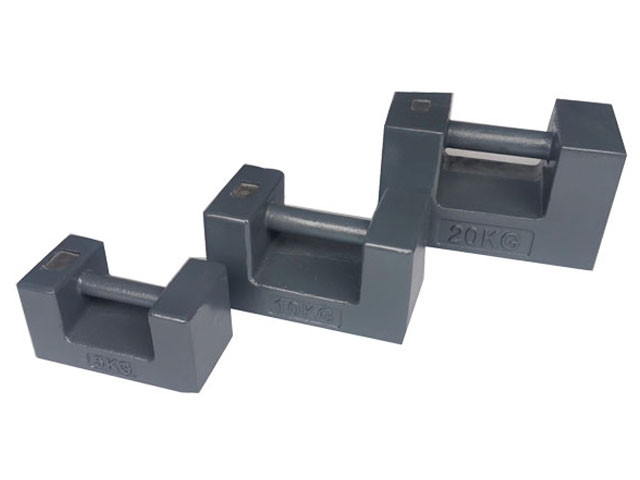
To understand the value of 5kg calibration weights, it is first essential to grasp the fundamental role of calibration in measurement. Calibration is the process of comparing a device’s measured value against a known, accurate standard to identify and correct any deviations. Without proper calibration, measuring instruments—from laboratory balances to industrial scales—can produce inaccurate results, leading to a cascade of problems. For instance, an uncalibrated scale in a food processing plant might result in underfilled packages, violating consumer trust and regulatory requirements. In a research laboratory, an imprecise balance could render experimental data unreliable, wasting time, resources, and potentially leading to incorrect conclusions. Calibration weights, including the 5kg variant, serve as the primary standards against which these instruments are tested, ensuring that their measurements are consistent and accurate.
The 5kg calibration weight is distinguished by its specific mass, which makes it versatile across multiple sectors. Unlike smaller weights (such as 1kg or 2kg) that are often used for fine-tuning small-scale balances, or larger weights (like 10kg or 20kg) that are reserved for heavy-duty industrial scales, the 5kg weight strikes a balance between portability and utility. It is lightweight enough to be handled easily by a single operator, yet heavy enough to calibrate a wide range of mid-sized instruments. This versatility is one of the key reasons why 5kg calibration weights are among the most commonly used standards in both professional and industrial environments.
When it comes to the construction of 5kg calibration weights, material selection is critical to ensuring their accuracy and durability. The ideal material must have high density to minimize the weight’s volume (reducing the impact of air resistance on measurements), excellent corrosion resistance to maintain its mass over time, and stability under varying environmental conditions. Common materials used include stainless steel, brass, and cast iron. Stainless steel is particularly popular due to its resistance to rust and oxidation, making it suitable for use in humid environments such as laboratories or food processing facilities. Brass, on the other hand, offers good density and machinability, allowing for precise shaping and finishing. Cast iron is often used for more rugged industrial applications, where durability and cost-effectiveness are prioritized. Regardless of the material, the manufacturing process of 5kg calibration weights involves rigorous machining and polishing to ensure that the mass is as close as possible to the nominal 5kg value, with minimal deviations.
One of the most important aspects of 5kg calibration weights is their mass tolerance. Tolerance refers to the maximum allowable deviation from the nominal mass. Even the most precisely manufactured weight cannot have an exact mass of 5.0000kg, so tolerance levels are established to categorize weights based on their accuracy. For example, a weight with a tight tolerance might have a maximum deviation of ±0.1g, making it suitable for high-precision laboratory applications. A weight with a looser tolerance, such as ±1g, might be sufficient for routine industrial calibration. The choice of tolerance depends on the intended use of the weight—higher precision applications require weights with tighter tolerances to ensure that the calibration process itself does not introduce errors.
The applications of 5kg calibration weights are diverse, spanning across laboratories, manufacturing facilities, commercial settings, and even educational institutions. In research laboratories, these weights are used to calibrate analytical balances and precision scales that are essential for experiments in chemistry, physics, biology, and materials science. For example, in a chemistry lab, a 5kg calibration weight might be used to verify the accuracy of a balance used to measure reactants for a synthesis reaction. Even a small deviation in the balance’s measurements could alter the stoichiometry of the reaction, leading to failed experiments or incorrect results. In biology labs, calibrated scales are used to measure cell cultures, tissue samples, or reagents, where precision is critical for maintaining the reproducibility of experiments.
In manufacturing and industrial settings, 5kg calibration weights play a vital role in ensuring the quality and consistency of products. Many manufacturing processes require precise measurement of raw materials to ensure that the final product meets specifications. For example, in the production of plastic products, the amount of resin used must be accurately measured to avoid defects such as underfilling or overfilling. A 5kg calibration weight can be used to calibrate the scales that measure these raw materials, ensuring that the correct amount is used every time. Similarly, in the automotive industry, components such as bolts, nuts, and bearings must be manufactured to precise weights to ensure their performance and safety. Calibration weights are used to verify the accuracy of the scales used to inspect these components, ensuring that only parts that meet the required specifications are used in production.
Commercial settings, such as grocery stores, markets, and shipping companies, also rely on 5kg calibration weights to ensure fair and accurate transactions. In grocery stores, scales used to weigh produce, meat, and other bulk items must be calibrated regularly to ensure that customers are charged the correct amount for their purchases. A 5kg calibration weight is an ideal standard for these scales, as it covers the typical range of weights that these scales handle. In shipping companies, scales used to measure packages for shipping costs must be accurate to avoid overcharging or undercharging customers. Calibration with a 5kg weight ensures that these scales are working correctly, maintaining the trust of customers and complying with regulatory requirements.
Educational institutions also use 5kg calibration weights as teaching tools to help students understand the principles of measurement and calibration. In physics classrooms, students learn about mass, weight, and the importance of standardization. By using 5kg calibration weights to calibrate simple scales, students can see firsthand how deviations in measurement instruments can affect results. This hands-on experience helps to reinforce key concepts and prepares students for future careers in science, engineering, and technology.
Proper usage and handling of 5kg calibration weights are essential to maintaining their accuracy and longevity. One of the most important rules for handling these weights is to avoid direct contact with bare hands. The oils and moisture from human skin can transfer to the weight’s surface, leading to corrosion or contamination, which can alter the weight’s mass over time. Instead, operators should use gloves made of lint-free material, such as nitrile or latex, or use weight handling tools such as tweezers or forceps for smaller weights (though 5kg weights may require more substantial handling equipment). Additionally, weights should be stored in a clean, dry environment to protect them from dust, moisture, and extreme temperatures. Exposure to high humidity can cause corrosion, while extreme temperatures can lead to thermal expansion or contraction, which can temporarily alter the weight’s mass.
Regular cleaning is another important aspect of maintenance. 5kg calibration weights should be cleaned periodically to remove any dust, dirt, or contaminants that have accumulated on their surface. The cleaning process should be gentle to avoid scratching or damaging the weight’s surface, which could affect its mass. For stainless steel or brass weights, a soft cloth dampened with a mild detergent can be used to wipe the surface, followed by a dry cloth to remove any moisture. Cast iron weights may require a different cleaning approach, such as brushing with a soft-bristled brush to remove dust, as they are more prone to rust if exposed to moisture for extended periods.
In addition to proper handling and cleaning, 5kg calibration weights should be re-calibrated periodically to ensure that their mass remains within the specified tolerance. Over time, even with proper care, weights can lose or gain mass due to wear and tear, corrosion, or other factors. The frequency of re-calibration depends on the frequency of use and the environment in which the weight is used. For weights used in high-precision applications, such as laboratory settings, re-calibration may be required every six months to a year. For weights used in less demanding industrial or commercial settings, re-calibration may be needed every two to three years. During re-calibration, the weight is compared against a higher-level standard (a weight with a tighter tolerance) to determine if it still meets the required specifications. If the weight is found to be out of tolerance, it may be adjusted, repaired, or replaced.
The importance of 5kg calibration weights extends beyond individual applications to global standardization. Measurement standards are essential for facilitating international trade, ensuring the compatibility of products and services across borders. For example, a 5kg product manufactured in one country must have the same mass as a 5kg product manufactured in another country to ensure fair competition and consumer protection. Calibration weights, including the 5kg variant, help to maintain this standardization by providing a common reference point for measurement. Many countries have national metrology institutes that are responsible for maintaining and disseminating measurement standards, including calibration weights. These institutes ensure that calibration weights used throughout the country are traceable to international standards, such as those maintained by the International Bureau of Weights and Measures (BIPM).
Despite their importance, 5kg calibration weights are often overlooked in discussions about precision measurement. They are simple in design, yet their role in ensuring the accuracy of measurement systems is irreplaceable. Without these weights, many of the technologies and processes that we rely on daily would be unreliable, leading to inefficiencies, waste, and a lack of trust in measurement results. Whether in a laboratory, a manufacturing plant, a grocery store, or a classroom, 5kg calibration weights work quietly behind the scenes to maintain the integrity of measurement.
In conclusion, the 5kg calibration weight is a versatile and indispensable tool in the world of precision measurement. Its unique mass makes it suitable for a wide range of applications, from high-precision laboratory experiments to routine industrial and commercial transactions. The materials used in its construction, its mass tolerance, and its proper usage and maintenance all contribute to its ability to serve as a reliable standard for calibration. By ensuring the accuracy of measurement instruments, 5kg calibration weights play a critical role in maintaining product quality, facilitating fair transactions, supporting scientific research, and promoting global standardization. As technology continues to advance and the demand for precision increases, the importance of these simple yet essential tools will only continue to grow.
