





Changzhou Veidt Weighing Co., Ltd. © 2022 ALL RIGHTS RESERVED Privacy Policy | Calibration Weight | Test Weights | Cast Iron Weights | Standard Weights | Laboratory Weights | XML | SITEMAP
NEWS LIST
50g Calibration Weight
Tuesday 15th September 2026 Back to list
A 50g calibration weight serves as a fundamental precision tool designed to verify, adjust, and maintain the accuracy of various weighing instruments across daily and industrial measurement scenarios. As a moderately sized standard weight, it strikes a perfect balance between compact portability and reliable measurement reference value, making it one of the most widely used calibration accessories for small to medium-scale weighing equipment. Unlike larger or miniature weights, the 50g calibration weight adapts to diverse common weighing tools, including digital pocket scales, kitchen scales, and small analytical balances that are frequently applied in daily life, laboratory testing, and light industrial production. Its core function lies in eliminating systematic errors caused by long-term equipment use, environmental interference, or improper operation, ensuring that every weighing result remains consistent and trustworthy. Regular calibration with a 50g standard weight effectively prevents inaccurate data that may lead to operational errors, quality inconsistencies, or experimental deviations. Crafted with strict attention to material stability and dimensional precision, this calibration tool delivers stable performance in conventional working environments, offering a simple, efficient, and dependable solution for routine weighing accuracy verification for both individual users and small-scale operational teams.
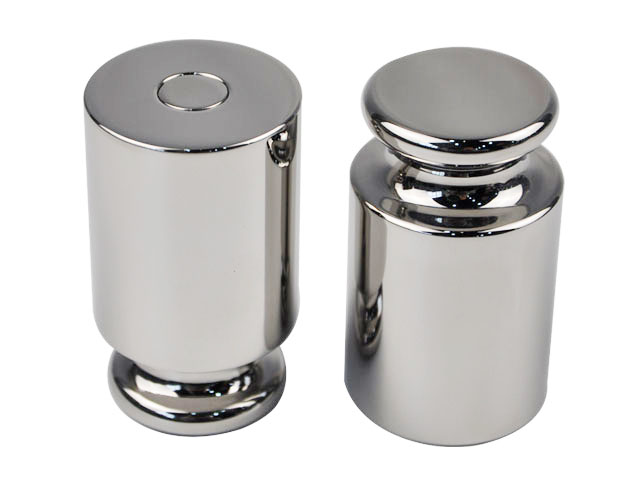
The material selection of a 50g calibration weight is the core foundation that determines its service stability and measurement reliability, with high-quality metal alloys being the predominant choice for mainstream products. Premium calibration weights are commonly made of stainless steel with optimized density and anti-corrosion properties, a material that boasts uniform internal texture and minimal porosity, effectively avoiding mass deviation caused by internal structural gaps. This type of material features excellent oxidation resistance, which prevents surface rust and discoloration even after long-term exposure to normal indoor environments, ensuring that the net mass of the weight does not change over prolonged use. In contrast, low-grade materials are prone to oxidation, wear, and surface peeling, which will gradually alter the standard mass and invalidate calibration results. Beyond stainless steel, some refined versions adopt brass with electroplated surface treatment, which further enhances surface smoothness and anti-scratch performance. The dense and solid material structure also enables the 50g weight to resist minor external impacts and daily friction, maintaining stable dimensional and mass consistency. Each finished weight undergoes fine polishing and surface finishing to remove burrs and uneven areas, eliminating tiny mass differences caused by surface defects and laying a solid foundation for accurate calibration work in various scenarios.
The structural and dimensional design of the 50g calibration weight is meticulously optimized to meet the practical needs of calibration operation and long-term storage. Most standard 50g calibration weights adopt a compact cylindrical structure with a flat top and bottom surface, a classic design that ensures stable placement on the weighing pan without tilting or rolling during calibration. The smooth and flat contact surface can fully fit the bearing surface of weighing equipment, avoiding measurement errors caused by unstable contact. The overall size is scientifically controlled to adapt to the bearing range of small and medium-sized weighing instruments, neither too large to affect the stress balance of the weighing pan nor too small to cause inconvenient handling. Some designs integrate a lightweight protective outer layer while retaining the core standard mass, which effectively resists daily wear and minor chemical corrosion. The integral molding process is widely applied in production, which avoids mass deviation caused by assembly gaps or loose parts. The unified and standardized structural design also makes the weight easy to clean and maintain; users can simply wipe the surface with a soft dry cloth to remove dust and floating impurities, ensuring no foreign matter affects the standard mass during each use. This user-friendly structural design greatly improves the convenience and efficiency of daily calibration operations.
The core application scenarios of the 50g calibration weight cover daily civilian use, small laboratory testing, and light industrial processing, demonstrating strong universal applicability. In daily household scenarios, it is mainly used for calibrating kitchen scales and portable electronic scales, ensuring accurate measurement of ingredients in baking, food preparation, and daily commodity weighing, which helps users control material proportions precisely and avoid deviations in production and production results. In small scientific research and student laboratory environments, the 50g weight is used for daily debugging and verification of analytical balances, providing accurate basic data for physical measurement experiments, material proportioning tests, and basic scientific research operations. In light industrial fields such as handicraft production, small parts processing, and packaging inspection, it calibrates weighing equipment used for product quality inspection and material counting, ensuring the consistency of product specifications and meeting basic production quality control requirements. Its moderate mass makes it suitable for frequent short-cycle calibration, enabling users to quickly complete equipment accuracy checks before formal operation. Whether for personal daily use or small-scale institutional daily inspection, the 50g calibration weight can meet basic precision measurement calibration needs with high flexibility and practicability.
Standardized use and correct operation methods are crucial to maximizing the service life and calibration accuracy of the 50g calibration weight. Before each calibration operation, users need to place the weight in a clean and dry environment for a period of time to adapt to the ambient temperature, avoiding mass deviation caused by temperature difference between the weight and the weighing equipment. It is essential to keep the weight surface clean and dry; dust, water stains, oil stains, or other attachments on the surface will directly increase the actual mass and lead to inaccurate calibration results. During operation, users should handle the weight gently, avoiding throwing, dropping, or violent collision, as strong impact may cause local deformation or internal structural changes, resulting in permanent mass error. It is not allowed to place the weight in humid, corrosive, or high-temperature environments for a long time, nor to contact it with corrosive chemicals. When placing the weight on the weighing pan, ensure the position is centered and stable to avoid eccentric load affecting the equipment’s stress balance. After use, the weight should be cleaned in time and placed in a matching protective storage box to prevent dust accumulation and accidental wear, maintaining long-term measurement stability.
Daily maintenance and scientific storage management directly determine the long-term use effect and service cycle of the 50g calibration weight. Daily maintenance focuses on regular cleaning and routine inspection; users need to check the weight surface regularly for scratches, oxidation spots, deformation, or other damage, and stop using it immediately if abnormal conditions are found to avoid invalid calibration. For surface dust and floating dirt, soft cotton cloth or microfiber wiping tools are recommended, and hard brushes or corrosive cleaning agents are prohibited to prevent surface damage and mass change. The storage environment should be kept dry, ventilated, and dust-free, with stable ambient temperature and humidity, avoiding extreme temperature and humidity changes that may cause material expansion and contraction or oxidation deterioration. Special protective storage boxes are usually equipped for targeted protection, which can isolate external dust, moisture, and physical impact. It is necessary to store the weight independently, avoiding stacking and friction with other metal accessories to prevent surface wear. Regular manual inspection and sorting can effectively avoid long-term neglected damage, ensuring that the weight always maintains a standard mass state and provides accurate calibration reference for long-term repeated use.
The advantages of the 50g calibration weight in practical use are reflected in its high precision, strong stability, excellent portability, and wide compatibility. Compared with ultra-small calibration weights, it has a larger contact area and more stable placement, reducing accidental measurement errors caused by operational negligence. Compared with large standard weights, it is lighter and more portable, easy to carry and store, and suitable for mobile use and frequent daily calibration. Its stable physical properties enable it to maintain consistent mass accuracy under conventional environmental changes, with low failure rate and long service life. The production process ensures low mass deviation of the finished product, which can meet the precision requirements of most daily and conventional industrial calibration scenarios. In addition, its simple operation and low maintenance threshold make it accessible to ordinary users without professional operation skills, realizing efficient self-calibration of household and small industrial weighing equipment. As a cost-effective and practical precision auxiliary tool, it fills the gap of daily rapid calibration for small and medium-sized weighing instruments and has become an indispensable basic accessory in daily measurement and small-scale precision operation scenarios.
With the continuous improvement of public awareness of measurement accuracy and the gradual standardization of small-scale production and experimental operations, the application value of the 50g calibration weight is becoming increasingly prominent. In daily life, accurate weighing is closely related to food production, commodity measurement, and daily material collocation, and reliable calibration tools are the basic guarantee for standardized measurement. In small industrial processing and basic scientific research fields, stable weighing data is the premise of product quality stability and experimental result authenticity, making regular calibration with standard weights an essential link in daily operation management. The 50g calibration weight, with its moderate specification, stable performance, and wide adaptability, can perfectly match the daily calibration frequency and precision needs of most users. In the future, with the continuous optimization of material technology and production processes, the comprehensive performance of such calibration weights will be further improved, providing more accurate, stable, and convenient technical support for civilian measurement, small-scale industrial production, and basic experimental research, and continuously assisting in improving the overall standardization level of daily precision measurement work.
