





Changzhou Veidt Weighing Co., Ltd. © 2022 ALL RIGHTS RESERVED Privacy Policy | Calibration Weight | Test Weights | Cast Iron Weights | Standard Weights | Laboratory Weights | XML | SITEMAP
NEWS LIST
20kg Calibration Weight
Thursday 11th December 2025 Back to list
The 20kg calibration weight is a standard measuring instrument used in the field of metrology to calibrate various large-scale weighing equipment. As an important medium for mass transfer, it is widely used in industrial production, laboratory testing, commercial trade and other fields. These high-precision weights not only carry the transmission function of quality standards, but also serve as key tools to ensure the accuracy and reliability of weighing systems.
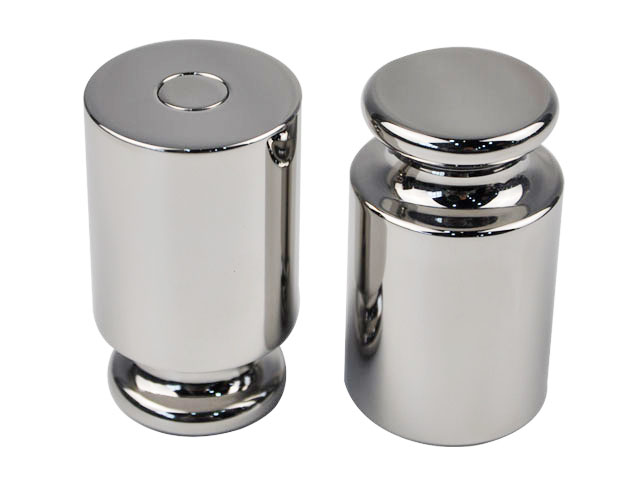
Modern 20kg calibration weights are often made of high-quality stainless steel (such as 304 or 316L), which has excellent corrosion resistance and stability. The surface of stainless steel weights is usually polished to achieve a mirror effect, which is both aesthetically pleasing and reduces adsorption effects. For applications that require higher precision, some weights will be made of alloy materials with copper coating to enhance their long-term stability.
The 20kg weight is mainly divided into the following grades:
E1 level: allowable error ± 100mg, used for the highest standard value transmission
E2 level: allowable error ± 300mg, laboratory level standard
F1 level: allowable error ± 1g, industrial precision calibration
F2 level: allowable error ± 3g, for general industrial use
In large-scale industrial production, a 20kg weight is used for calibration:
Material batching system
Production line weight inspection equipment
Warehouse logistics weighing platform
Crane force measuring device
The anti magnetic 20kg weight is used for:
Calibration of weighing equipment in strong magnetic field environment
Verification of medical equipment supporting scales
Precision Electronic Manufacturing Workshop
Operation precautions
Special tools or gloves must be used for handling to avoid direct hand contact affecting accuracy
The working environment should maintain a stable temperature (preferably 20 ± 2 ℃) and humidity not exceeding 70%
Before calibration, it is necessary to let it stand in the weighing environment for a sufficient amount of time (usually more than 2 hours) to achieve thermal equilibrium
Stacking is strictly prohibited to prevent scratching the surface and affecting accuracy
Key points of periodic maintenance
Quarterly visual inspection to ensure no corrosion or scratches
At least once a year, compare and verify with higher-level standards
Re inspection by certification bodies every 2-3 years
Regularly maintain the surface using specialized weight cleaner
The selection and use of 20kg calibration weights, as the core tool for calibrating medium and large weighing equipment, directly affect the reliability of the entire weighing system. With the increasing demand for intelligent manufacturing and precision measurement, modern 20kg weights are developing towards intelligence. Some high-end products have integrated RFID chips to achieve digital management of usage records and calibration history. Proper use and maintenance of such precision measuring instruments are important guarantees for ensuring product quality and trade fairness.
