





Changzhou Veidt Weighing Co., Ltd. © 2022 ALL RIGHTS RESERVED Privacy Policy | Calibration Weight | Test Weights | Cast Iron Weights | Standard Weights | Laboratory Weights | XML | SITEMAP
NEWS LIST
1kg Calibration Weight
Thursday 11th December 2025 Back to list
The 1kg calibration weight is a fundamental tool in the fields of metrology and precision measurement. As a physical manifestation of the quality standard in the International System of Units, it plays a crucial role in laboratories, industrial production, and commercial transactions. This high-precision weight is not just a simple metal block, but a quality standard carrier that has been rigorously manufactured, tested, and certified.
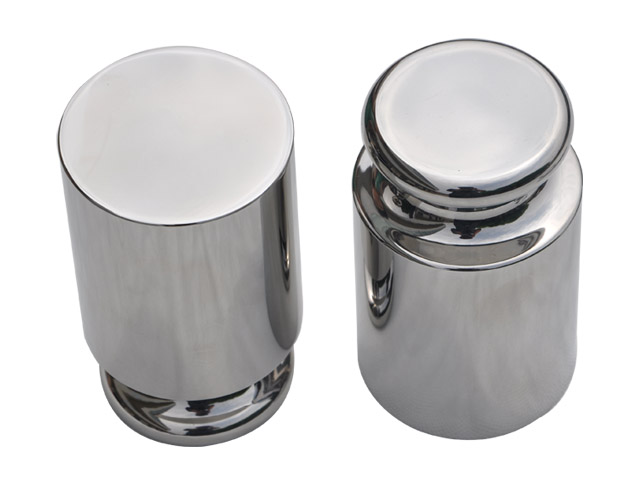
Modern 1kg calibration weights are usually made of the following materials:
Non magnetic stainless steel: The most commonly used grade is 316L or similar stainless steel, which has excellent corrosion resistance and stability
Platinum iridium alloy: used for the highest precision standards
Copper alloy: used in some cases for economical calibration weights
The key characteristics of high-quality 1kg calibration weights include:
Density: Approximately 7.95g/cm ³ (stainless steel) to 21.5g/cm ³ (platinum iridium alloy)
Magnetic susceptibility: usually less than 0.01 (ideally should be completely non-magnetic)
Surface roughness: Ra<0.2 μ m, ensuring minimal surface adsorption effect
Temperature coefficient: extremely low coefficient of thermal expansion (stainless steel approximately 16.5 × 10 ⁻⁶/° C)
1kg weights are divided into multiple precision levels:
E1 level: highest accuracy, allowable error ± 0.5mg
E2 level: allowable error ± 1.5mg
F1 level: allowable error ± 5mg
F2 level: allowable error ± 15mg
M1 level: allowable error ± 50mg
Modern 1kg calibration weights may include:
Anti tampering seal: ensuring that quality is not accidentally altered
Unique identification number: laser engraving
Ergonomic handle: reducing the risk of contamination during operation
Temperature Sensor: High end models with built-in temperature monitoring
To ensure the long-term accuracy of the 1kg weight:
Operating instructions: Use specialized tweezers or gloves to avoid direct contact with hands
Storage conditions: Maintain a stable environment at 20 ± 2 ° C and humidity of 40-60% RH
Cleaning Procedure: Regularly clean with ethanol and microfiber cloth
Transportation protection: Use specialized shock resistant boxes for transportation
1kg calibration weight is widely used in:
Laboratory: Balance calibration, precision measurement research
Pharmaceutical industry: precise weighing of pharmaceutical raw materials
Jewelry Industry: Trading Standards for Precious Metals
Manufacturing industry: quality control and production process monitoring
When selecting a 1kg calibration weight, the following should be considered:
Accuracy requirement: Select the appropriate level based on the application
Certification requirements: Ensure compliance with local regulations and industry standards
Budget Balance: Finding the Best Point between Cost and Performance
Supplier reputation: Choose qualified professional suppliers
With the advancement of measurement technology, the 1kg calibration weight will continue to serve as the cornerstone of quality standards, but its form may evolve from a simple physical entity to a hybrid system that combines quantum standards and traditional physical standards. New materials, intelligent manufacturing technology, and digital certification methods will bring new dimensions of development to this ancient and fundamental measurement tool.
