





Changzhou Veidt Weighing Co., Ltd. © 2022 ALL RIGHTS RESERVED Privacy Policy | Calibration Weight | Test Weights | Cast Iron Weights | Standard Weights | Laboratory Weights | XML | SITEMAP
NEWS LIST
100g Calibration Weight
Wednesday 10th December 2025 Back to list
100g calibration weight is one of the most commonly used standard quality tools in the field of metrology, used to verify, calibrate, and test the accuracy of various electronic scales, mechanical scales, and laboratory weighing equipment. As an important carrier of the international unit of mass (kilogram), this weight represents the precise physical manifestation of 100 grams of mass.
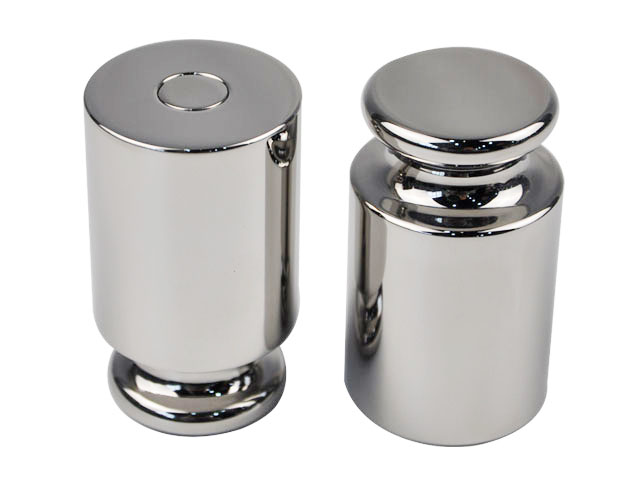
In metrology, 100g weight belongs to the medium range standard, which is neither as small and susceptible to interference as milligram weight, nor as bulky and cumbersome as kilogram weight, making it one of the most frequently used calibration tools in the daily work of laboratories, factories, and quality testing institutions.
High quality 100g calibration weights are typically made from the following materials:
Non magnetic stainless steel (such as 316L or 304 stainless steel): Strong corrosion resistance and low magnetic susceptibility
Brass chrome plating: economical and practical, but slightly less stable in the long term than stainless steel
Platinum iridium alloy: used for the highest precision standards, expensive in price
100g weights are divided into multiple accuracy levels:
E1 level: allowable error ± 0.5mg, used for calibrating the highest precision balance
E2 level: allowable error ± 1.5mg, commonly used laboratory standard
F1 level: allowable error ± 3mg, industrial grade calibration
F2 level: allowable error ± 6mg, for general industrial use
M1 level: allowable error ± 15mg, ordinary commercial use
A standard 100g weight typically has the following characteristics:
Diameter approximately 45-50mm (depending on shape)
Height approximately 20-25mm
Surface smoothness Ra ≤ 0.2 μ m (high-grade weight)
Equipped with professional lifting buttons or edge grooves for easy access
Main application areas
Laboratory applications
Daily calibration of analytical balance
Periodic verification of precision weighing equipment
Quality standards in the development of detection methods
industrial production
Calibration of automatic weight checking equipment for production lines
Verification of weight control system for packaging machinery
Standard setting for precious metal processing industry
Quality monitoring of drug production
quality supervision
Standard equipment for market supervision spot checks
Mandatory calibration of trade settlement scales
Measurement technology institutions transmit measurement values
Correct usage method
Use specialized weight tweezers or wear clean gloves to take and place
Handle with care to avoid collisions or falls
Balance the weight and balance temperature before calibration (recommended 15-30 minutes)
Regular comparison and verification (recommended at least once every quarter)
Key points of maintenance and upkeep
Store in a dedicated box to avoid dust contamination
Regular cleaning (using anhydrous ethanol and lint free cloth)
Stay away from strong magnetic fields and corrosive environments
Send to the metrology department for calibration once a year (high-precision weights)
Common erroneous operations
Directly touching the surface of the weight with bare hands
Quickly move and use in different temperature environments
When used in combination, air buoyancy correction is not considered
Neglecting the validity period of periodic calibration of weights
Although 100g calibration weight is small, it is an indispensable foundation for modern quality measurement systems. With the advancement of technology, this traditional measurement tool is constantly integrating new technologies and continues to play a key role as a "quality gatekeeper" in scientific research, industry, and trade. Choosing and using appropriate 100g calibration weights is of great significance for ensuring the accuracy and reliability of measurement results.
