





Changzhou Veidt Weighing Co., Ltd. © 2022 ALL RIGHTS RESERVED Privacy Policy | Calibration Weight | Test Weights | Cast Iron Weights | Standard Weights | Laboratory Weights | XML | SITEMAP
NEWS LIST
1000g Calibration Weight Set
Tuesday 15th September 2026 Back to list
A 1000g calibration weight set serves as an essential precision tool designed to verify, adjust, and maintain the accuracy of various weighing instruments across daily, commercial, and experimental scenarios. This comprehensive weight kit is thoughtfully assembled with multiple segmented weight units of different specifications, combining small incremental weights and large main weights to reach a total mass of 1000g, enabling flexible and precise calibration for scales with diverse measurement ranges. Crafted with high-quality metal materials and fine surface finishing, the set features stable physical properties, excellent anti-corrosion performance, and consistent mass retention over long-term use. It effectively eliminates measurement deviations caused by instrument aging, environmental interference, or frequent operation errors. Widely adaptable to digital precision scales, mechanical balances, portable gram scales, and other common weighing equipment, the set is suitable for daily instrument inspection, experimental data calibration, and routine accuracy verification, acting as a reliable guarantee for consistent and accurate weighing results in various application scenarios.
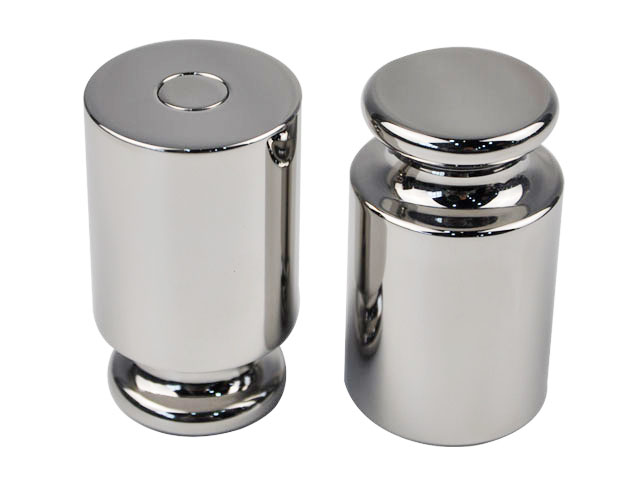
The structural composition of a standard 1000g calibration weight set is scientifically optimized to balance operational flexibility and full-range calibration capability. The complete set is composed of multiple independent weight units with gradient mass specifications, covering lightweight small-unit weights and heavy large-unit weights to meet diversified calibration demands. The conventional configuration includes classic combinations such as 500g, 200g, dual 100g, 50g, dual 20g, and 10g weights, whose cumulative mass accurately reaches 1000g. This gradient design allows users to conduct precise single-point calibration with individual weights for small-range detection, or combine multiple weights for full-scale calibration of medium and large-range weighing instruments. Each weight unit is manufactured with uniform dimensional standards and smooth surface treatment, ensuring stable placement on weighing platforms without tilting or sliding. Additionally, the set is equipped with professional matching accessories including dedicated tweezers and a customized storage case, which are specially designed to avoid direct hand contact with the weights and prevent surface contamination, fingerprints, or oil stains that may affect calibration accuracy, laying a solid foundation for standardized and accurate calibration operations.
Material selection is the core factor that determines the service life, stability, and calibration accuracy of the 1000g calibration weight set. Most high-performance sets adopt premium carbon steel as the base material, paired with fine chrome-plated surface treatment and mirror polishing technology. This manufacturing process endows the weights with outstanding surface finish and structural compactness, effectively resisting daily oxidation, rust, and chemical corrosion caused by humid air, dust, and trace contaminants in the working environment. Compared with ordinary alloy materials, the optimized carbon steel and chrome-plated structure maintains stable mass density and will not produce subtle quality changes due to long-term placement or frequent use. The polished smooth surface also avoids residual dust and dirt accumulation, reducing the frequency of cleaning and maintenance. Meanwhile, the material has excellent hardness and wear resistance, preventing surface scratches, dents, or edge wear caused by accidental collision and friction during handling and storage. These superior material properties ensure that each weight unit maintains consistent mass accuracy for a long time, avoiding frequent replacement and repeated calibration of the weight set, and greatly improving the overall cost performance and practicality of the product in long-term use.
The core functional value of the 1000g calibration weight set lies in its ability to correct weighing instrument deviations and standardize measurement data. All weighing equipment will gradually produce subtle measurement errors after long-term operation, frequent movement, temperature and humidity changes, or long-term idle placement. These tiny deviations are difficult to detect through daily use but will directly affect the authenticity and accuracy of weighing data. The 1000g calibration weight set provides a stable and reliable mass reference standard, allowing users to perform regular detection and calibration of various weighing instruments. In actual operation, users can place a single weight or combined weights on the center of the weighing platform according to the instrument’s measuring range and accuracy requirements, observe the displayed data of the equipment, and compare it with the standard mass of the weights to judge whether the instrument has deviation. Once data drift is found, targeted adjustment and correction can be carried out in time to restore the instrument’s optimal measurement state. This standardized calibration process effectively ensures the repeatability and consistency of weighing results, avoids data errors affecting experimental analysis, commodity measurement, and daily detection work, and provides basic precision guarantee for all work that relies on accurate weighing data.
The 1000g calibration weight set boasts extremely wide application scenarios, covering civilian daily use, professional laboratory research, and small-scale industrial detection fields. In daily civilian scenarios, it is commonly used for the accuracy calibration of household baking scales, portable jewelry scales, and small electronic weighing devices, ensuring the precise measurement of ingredients, precious metal quality, and daily small items. In educational and experimental environments, the set is an indispensable teaching and experimental tool, helping students and researchers verify the working principle of weighing instruments, master standardized calibration methods, and ensure the accuracy of experimental data in physics, chemistry, and material testing experiments. In small industrial and commercial detection links, it can be used for routine inspection and regular maintenance of workshop weighing equipment, commodity detection scales, and packaging weighing instruments, effectively avoiding measurement errors in commodity weighing and industrial sampling. Its flexible combination mode and moderate total mass make it compatible with most mainstream small and medium-sized weighing instruments on the market, meeting the precision calibration needs of different scenarios from daily low-precision detection to professional high-precision experimental verification.
Standardized operation methods are crucial to giving full play to the precision performance of the 1000g calibration weight set and extending its service life. Before each calibration operation, users need to place the weighing instrument and the weight set in a stable, flat, and dry environment for a period of time to adapt to the ambient temperature and humidity, avoiding measurement errors caused by environmental temperature differences and air flow fluctuations. During the operation, users must use supporting tweezers to clamp and place the weights, strictly prohibiting direct contact with hands, because sweat, oil, and fine impurities on the skin will adhere to the weight surface, causing subtle mass changes and affecting calibration accuracy. When placing weights, they should be stably positioned in the center of the weighing platform to avoid contact with the edge of the instrument or external objects, ensuring uniform force on the weighing sensor. After completing single or combined calibration detection, users should record the instrument’s display data and deviation status in a timely manner to facilitate subsequent data comparison and instrument adjustment. In addition, different combinations of weight units should be selected according to the instrument’s measuring range to avoid overloading the weighing equipment or insufficient calibration range, ensuring the rationality and effectiveness of each calibration operation.
Scientific daily maintenance and standardized storage management are key to maintaining the long-term accuracy and durability of the 1000g calibration weight set. After each use, all weight units and matching accessories need to be thoroughly inspected and cleaned. Users can use soft, dry, dust-free cloths to gently wipe the surface of the weights to remove residual dust, fine particles, and trace stains, avoiding the use of corrosive chemical cleaners that may damage the surface plating. All cleaned weights should be neatly placed in the matched special storage case, which is designed with customized card slots to fix each weight unit, preventing collision, friction, and displacement during storage and carrying. The storage environment should be kept dry, ventilated, and dust-free, avoiding long-term exposure to humid air, high temperature, or corrosive gas environments to prevent oxidation and rust of the weights. Regular visual inspection should be carried out during daily storage to check for surface scratches, plating peeling, or deformation of the weights. Timely sorting and finishing can avoid loss and confusion of weight units, ensuring that the entire set maintains complete specifications and stable precision for each subsequent use.
In practical use, the 1000g calibration weight set shows outstanding practicality and cost-effectiveness, becoming a universal precision auxiliary tool for weighing accuracy maintenance. Compared with single large-specification calibration weights, its multi-piece gradient combination design achieves coverage from small mass to medium mass calibration, realizing multi-scene and multi-range detection with one set of equipment, which greatly improves the utilization rate and flexibility of the tool. The stable material performance and reliable manufacturing process enable the weight set to maintain long-term precision stability, avoiding frequent replacement and repeated procurement caused by accuracy attenuation. Whether it is regular daily accuracy inspection of weighing instruments, troubleshooting of data deviation problems, or standardized precision verification in professional experiments and detection work, this weight set can provide stable and accurate mass reference. It simplifies the calibration operation process, reduces the technical threshold of daily instrument maintenance, and effectively guarantees the accuracy and credibility of weighing data in various work links, bringing stable and reliable precision support for daily life, teaching experiments, and small-scale industrial detection work.
