





Changzhou Veidt Weighing Co., Ltd. © 2022 ALL RIGHTS RESERVED Privacy Policy | Calibration Weight | Test Weights | Cast Iron Weights | Standard Weights | Laboratory Weights | XML | SITEMAP
Product Category
Counting Scale
In modern industrial production, warehouse management, and commercial circulation scenarios, the efficient and accurate counting of small and homogeneous items has always been a core link restricting operational efficiency. Traditional manual counting methods rely entirely on human vision and manual sorting, which are not only extremely time-consuming and labor-intensive but also prone to inevitable errors caused by fatigue, visual deviation, and subjective judgment. With the continuous improvement of automated measurement technology, counting scales have gradually become indispensable intelligent measuring equipment in various industries, completely changing the traditional counting mode and realizing the organic integration of high precision, high efficiency, and high stability in batch item counting. Different from ordinary weighing scales that only focus on single weight measurement, counting scales take weight data as the core basis and complete intelligent conversion from weight to quantity through built-in operational programs, providing reliable quantity data support for production scheduling, inventory statistics, product packaging, and quality inspection in various fields. This equipment is specially designed for batch counting of identical or similar-specification items, covering tiny electronic components, standard hardware fasteners, granular pharmaceutical products, small plastic parts, and various small daily necessities, with extremely wide application coverage and strong practical value.
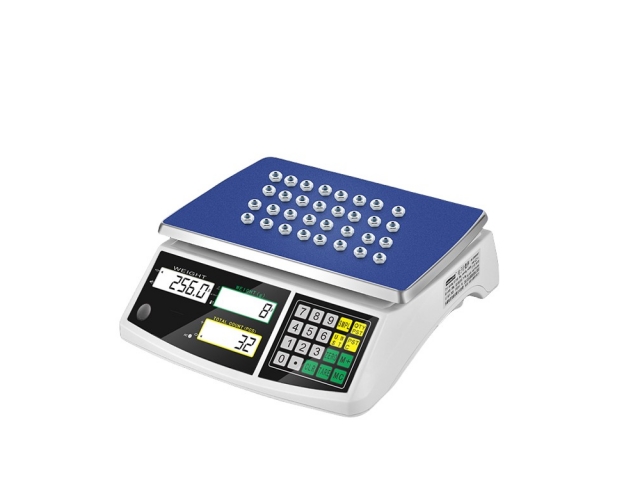
The working logic of counting scales is based on a rigorous and scientific mathematical conversion principle, and the entire operation process is simple and efficient without complex manual calculation. The core operational formula of the equipment is fixed, that is, the total quantity of items is equal to the total weight of the batch items divided by the average single-item weight. In actual use, the equipment needs to complete a simple sample calibration process first. Users only need to place a small number of known-quantity sample items on the weighing platform, and the scale will automatically measure the total weight of the sample and calculate the average weight of a single item through internal intelligent chips. This sample calibration link is the key to ensuring counting accuracy, and the precision of the single-item average weight directly determines the error range of subsequent batch counting. After completing the calibration and confirming the stable reference data, users can place a large number of to-be-counted items of the same specification on the weighing platform. The equipment will instantly collect the total weight data of the batch items, automatically complete division operation through the built-in program, and quickly display the accurate total quantity of items on the display screen. The whole process takes only a few seconds, which realizes the instant output of counting results and completely subverts the slow and error-prone defects of manual counting.
Compared with traditional manual counting and ordinary weighing equipment, counting scales have formed obvious functional advantages in practical application scenarios. First of all, it has extremely high counting efficiency. For batch items with hundreds or even tens of thousands of quantities, manual counting often takes tens of minutes or even hours, and repeated verification is required to reduce errors, while counting scales can complete accurate statistics in a few seconds, greatly compressing the time cost of counting work and improving the overall operational efficiency of the production and inventory links. Secondly, the equipment has ultra-high counting accuracy. Manual counting is inevitably affected by human factors such as fatigue, distraction, and visual misjudgment, and the error rate will increase geometrically with the increase of the number of items. In contrast, counting scales rely on precise sensor sensing data and fixed algorithm operations, with no subjective human interference in the whole process, and can maintain stable and accurate counting results even in large-batch counting scenarios. In addition, counting scales have strong anti-interference ability and stable operation performance. Most mainstream counting scale products are equipped with high-sensitivity pressure sensing components, which can effectively resist the interference of tiny air flow, slight vibration, and ambient temperature changes in the working environment, ensuring the stability of weighing and counting data in complex working scenarios.
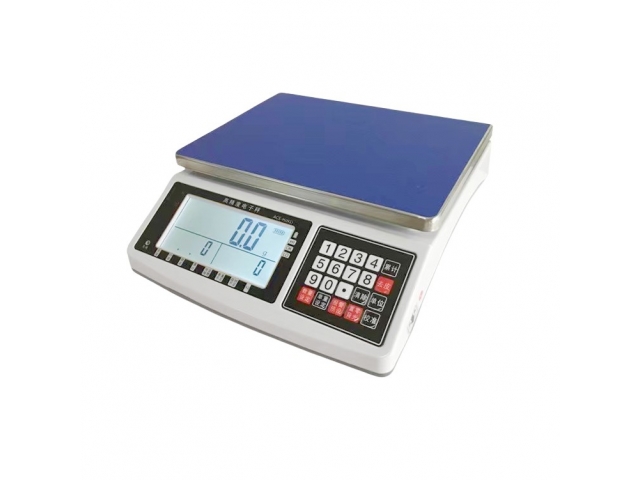
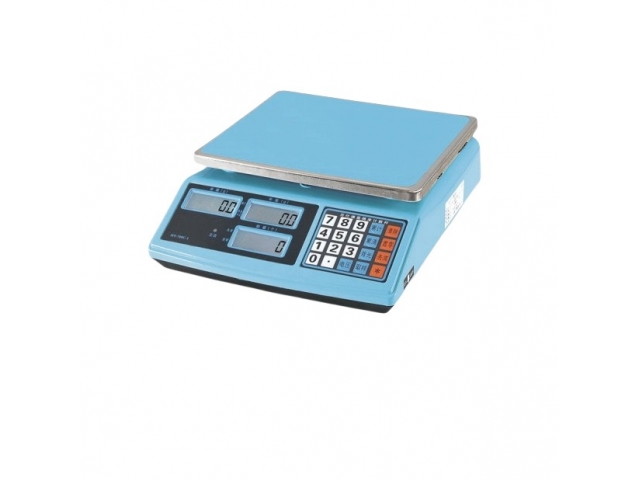
Counting scales can be divided into multiple types according to structural form, volume size, and applicable scenario, and different types of equipment can accurately match the differentiated counting needs of various industries. Desktop small counting scales are the most widely used type, with compact structure, light weight, and convenient movement and placement. They are suitable for desktop operation scenarios such as electronic component sorting, hardware accessory counting, and laboratory sample statistics. This type of equipment has high measurement resolution, can accurately identify tiny weight differences of miniature items, and is very suitable for counting small-batch and high-precision items. Floor-type large counting scales have a larger weighing platform and stronger bearing capacity, which can meet the counting needs of large-batch and heavy-weight item batches such as industrial parts, mechanical accessories, and packaged bulk products. Their stable base structure can avoid data deviation caused by equipment shaking during heavy-load weighing, ensuring the accuracy of large-batch counting data. In addition, there are integrated counting scales supporting assembly line docking, which can be embedded in automated production lines to realize real-time counting and statistics of items in the production and transmission process, realizing seamless connection with automated production links and further improving the overall automation level of production operations.
The manufacturing and internal configuration of counting scales integrate multiple sophisticated sensing and intelligent processing technologies, and the optimization of core components lays a solid foundation for its efficient and stable operation. The core sensing part of the equipment is a high-precision weighing sensor, which can capture the tiny weight change data of items on the weighing platform in real time and convert physical weight signals into digital electrical signals for transmission and processing. Different from ordinary sensors, the sensors used in counting scales have higher sensitivity and linearity, which can accurately identify the weight difference of ultra-light single items and avoid counting errors caused by insufficient sensor resolution. The built-in intelligent data processing chip is the operation core of the counting scale, which undertakes the tasks of sample data calculation, batch data conversion, error correction processing, and data display output. The chip has fast operation speed and strong data processing ability, which can complete complex data calculation and verification in an instant, and support continuous high-frequency counting operation without data delay or distortion. At the same time, the equipment is also equipped with intelligent data stabilization programs, which can automatically filter floating data generated by environmental interference and ensure the stability and authenticity of final counting results.
In the modern manufacturing industry, counting scales have become an important auxiliary equipment to ensure standardized production and accurate material management, covering multiple links from raw material incoming inspection to finished product delivery. In the electronic manufacturing industry, a large number of miniature precision components such as resistors, capacitors, chips, and pin connectors are required in the production process. These components are small in size, huge in quantity, and extremely difficult to count manually. Counting scales can quickly and accurately count batch electronic components, ensuring that the quantity of raw materials used in each production link is accurate, avoiding production stagnation or material waste caused by insufficient or excessive material preparation. In the automotive and mechanical manufacturing fields, a large number of standard fasteners such as screws, bolts, and nuts are used in product assembly. The use of counting scales can realize accurate statistics of accessory quantities, ensure the completeness of product assembly accessories, and avoid product quality problems caused by missing or redundant accessories. In addition, in the production link of plastic parts and hardware stamping parts, counting scales can also be used for real-time statistics of finished product output, providing accurate data support for production output statistics and production progress adjustment.
Warehouse logistics and inventory management are the most mainstream application scenarios of counting scales, and the equipment effectively solves the pain points of low efficiency and high error rate in traditional inventory counting and material sorting. For various production and trading enterprises, regular inventory checking is a necessary work link to ensure consistent account and actual inventory, but traditional manual inventory counting has the problems of long cycle, high labor cost, and easy counting error, which often leads to inconsistent inventory data and affects enterprise material scheduling and order delivery. The application of counting scales completely optimizes the inventory management process. Warehouse staff only need to calibrate the equipment according to the specifications of different materials, and then they can quickly complete the quantity statistics of batch materials. Whether it is small batch precision materials or large batch conventional parts, efficient and accurate inventory counting can be realized. At the same time, counting scales can realize real-time recording of counting data, which is convenient for staff to sort, summarize and archive inventory data, improve the standardization and informatization level of warehouse management, and help enterprises accurately grasp material inventory status, optimize material procurement plans, and reduce inventory backlog and capital occupation.
The packaging and commodity circulation industry also relies heavily on counting scales to ensure the standardization and consistency of product packaging specifications. In the batch packaging of small commodities, granular products, and spare parts products, it is necessary to ensure that the quantity of each package of products is strictly consistent to meet market sales and user use standards. Traditional manual packaging and counting are prone to uneven quantity of packaged products, which not only affects product packaging quality but also causes customer complaints and market reputation losses. Counting scales can realize fixed-quantity counting and packaging auxiliary work. During the packaging process, staff can complete accurate quantity matching through the equipment, ensuring that the quantity of each batch of packaged products is uniform and meets the preset packaging standards. In the wholesale and retail links of hardware, electrical accessories, and daily small commodities, counting scales can quickly complete quantity statistics for bulk goods sales, improve the efficiency of goods outbound and settlement, and avoid quantity disputes caused by inaccurate manual counting. In addition, in the customized parts distribution and supporting delivery business, counting scales can ensure the accurate quantity of delivered parts, effectively guaranteeing the interests of both suppliers and purchasers.
Quality inspection and product verification is another important application field of counting scales, which provides reliable data support for product quality control and standard compliance inspection. In the industrial production process, the consistency of product quantity in batch production is an important index of production quality standardization. For standardized batch-produced products, if the quantity of single-batch products is uneven or the number of assembled parts is missing, it means that there are problems in the production and assembly process, which need timely inspection and adjustment. Counting scales can be used for random inspection and full inspection of batch products. By quickly counting the products in a single batch, quality inspection personnel can accurately judge whether the product quantity meets the production standard, timely discover abnormal production batches, and trace production problems. In the precision parts processing industry, the quantity of finished products and defective products needs to be counted accurately after production. Counting scales can efficiently complete the classification and counting of qualified products and unqualified products, helping enterprises count product qualification rates accurately, providing data basis for production process optimization and quality improvement, and promoting the continuous improvement of product production quality.
In the actual operation process, the standard use and daily maintenance of counting scales are crucial to maintaining its long-term accuracy and stable performance, and standardized operation habits can effectively extend the service life of the equipment and reduce counting errors. Before each use, it is necessary to place the counting scale on a horizontal and stable working platform to avoid equipment tilt and shaking caused by uneven placement, which will affect the accuracy of weighing and counting data. At the same time, the zero calibration operation of the equipment should be completed first to eliminate the influence of the weight of the weighing platform and residual sundries on the data. In the sample calibration link, it is necessary to select complete and standard single items as samples, avoid using defective, deformed or overweight and underweight individual items for calibration, so as to prevent the deviation of the average single-item weight reference data from causing overall counting errors. During the counting operation, excessive stacking and eccentric placement of items on the weighing platform should be avoided, and the items should be evenly placed in the center of the weighing platform to ensure uniform force on the sensor and accurate data collection. In terms of daily maintenance, the weighing platform should be kept clean and dry for a long time, sundries and dust should be cleaned regularly, and the equipment should be avoided from being affected by moisture, corrosion and strong vibration, so as to ensure the long-term stable operation of internal sensors and chips.
With the continuous progress of intelligent manufacturing and industrial informatization technology, counting scales are also constantly iterating and upgrading, showing the development trend of intelligent integration, data networking, and multi-functional integration. Traditional counting scales only have single weighing and counting functions, with relatively single data output mode, which is difficult to adapt to the needs of modern automated production and intelligent management. The new generation of counting scales is equipped with intelligent data transmission interfaces, which can realize real-time docking with enterprise management systems, warehouse management software, and production monitoring equipment, realizing automatic upload, storage and analysis of counting data, no need for manual recording and entry, greatly improving the efficiency of data management and reducing manual entry errors. At the same time, the equipment has added intelligent error reminder and abnormal data screening functions, which can automatically identify abnormal data such as excessive item weight difference and unqualified sample calibration, and send real-time reminders to users, helping users timely eliminate operational errors and ensure counting accuracy. In addition, modern counting scales also support multi-specification parameter storage, which can store the calibration parameters of multiple different items, realizing one-key switching and rapid counting of different specifications of items, further improving the convenience and efficiency of operation.
As an important precision measuring and counting equipment in modern industrial and commercial fields, counting scales have irreplaceable practical value and broad development prospects. It effectively makes up for the various defects of traditional manual counting, realizes the double improvement of counting efficiency and accuracy, provides solid technical support for enterprises to reduce labor costs, optimize operational processes, and improve management standards. In the context of the continuous development of industrial automation and intelligent management, the market demand for high-precision, intelligent and integrated counting scales will continue to grow. In the future, with the continuous innovation of sensor technology, intelligent algorithm and data transmission technology, counting scales will further realize higher precision measurement, more intelligent data analysis and more seamless industrial docking, and will be more widely used in more subdivided industries such as precision manufacturing, intelligent warehousing, pharmaceutical production, and new material processing. As a basic supporting equipment for industrial standardized operation and refined management, counting scales will continue to play an important role in promoting the high-quality development of various industries and become an indispensable part of modern intelligent industrial systems.
