





Changzhou Veidt Weighing Co., Ltd. © 2022 ALL RIGHTS RESERVED Privacy Policy | Calibration Weight | Test Weights | Cast Iron Weights | Standard Weights | Laboratory Weights | XML | SITEMAP
Product Category
Coffee Scale
In the intricate world of specialty coffee brewing, where subtle flavor nuances define the difference between an ordinary cup and an exceptional one, the coffee scale stands as an unsung yet indispensable tool. Unlike subjective brewing methods that rely on visual estimation, guesswork, or traditional volume-based measuring tools, a dedicated coffee scale introduces mathematical precision and repeatability to every brewing routine, transforming casual coffee making into a deliberate, craft-driven process. For decades, casual coffee drinkers have relied on scoops, spoons, and eye-balled ratios to prepare their daily brew, unaware of the significant variability these imprecise methods introduce. Coffee beans and ground coffee possess variable densities that shift with roast degree, freshness, grind size, and even ambient humidity, meaning a single volume measurement can yield vastly different masses of coffee each time it is used. This inherent variability creates inconsistent extraction results, leading to cups that alternate between weak and watery, overly bitter and astringent, or unbalanced in flavor profile with no clear explanation for the shift. A coffee scale eliminates this guesswork entirely by grounding every brewing decision in measurable mass, creating a stable foundation upon which all other brewing variables can be adjusted and refined. Whether for simple daily pour-over brewing, meticulous espresso shot preparation, or immersive cold brew crafting, the coffee scale acts as a reliable anchor, ensuring that the core relationship between coffee grounds and brewing water remains consistent across every single brew session.
The core value of a coffee scale lies in its ability to standardize the coffee-to-water ratio, the single most critical variable in determining brew strength, extraction quality, and final flavor character. Every coffee recipe, regardless of brewing method, relies on a precise balance between the mass of dry coffee grounds and the mass of heated water used for extraction. This ratio dictates how much soluble flavor material is pulled from the coffee beans into the final cup, directly shaping the concentration of sugars, acids, aromatic compounds, and bitter substances that create coffee’s complex taste profile. When this ratio falls out of balance, the entire flavor structure of the brew collapses: an overabundance of coffee grounds relative to water leads to under-extraction, resulting in a thin, sour, and underdeveloped cup that lacks sweetness and depth, while too little coffee grounds for the volume of water causes over-extraction, stripping harsh bitter compounds and dry, astringent flavors from the beans that overpower the coffee’s natural sweetness and brightness. Before the widespread adoption of coffee scales, home brewers and even casual professional baristas had no reliable way to maintain this critical balance consistently. Scoops and spoons compress coffee grounds differently with each use, hold varying amounts of grounds based on grind fineness, and fail to account for density changes in aged or freshly roasted beans. By measuring both coffee dose and brewing water by weight rather than volume, a coffee scale removes all these uncontrolled variables, allowing brewers to replicate their favorite flavor profiles reliably and make targeted, intentional adjustments when they seek to modify their brew’s taste characteristics.
Beyond basic ratio standardization, coffee scales enable precise control over extraction dynamics by synchronizing mass measurement with brewing time, a dual variable system that elevates coffee brewing from basic preparation to refined craft. Modern specialty coffee brewing is not merely a matter of mixing coffee and water; it is a time-sensitive chemical extraction process where the duration of water contact directly interacts with coffee mass to shape final flavor. Even minor deviations in coffee dose can create noticeable shifts in extraction time, altering the rate at which soluble compounds dissolve into the water and reshaping the cup’s overall quality. A small discrepancy in dry coffee mass can add or subtract several seconds from optimal extraction times, disrupting the delicate balance between sweet, desirable soluble compounds and harsh, undesirable ones. Most functional coffee scales integrate a built-in timing feature that works in tandem with weight measurement, allowing brewers to track exactly how much water is dispensed at every stage of the brewing process and align water flow with precise time intervals. This synchronization is particularly vital for manual brewing methods such as pour-over, where staged water pouring controls extraction intensity, and for espresso preparation, where shot duration and yield mass determine the completeness of flavor extraction. By recording both weight and time data for each brew, coffee enthusiasts can build personalized brewing databases, identifying exactly which combinations of dose, water mass, and time produce their ideal flavor results and troubleshooting inconsistent brews with scientific clarity rather than subjective guesswork.
The limitations of volume-based measuring become exponentially apparent when working with different coffee varieties, roast profiles, and freshness levels, making the coffee scale a non-negotiable tool for anyone seeking consistent quality across diverse coffee beans. Freshly roasted coffee beans retain higher levels of internal moisture and volatile aromatic compounds, resulting in lower density than beans that have been resting for several weeks, while dark-roasted beans undergo significant cellular breakdown during roasting, creating porous, less dense grounds compared to dense, tightly structured light-roasted beans. A single tablespoon of freshly ground light-roast coffee will weigh substantially more than the same volume of stale dark-roast coffee, yet volume-based tools treat these vastly different masses as identical measurements. This fundamental flaw creates endless inconsistency for brewers who experiment with different bean types and roast styles, as a “standard” scoop measurement delivers wildly variable actual coffee content per brew. A coffee scale negates all these density-based discrepancies by focusing solely on measurable mass, ensuring that a specific dose weight remains identical in terms of coffee material content regardless of bean age, roast style, or grind texture. This consistency allows brewers to accurately compare flavor differences between bean varieties, isolate the unique taste characteristics of each roast profile, and adjust brewing ratios specifically to complement the inherent properties of each coffee they use, rather than battling the inconsistencies of imprecise volume measurement.
Espresso brewing, more than any other coffee preparation method, depends entirely on the precision that only a dedicated coffee scale can provide, due to its hyper-sensitive extraction parameters and narrow margin for error. Espresso extraction occurs at high pressure, with water forced through finely ground coffee in a narrow time window of just twenty-five to thirty seconds, creating an extremely delicate chemical process where tiny variations in coffee dose or final yield produce dramatic flavor changes. Even a minimal deviation in dry coffee mass can alter espresso shot duration by several seconds, shifting the extraction level enough to transform a sweet, balanced shot into a sour, underdeveloped pull or a bitter, over-extracted mess. Professional and home espresso practitioners rely on coffee scales to measure three core critical values for every shot: the dry coffee dose before tamping, the total liquid yield extracted during brewing, and the exact time taken to reach that yield. This three-point measurement system allows brewers to calculate precise yield-to-dose ratios, fine-tune grind size incrementally, and lock in repeatable shot profiles for every bean they use. Without a coffee scale, espresso brewing becomes a game of chance, where minor unmeasured variations compound to create entirely unpredictable results, making it nearly impossible to refine technique or replicate successful shots consistently over time.
Manual pour-over brewing methods, beloved for their clarity of flavor and hands-on craft, also derive immense benefit from the granular precision of coffee scales, particularly in staged pouring techniques that define high-quality filter coffee. Pour-over brewing relies on controlled water agitation and progressive saturation of coffee grounds to extract layered flavor notes, with each pouring stage designed to target specific soluble compounds in the coffee beans. Early pours bloom the grounds, releasing trapped carbon dioxide from freshly roasted beans and priming the coffee for even extraction, while subsequent pours build body, sweetness, and acidity in deliberate increments. To execute these staged pours accurately, brewers must dispense precise amounts of water at specific time intervals, a task that cannot be accomplished reliably through visual estimation. A coffee scale provides real-time water mass readings during brewing, allowing practitioners to follow structured pouring recipes with exact precision, ensuring uniform saturation and consistent extraction across the entire coffee bed. This level of control eliminates common pour-over flaws such as channeling, uneven saturation, and over-pouring, which create unbalanced cups with isolated bitter or sour pockets of flavor. For enthusiasts who pursue clean, layered, and nuanced filter coffee, the scale transforms inconsistent manual brewing into a disciplined, repeatable process that highlights the unique terroir and flavor characteristics of specialty coffee beans.
Cold brew coffee, often mistakenly perceived as a low-preparation, forgiving brewing method, also requires coffee scale precision to avoid common flavor pitfalls and achieve optimal smoothness and strength. Cold brew extraction occurs slowly over several hours at room or chilled temperatures, with low water pressure and minimal agitation, resulting in far slower soluble compound dissolution than hot water brewing. This extended extraction window amplifies the impact of ratio imbalance: even small excesses of coffee grounds create overly concentrated, gritty, and harsh cold brew concentrates, while insufficient coffee produces weak, flavorless results that fail to capture the bean’s inherent sweetness. Many casual cold brew makers rely on loose volume estimates, leading to inconsistent concentrate strength that makes proper dilution and serving impossible to standardize. A coffee scale allows brewers to establish precise cold brew ratios tailored to long-duration cold extraction, creating balanced concentrates that maintain consistent flavor strength batch after batch. Additionally, scale measurement enables accurate dilution calculations for finished cold brew, ensuring that every served cup achieves the ideal balance of strength, sweetness, and smoothness without guesswork or inconsistent dilution practices.
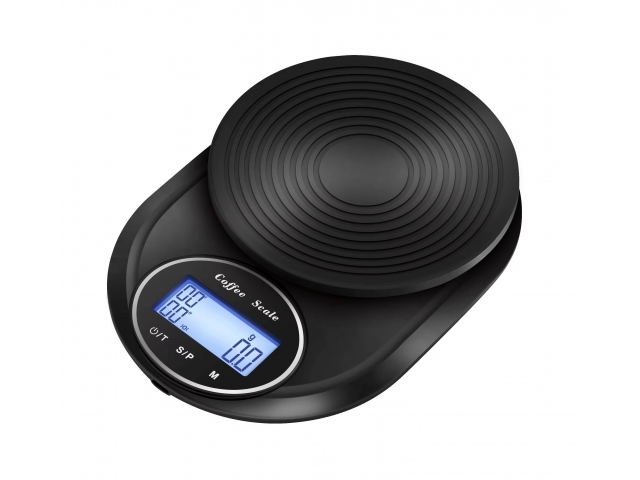
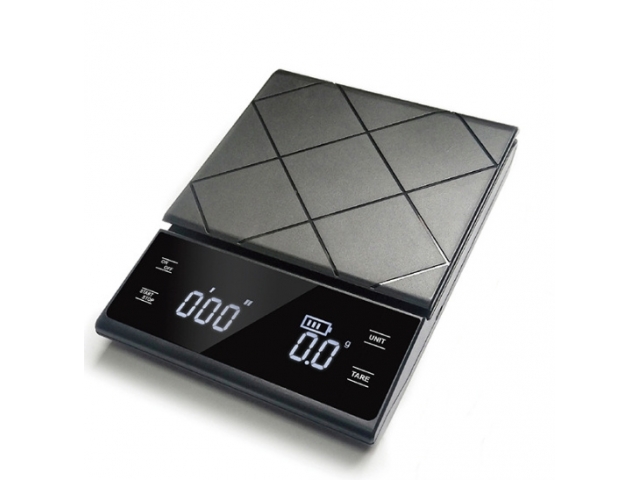
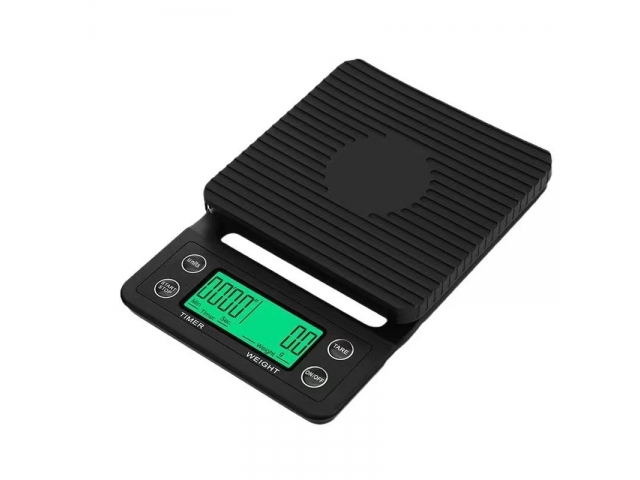
Key functional features of modern coffee scales are specifically engineered to support streamlined, efficient brewing workflows, with core design elements that address the unique demands of coffee preparation. The tare function stands as the most essential feature, allowing users to zero out the weight of brewing vessels, drippers, portafilters, or mason jars instantly, so only the mass of coffee grounds or brewing water is measured. This simple yet powerful feature eliminates the need for manual weight calculations and removes a major source of human error from the brewing process. Precision incremental measurement, typically accurate to 0.1 grams, caters to the narrow tolerance ranges required for specialty coffee extraction, where tiny mass variations directly impact final flavor outcomes. Built-in programmable timers synchronize weight tracking with brewing duration, consolidating two critical measurement tools into one compact device and creating a seamless workflow for timed brewing sequences. Many models also incorporate water-resistant surface coatings and spill-proof design elements, accounting for the inevitable spills and splashes that occur during active brewing, ensuring long-term durability in busy kitchen and café environments. Multiple unit measurement options further enhance versatility, allowing users to work with their preferred measurement systems without conversion guesswork, simplifying adherence to diverse brewing recipes from global coffee resources.
Developing a consistent coffee brewing workflow centered on scale measurement fundamentally elevates a brewer’s understanding of coffee science and flavor dynamics, fostering intentionality over random trial and error. New coffee enthusiasts often approach brewing as a passive process, adjusting variables randomly when a cup tastes unsatisfactory without understanding the root cause of flavor flaws. Integrating a coffee scale into daily brewing forces practitioners to engage actively with brewing variables, learning firsthand how ratio adjustments alter acidity, sweetness, body, and bitterness in the final cup. When a brewed coffee exhibits excessive sourness, a scale-equipped brewer can identify that the coffee-to-water ratio was too dilute or extraction time was insufficient, rather than arbitrarily changing grind size or water temperature without direction. When a cup tastes overly bitter or astringent, precise weight data reveals over-extraction caused by excess coffee mass or prolonged water contact, enabling targeted corrections. Over time, this data-driven approach builds a robust intuitive understanding of coffee extraction mechanics, allowing brewers to adapt quickly to new bean varieties, adjust for seasonal bean changes, and troubleshoot brewing inconsistencies with confidence. The scale does not merely produce better-tasting coffee—it educates brewers, turning casual hobbyists into skilled practitioners who understand and control every aspect of their brew.
The long-term economic and sustainability benefits of consistent scale-based brewing are often overlooked, yet they deliver substantial value for daily coffee drinkers and professional operations alike. Imprecise volume-based measurement routinely leads to overuse of coffee grounds, as users tend to add extra coffee to compensate for fears of weak flavor, resulting in unnecessary waste of premium specialty beans that require extensive labor and resources to produce. Consistent scale measurement eliminates this over-portioning, ensuring that every gram of coffee is used efficiently to produce a perfectly balanced cup, maximizing the flavor yield from every batch of beans and extending the lifespan of coffee supplies. Additionally, inconsistent brewing produces more unsatisfactory cups that are discarded entirely, creating waste of both coffee beans and filtered water while wasting the time invested in preparation. By locking in consistent, reliable brewing results, a coffee scale drastically reduces brew failure rates, minimizing unnecessary waste across all brewing resources. For daily home use, these small consistent savings accumulate significantly over months and years, while for professional café environments, scale-driven precision streamlines production, reduces ingredient waste, and maintains uniform customer experience across every serving, enhancing overall operational efficiency and sustainability.
Common misconceptions surrounding coffee scales often deter new enthusiasts from adopting this essential tool, with many casual drinkers assuming precision measurement is unnecessary for everyday home brewing. The most prevalent myth is that scale precision only matters for professional baristas or competitive coffee brewing, while home consumption allows for casual approximation. In reality, the flavor differences created by minor measurement inconsistencies are fully perceptible in everyday drinking, and the incremental improvements enabled by scale use transform routine daily coffee from mediocre to exceptional. Another widespread misconception is that scale-based brewing is overly complicated and time-consuming, creating an unnecessary barrier for casual home brewers. While learning to use a scale effectively requires a short adjustment period, the streamlined workflow, reduced trial and error, and elimination of repetitive brewing mistakes ultimately saves time in daily preparation. Once a personalized recipe is calibrated and recorded, brewing becomes faster, more reliable, and far less stressful than guessing through each session. A final misconception is that expensive, high-end equipment is required for quality brewing precision, yet basic well-designed coffee scales deliver more than enough accuracy for home brewing needs, making precision coffee crafting accessible to all enthusiasts regardless of equipment budget.
As specialty coffee culture continues to evolve and prioritize quality, consistency, and craft intentionality, the coffee scale has transitioned from a niche professional tool to a fundamental staple of every serious coffee brewing setup. The shift from subjective, guesswork-based brewing to data-driven, precision measurement represents a maturation of home coffee culture, empowering enthusiasts to unlock the full flavor potential of high-quality coffee beans. Every premium coffee bean, whether sourced from single-origin farms or small-batch roasters, possesses intricate layered flavor notes of fruit, floral, chocolate, nutty, and caramel tones that can only be fully realized through precise, consistent extraction. Without the standardized measurement provided by a coffee scale, these delicate flavor complexities are lost to inconsistent ratios, uneven extraction, and uncontrolled brewing variables. By integrating a coffee scale into daily brewing routines, coffee drinkers move beyond relying on luck or random chance for a good cup of coffee, taking full control of their brewing process to produce reliable, exceptional results every single time. In the ever-expanding pursuit of perfect coffee, where every small variable matters, the humble coffee scale remains the most powerful, accessible, and essential tool for elevating every cup of coffee to its maximum flavor potential.
