





Changzhou Veidt Weighing Co., Ltd. © 2022 ALL RIGHTS RESERVED Privacy Policy | Calibration Weight | Test Weights | Cast Iron Weights | Standard Weights | Laboratory Weights | XML | SITEMAP
Product Category
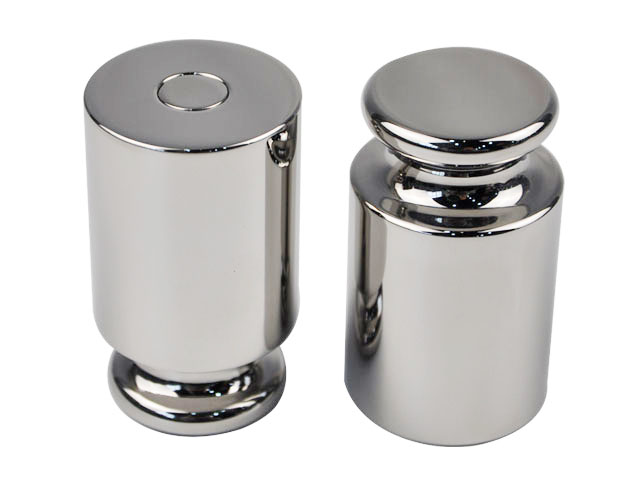
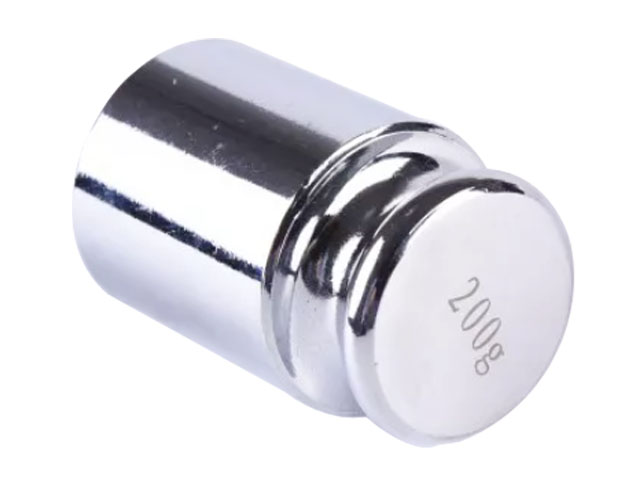
Chrome Steel Weight
Veidt Weighing is a Chrome Steel Weight factory in china. Chrome Steel Weights are high-precision measuring instruments mainly made of chromium containing alloy steel materials, which have excellent wear resistance, corrosion resistance, and long-term stability. These types of weights are widely used in fields that require high-precision weighing, such as laboratories, measuring institutions, and industrial production. Compared with ordinary steel weights, Chrome Steel Weights have significantly improved their physical properties and service life due to the addition of chromium elements.
Chrome Steel Weights are usually made of alloy steel with a chromium content of 12-18%. This material combination endows the weights with the following characteristics:
Excellent hardness: Chromium significantly increases the hardness of steel, with a Mohs hardness of 5.5-6.5
Corrosion resistance: Chromium forms a dense oxide film on the surface, effectively preventing corrosion
Temperature stability: Low coefficient of thermal expansion, less affected by temperature changes
Moderate magnetism: It has sufficient magnetism for easy operation and will not excessively adsorb impurities
The manufacturing process includes multiple processes such as precision casting, CNC machining, polishing, heat treatment, and surface passivation to ensure the quality accuracy and surface smoothness of each weight.
Chrome Steel Weights are classified into multiple accuracy levels according to international standards:
E1 level: highest accuracy, used for transmitting national metrological benchmarks and standards
E2 level: Standard weights for advanced laboratories
F1 level: Conventional laboratory and work standards
F2 level: General industrial use
M1 level: ordinary industrial weighing
Common specifications range from 1mg to 50kg, with various designs including cylindrical, sheet, and lock shapes. Different shapes are optimized for specific usage scenarios.
Modern Chrome Steel Weights adopt advanced surface treatment processes:
Electrolytic polishing: eliminate micro unevenness and reduce surface adsorption
Passivation treatment: Enhance chromium oxide layer and improve corrosion resistance
Special coating: Some high-end products use Teflon or other special coatings
Laser marking: permanent quality marking to avoid wear and tear and detachment
To ensure the accuracy and service life of Chrome Steel Weights, attention should be paid to:
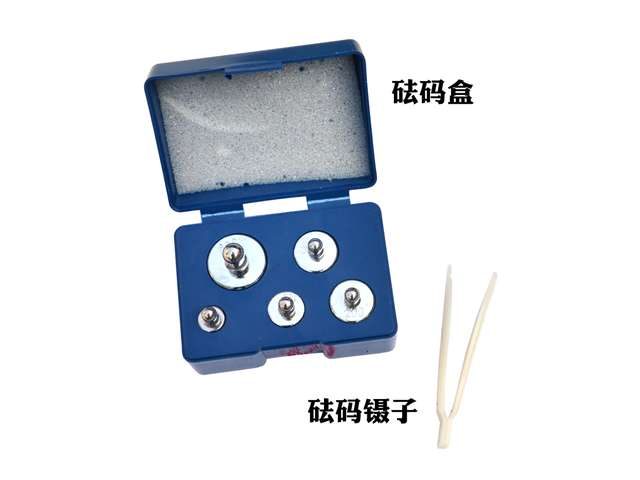
Operating instructions: Use specialized tweezers or gloves to avoid direct contact with hands
Storage conditions: Keep in a dry environment with a relative humidity of ≤ 60%
Cleaning method: Gently wipe with a soft cloth and specialized cleaning agent, do not use corrosive solvents
Regular calibration: Professional calibration is conducted every 6-12 months based on usage frequency
Avoid collision: Handle with care to prevent edge damage from affecting accuracy
Chrome Steel Weights are widely used in:
Metrological verification institutions: serving as quality transmission standards
Pharmaceutical industry: high-precision proportioning and weighing
Food testing: analysis of nutritional components
Jewelry appraisal: weighing of precious metals
Research Experiment: Precision Measurement Research
Industrial Production: Quality Control System
When choosing Chrome Steel Weights, the following should be considered:
Accuracy requirement: Select the appropriate level according to the purpose
Supporting equipment: Ensure compatibility with scales/scales
Manufacturer Qualification: Choose a manufacturer with a measuring instrument production license
After sales service: including calibration and repair support
As an important tool in the field of precision measurement, Chrome Steel Weights continue to expand their technological development and application scope, providing reliable guarantees for accurate measurement in various industries.
In the vast and interconnected world of measurement and quality control, precision is not merely a convenience but a foundational requirement that shapes every industry, from small-scale laboratory research to large-scale industrial manufacturing, commercial trade, and educational institutions. At the heart of accurate weighing systems lie two critical components: chrom steel weight and calibration weight, two terms that are closely linked yet serve distinct yet complementary roles in maintaining the reliability of weighing equipment worldwide. These tools are often overlooked in daily operations, but their consistent performance ensures that every weight reading, every product batch, and every scientific measurement remains consistent, traceable, and free from avoidable error. To fully grasp their significance, it is necessary to explore their material composition, manufacturing processes, functional purposes, practical applications, maintenance protocols, and the broader impact they have on global standards of measurement, all while focusing on their core attributes without reference to specific brands, certifications, or promotional language that could skew objective understanding.
First, it is vital to define both terms clearly to distinguish their unique identities and overlapping functions. A chrom steel weight refers to a precision-machined weight block crafted from high-quality steel as the base material, finished with a protective layer of chromium through a specialized electroplating or surface treatment process. The term “chrom steel” highlights the dual nature of the product: the durable steel core that provides structural integrity and consistent density, and the chromium coating that enhances durability, resistance to environmental damage, and overall longevity. Chrom steel weights are designed to hold a fixed, specific mass value, making them suitable for a range of weighing-related tasks, from basic balance checks to temporary counterbalancing in machinery and equipment. In contrast, a calibration weight is a highly controlled, reference-grade mass unit explicitly manufactured to serve as a benchmark for verifying, adjusting, and calibrating all types of weighing instruments, including analytical balances, bench scales, platform scales, counting scales, and precision load cells. Calibration weights are the gold standard of mass measurement; they are produced with extreme attention to detail to ensure their mass value remains stable over time, allowing technicians and operators to confirm that a weighing device delivers accurate readings by comparing the device’s output to the known, fixed mass of the calibration weight. While many calibration weights are made from chrom steel due to its ideal combination of properties, not all chrom steel weights are classified as calibration weights—only those that meet strict dimensional and mass tolerance standards for reference use fall into the calibration weight category.
The material properties of chrom steel are what make it such a versatile and reliable choice for both standard weight applications and calibration-grade mass units. The base steel used in chrom steel weights is selected for its uniform density, high structural strength, and resistance to deformation under normal operating conditions. Unlike softer metals that may bend or warp with regular handling, or denser alloys that are costly and difficult to machine, the steel core offers a balanced profile of stability and workability. The density of the base steel remains consistent throughout the material, meaning that mass is distributed evenly within the weight block, eliminating internal inconsistencies that could lead to inaccurate mass readings. The chromium plating applied to the surface is a thin, uniform layer that adds a critical layer of protection without significantly altering the overall mass of the weight. This coating is non-porous and smooth, creating a barrier against moisture, oxidation, minor chemical exposure, and physical abrasion—common threats that can degrade uncoated steel over time. Without this protective layer, steel weights would quickly develop rust, pitting, or surface roughness, which can add or remove tiny amounts of mass and compromise the accuracy of the weight. The chromium finish also resists fingerprints, dust, and debris buildup, making chrom steel weights easier to clean and maintain compared to uncoated metal weights. Additionally, chrom steel has low magnetic susceptibility, meaning it does not attract or retain magnetic fields that could interfere with sensitive weighing equipment, a key advantage in laboratory and precision manufacturing settings where magnetic interference can cause significant measurement errors.
The manufacturing process of chrom steel weights and calibration weights follows a rigorous, multi-step workflow that prioritizes precision and consistency, with additional strict controls for calibration-grade units to meet reference standards. The process begins with the selection of high-quality raw steel billets, free from internal voids, impurities, or structural flaws that could affect density uniformity. These billets are cut into rough shapes corresponding to the desired weight size and form, whether cylindrical, square, rectangular, or with a handle for easy handling. Next, the rough-cut pieces undergo precision machining using computer-controlled equipment to achieve exact dimensional specifications. Every surface is smoothed, edges are rounded to prevent sharp corners that could cause injury or damage to weighing pans, and the overall shape is refined to ensure perfect symmetry—symmetry is crucial because an unevenly shaped weight can distribute mass unevenly and lead to inconsistent readings when placed on a weighing device. For standard chrom steel weights, this machining step brings the mass close to the target value, while for calibration weights, the machining is far more precise, with tolerances measured in milligrams or even micrograms for smaller units. After machining, the steel weights undergo a thorough cleaning process to remove machining oil, metal shavings, and surface contaminants, preparing the surface for the chromium plating process. The plating is applied evenly across all surfaces using an electroplating technique that ensures the layer is uniform in thickness; uneven plating could add excess mass to one area and throw off the weight’s balance. Once plated, the weights are polished to a smooth, matte or slightly glossy finish, enhancing their resistance to corrosion and making surface imperfections easy to spot.
The final and most critical stage of production is mass adjustment and verification, a step that separates standard chrom steel weights from precision calibration weights. For regular chrom steel weights, technicians use sensitive weighing equipment to check the mass, making minor adjustments by removing tiny amounts of material from non-critical areas or adding small, secure filler materials if needed to reach the exact target mass. Once adjusted, the weight is marked with its nominal mass value for easy identification. For calibration weights, this process is far more stringent, taking place in controlled environments with stable temperature and humidity to eliminate environmental factors that can affect mass measurements. Calibration weights are measured against higher-grade reference masses in a controlled laboratory setting, with adjustments made incrementally until the mass falls within the narrow tolerance range required for reference use. Even the smallest deviation is corrected, as calibration weights must provide an unwavering benchmark for other equipment. Unlike standard chrom steel weights, calibration weights are often produced in matched sets covering a range of mass values, from fractions of a gram for micro-balances to several kilograms for industrial platform scales, allowing for full-range calibration of any weighing device. This level of precision in manufacturing ensures that both chrom steel weights and calibration weights maintain their mass value reliably over years of use, provided they are handled and stored correctly.
The practical applications of chrom steel weights and calibration weights span nearly every industry that relies on accurate weight measurement, making them indispensable tools in modern commerce, science, and production. In laboratory and research settings, calibration weights are non-negotiable for daily calibration of analytical balances and precision scales used in chemical analysis, pharmaceutical research, material testing, and academic experiments. Researchers depend on these weights to ensure that measurements of reagents, samples, and final products are consistent, as even a tiny error in mass can skew experimental results, compromise data integrity, and lead to incorrect conclusions. Chrom steel weights are also used in educational laboratories, where students learn basic principles of mass, weight, and measurement; their durability and affordability make them ideal for classroom use, where frequent handling by multiple users is common. In the manufacturing sector, both types of weights play a central role in quality control processes. Production lines use calibration weights to regularly calibrate scales that measure raw materials, component parts, and finished products, ensuring that every batch meets specified weight requirements and that production remains consistent across shifts and facilities. Chrom steel weights are often used as counterweights in manufacturing machinery, balancing moving parts to reduce wear and tear, improve operational efficiency, and maintain smooth performance. Industries such as food and beverage production, cosmetics manufacturing, and consumer goods production rely heavily on these weights to comply with internal quality standards and ensure product uniformity, which is essential for customer satisfaction and brand consistency.
Commercial and retail industries also depend on chrom steel weights and calibration weights to maintain fair and accurate trade practices. Retail scales used in grocery stores, markets, and specialty shops must be calibrated regularly to ensure that customers receive the exact amount of product they pay for, and calibration weights are the primary tool for this verification process. Chrom steel weights are often used for on-the-spot checks of retail scales, allowing store owners to confirm accuracy quickly between official calibrations. In logistics and warehousing, shipping scales and pallet scales require frequent calibration with heavy-duty calibration weights to ensure accurate billing for freight, proper inventory management, and compliance with shipping regulations. Accurate weight measurements in logistics prevent overcharging, under-delivery, and logistical errors that can disrupt supply chains and increase operational costs. Additionally, chrom steel weights are used in equipment testing and maintenance across various industries, from automotive manufacturing to construction, where precise weight distribution and load testing are critical for safety and performance. Even in small businesses and workshops, these weights are used for basic weighing tasks, equipment setup, and quality checks, proving their versatility across operations of all sizes.
Proper handling, storage, and maintenance are essential to preserve the accuracy and lifespan of chrom steel weights and calibration weights, as even minor damage or contamination can alter their mass value and render them unreliable. One of the most important rules is to handle weights with clean, dry hands or wear protective gloves, as fingerprints, oils, and sweat can leave residue on the surface that adds small amounts of mass over time. Weights should never be dropped, bumped, or scratched, as physical damage can chip the chromium coating, expose the steel core to oxidation, or change the weight’s dimensional balance. When not in use, weights should be stored in a dedicated, clean, dry case or cabinet, away from moisture, direct sunlight, extreme temperatures, and chemical fumes. Storing weights individually or in padded compartments prevents them from rubbing against each other and causing surface scratches. Regular cleaning is also necessary: weights should be wiped gently with a soft, lint-free cloth to remove dust and debris; for stubborn residue, a mild, non-abrasive cleaning solution can be used, followed by thorough drying to prevent moisture buildup. It is important to avoid harsh chemicals, abrasive scrubbers, or excessive force during cleaning, as these can damage the chromium coating.
For calibration weights, additional maintenance steps are required to sustain their reference-grade accuracy. Calibration weights should be inspected regularly for signs of wear, corrosion, or damage, and any weight that shows visible defects should be removed from use and re-verified before being put back into service. While chrom steel’s corrosion resistance is high, prolonged exposure to high humidity or harsh environments can still cause minor surface changes, so routine inspections are critical. Calibration weights should also be re-verified periodically by comparing them to higher-standard reference masses, as gradual wear or minor contamination can shift their mass value slightly over time. The frequency of re-verification depends on usage intensity: weights used daily in industrial settings may require more frequent checks than those used occasionally in a laboratory. Standard chrom steel weights, while not requiring the same level of frequent verification, still benefit from regular inspections to ensure they remain in good condition. By following these simple maintenance practices, users can extend the functional life of both chrom steel weights and calibration weights significantly, ensuring they remain accurate and reliable for years, reducing the need for frequent replacements and supporting consistent measurement practices.
When comparing chrom steel weights and calibration weights to alternative materials used for mass units, it becomes clear why chrom steel is a preferred choice for so many applications. Other common materials include stainless steel, brass, aluminum, and cast iron, each with its own set of advantages and limitations. Stainless steel is highly corrosion-resistant but often more costly to produce and machine, making it less practical for large-scale or budget-conscious applications. Brass is non-magnetic and resistant to corrosion but is softer and more prone to scratching and deformation with heavy use. Aluminum is lightweight but less durable and has a lower density, requiring larger sizes to achieve the same mass, which can be inconvenient for storage and handling. Cast iron is heavy and durable but prone to rust without heavy coating and is difficult to machine to tight tolerances. Chrom steel strikes an optimal balance between these materials: it offers excellent durability and corrosion resistance comparable to stainless steel at a more accessible cost, has a high density that allows for compact, easy-to-handle weight sizes, is rigid and resistant to deformation, and is easy to machine to precise specifications. The chromium coating adds a layer of protection that uncoated steel lacks, making chrom steel suitable for use in moderately harsh environments where other materials might degrade quickly. This combination of performance, affordability, and versatility makes chrom steel the material of choice for both everyday chrom steel weights and high-precision calibration weights across diverse industries.
Beyond their immediate functional uses, chrom steel weights and calibration weights play a vital role in upholding global consistency in measurement, a cornerstone of international trade, scientific collaboration, and industrial standardization. In a world where goods are produced in one country, shipped to another, and used across continents, uniform weight measurement is essential to ensure fairness, transparency, and compatibility. Calibration weights serve as the link between local weighing equipment and global mass standards, ensuring that a kilogram measured in one part of the world is equivalent to a kilogram measured anywhere else. This consistency prevents trade disputes, ensures product safety, and allows researchers and manufacturers to share data and products with confidence that measurements are universally understood and reliable. Chrom steel weights support this ecosystem by providing a durable, accessible option for routine weighing tasks, reducing the wear on higher-value calibration weights and ensuring that precision measurement is feasible for businesses and institutions of all sizes. Without these reliable mass units, the modern systems of trade, manufacturing, and research that rely on accurate weighing would be prone to error, inefficiency, and inconsistency, leading to wasted resources, compromised product quality, and lost trust between partners and consumers.
It is also important to address common misconceptions about chrom steel weights and calibration weights to promote proper usage and understanding. One common misconception is that all metal weights are the same, regardless of material or coating; in reality, the material composition and surface treatment directly impact accuracy, durability, and lifespan. A standard uncoated steel weight will degrade much faster than a chrom steel weight, leading to frequent replacements and inaccurate measurements. Another misconception is that calibration weights only need to be used once when a weighing device is first installed; in truth, all weighing devices can drift in accuracy over time due to regular use, minor mechanical shifts, or environmental factors, so regular calibration with reliable calibration weights is necessary to maintain accuracy. Additionally, some users believe that minor scratches or surface marks on chrom steel weights are harmless, but even small damage to the chromium coating can lead to underlying rust and mass changes, so prompt inspection and care are always necessary. Understanding these nuances helps users make informed decisions about selecting, using, and maintaining their weights, maximizing their value and performance.
The design variations of chrom steel weights and calibration weights also cater to specific user needs, adding to their practicality and adaptability. Small-scale weights for laboratory balances are typically compact and cylindrical, with smooth surfaces to fit easily on small weighing pans. Medium-sized weights for bench scales may feature a small handle or grip for safe handling, while larger industrial weights for platform scales and heavy-duty calibration are often designed with reinforced structures and lifting points for easy maneuvering with tools. Some weights are designed as individual units for targeted calibration, while others come in coordinated sets that include a full range of mass values for comprehensive equipment testing. The shape and design are always engineered to prioritize stability when placed on a weighing surface, preventing tilting or shifting that could affect measurement readings. This attention to design details ensures that chrom steel weights and calibration weights can be tailored to the unique requirements of any application, from micro-scale laboratory analysis to heavy-duty industrial weighing.
As technology and manufacturing processes continue to evolve, the production and application of chrom steel weights and calibration weights have also advanced to meet modern demands. Improved machining techniques allow for even tighter tolerances and more consistent mass values, while enhanced plating processes create more durable and uniform chromium coatings that resist wear and corrosion better than older treatments. Digital measurement tools have streamlined the mass verification process, allowing for faster and more accurate adjustments during production. Despite these technological advancements, the core purpose of chrom steel weights and calibration weights remains unchanged: to provide reliable, consistent mass references for accurate weighing. Even with the rise of automated weighing systems and smart sensors, these physical mass units remain irreplaceable, as digital systems still require calibration against a physical, traceable mass standard to ensure accuracy. This enduring relevance highlights the fundamental role of chrom steel weights and calibration weights in the world of measurement, a role that will continue as technology progresses and industries evolve.
In summary, chrom steel weight and calibration weight are two interconnected yet distinct tools that form the backbone of accurate weight measurement across every sector of modern industry, science, and commerce. Chrom steel weights, with their durable steel core and protective chromium finish, offer a reliable, cost-effective solution for routine weighing, counterbalancing, and basic equipment checks, combining strength, corrosion resistance, and versatility. Calibration weights, many of which are crafted from chrom steel for its superior properties, serve as the precision reference standard for calibrating and verifying all types of weighing equipment, ensuring that measurements remain consistent, accurate, and traceable. Together, they support quality control, fair trade, scientific research, and operational efficiency, preventing errors, reducing waste, and upholding standards that are essential for global collaboration and consumer trust. By understanding their material properties, manufacturing processes, practical applications, and maintenance needs, users can harness the full potential of these tools to maintain precision in their daily operations. As essential yet often underappreciated components of the measurement ecosystem, chrom steel weights and calibration weights will continue to play a vital role in ensuring accuracy and reliability in every field that depends on precise weight measurement, now and in the years to come.
The impact of these weights extends far beyond individual workplaces, contributing to a larger framework of accountability and precision that shapes the global economy. Every time a manufacturer calibrates a scale to produce consistent products, a laboratory verifies an experiment with a calibration weight, or a retailer checks a scale with a chrom steel weight, they are participating in a system that prioritizes accuracy and fairness. This collective commitment to precise measurement, supported by reliable tools like chrom steel weights and calibration weights, builds a foundation of trust between businesses, consumers, researchers, and regulatory bodies. It ensures that products are safe, data is valid, and trade is equitable, addressing small-scale daily needs and large-scale industrial challenges alike. While they may seem like simple, unassuming objects, chrom steel weights and calibration weights are integral to the smooth functioning of modern society, proving that even the most basic tools can have a profound and far-reaching impact when engineered for precision and reliability.
Learn more about chrome steel unit weight, chrome steel standard weight, chrome steel theoretical weight, high chrome steel weight, chrome molybdenum steel weight, chrome steel plate weight, chrome steel pipe weight, chrome steel actual weight, chrome steel weight per square meter, chrome steel bar weight, chrome steel weight calculation formula, chrome steel tube weight, chrome steel profile weight, chrome steel weight tolerance, chrome steel strip weight, chrome steel weight measurement, chrome steel component weight, chrome steel forging weight, chrome steel weight per linear meter, chrome steel fastener weight, chrome steel frame weight, chrome steel weight specification, chrome steel weight verification, chrome steel cladding weight, chrome steel gross weight, chrome steel net weight, chrome steel weight deviation, chrome steel weight calibration, chrome steel weight testing standard, chrome steel weight for machinery parts, chrome steel weight compliance, chrome steel weight benchmark, chrome steel shipping weight, chrome steel weight reference table, chrome steel weight adjustment, chrome steel weight for production line equipment, chrome steel weight load capacity, chrome steel weight for panel assembly, chrome steel weight comparison, chrome steel weight for conveyor systems, chrome steel weight for wear-resistant components, chrome steel weight for industrial bearings, chrome steel weight for cutting tools, chrome steel weight for automotive parts, chrome steel weight for construction machinery, chrome steel weight for valve components, chrome steel weight for pump shafts, chrome steel weight for agricultural machinery parts, pls contact us.
