





Changzhou Veidt Weighing Co., Ltd. © 2022 ALL RIGHTS RESERVED Privacy Policy | Calibration Weight | Test Weights | Cast Iron Weights | Standard Weights | Laboratory Weights | XML | SITEMAP
NEWS LIST
Calibration Weight Kit
Saturday 10th July 2021 Back to list
The calibration weight kit is an indispensable precision measuring tool in laboratories, quality testing institutions, and industrial production, used to verify and calibrate the accuracy of various weighing equipment. These high-precision quality standards ensure reliable measurement results from weighing instruments such as scales and electronic scales through physical mass comparison.
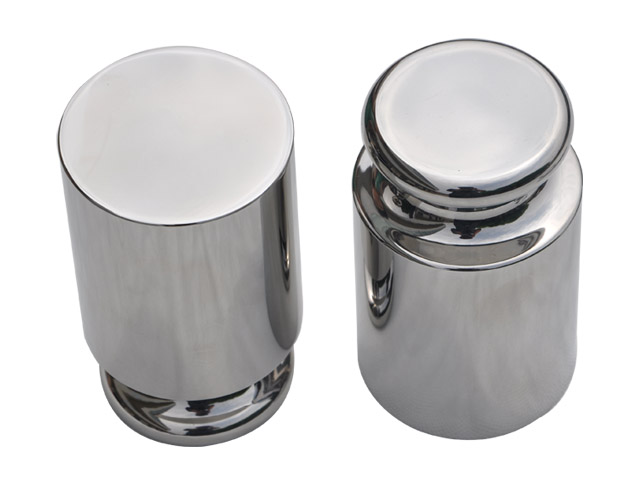
Modern calibration weights are usually made of materials such as stainless steel, brass, or cast iron, and their surfaces are specially treated to prevent corrosion and contamination. A complete set of calibration weights includes multiple weights with different mass values, which can cover a wide weighing range and meet the calibration requirements of different accuracy levels.
Classified by accuracy level
E1 level weight: the highest precision level, used for calibrating high-precision analytical scales with extremely low uncertainty
E2 level weight: second highest precision, suitable for precision laboratory balance calibration
F1 grade weight: Industrial grade high-precision, used in general laboratories and workplaces
F2 grade weight: for conventional industrial use, with moderate accuracy
M1 grade weights: for general industrial use, economical and practical
M2 level weight: the lowest precision level, used in situations where high requirements are not necessary
Classify by shape
Cylindrical weights: the most common design, easy to stack and use
Sheet weight: designed with thin sheets, used for measuring small masses
Polygonal weight: special shape to prevent rolling
Weight with handle: Large weight for easy handling
Classified by material
Stainless steel weights: the most commonly used, with good corrosion resistance
Brass weights: traditional materials that require regular maintenance
Cast iron weights: an economical choice for large mass weights
Platinum iridium alloy weights: international kilogram raw material, extremely expensive
A high-quality calibration weight kit typically includes the following technical specifications:
Quality range: ranging from 1mg to 50kg, can be combined according to demand
Density: usually 8000kg/m ³, stainless steel material is close to this value
Magnetic susceptibility: High quality weights should have low magnetic susceptibility (<0.05)
Surface roughness: The polished surface roughness generally does not exceed 0.2 μ m
Temperature coefficient: High quality weights have a small temperature coefficient and are less affected by the environment
Correct usage method
Use dust-free gloves or specialized tools to retrieve and avoid direct hand contact
Place it in the center of the weighing plate to ensure even force distribution
Handle with care to prevent collisions and falls
Stabilize the temperature in the weighing environment before use
Regularly conduct periodic checks to ensure stable quality
Key points of maintenance and upkeep
Store in a dry and dust-free environment
Clean and return to the dedicated box promptly after use
Avoid contact with corrosive substances
Regular inspection to maintain measurement traceability
Special handling tools should be used for large mass weights
Application areas of calibration weights
Laboratory: Precision measurement in research institutions and university laboratories
Food processing: Regular validation of weighing systems on production lines
Jewelry industry: precise weighing for precious metal trading
Industrial Manufacturing: Calibration of Testing Equipment for Quality Control Departments
Measurement institution: used as a transmission standard for value transmission
Calibration weights as the foundation of quality measurement, play an irreplaceable role in ensuring global measurement consistency. Choosing and using appropriate calibration weight kits is a key step in ensuring accurate and reliable measurement results.
